
Detroit's engineers weren't always chasing horsepower. Sometimes they were chasing cocktails, fur trim, and built-in turntables. These are the factory options that made the options sheet look like a fever dream — and buyers actually checked the boxes.
Built-In Turntables for the Road
Picture this: a 1960s Chrysler Imperial gliding down the highway while Frank Sinatra spins on a genuine record player mounted under the dash. Motorola actually built and sold these units through select dealers. The tone arm had a special mechanism to keep the needle in the groove over bumps. It mostly worked. Mostly. The whole setup cost about $150 — roughly $1,500 today — and was considered the height of automotive sophistication.
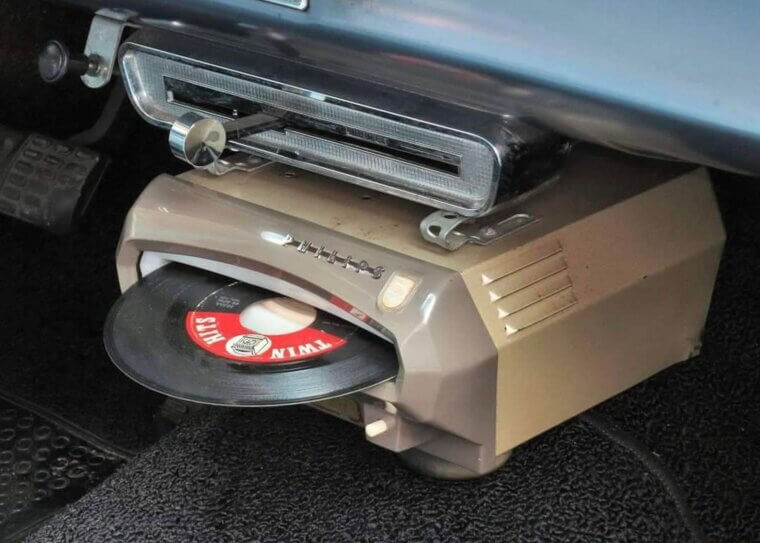
The turntable played standard 45 rpm records and was marketed as the Highway Hi-Fi. Skipping was, predictably, a known issue that Motorola never quite solved despite two redesigns.
Factory-Installed Television Sets
Long before backseat iPads, RCA and Philco were stuffing actual cathode-ray televisions into luxury cars. Cadillac and Lincoln both offered dealer-installed TV sets in the late 1950s, typically mounted in the rear partition of limousines. Reception required a roof-mounted antenna and a whole lot of optimism. The screens were tiny, the picture was snowy, and the power draw was enormous — but wealthy buyers loved the novelty enough to keep ordering them.
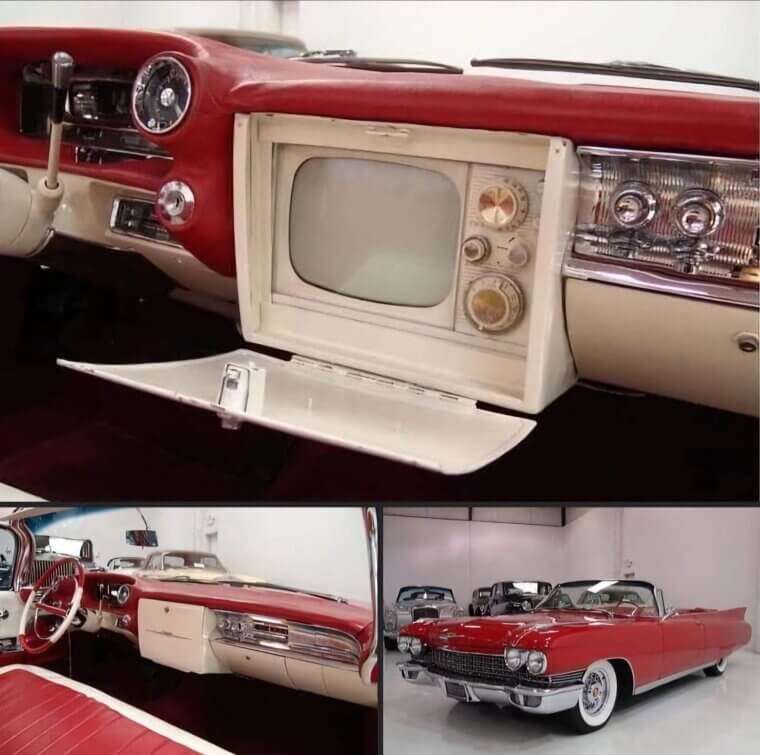
Some units were mounted facing rear-seat passengers; others folded into the center armrest console. Either way, you needed to be parked to watch anything without getting a headache.
Swivel Seats That Faced Backward
Studebaker offered swivel front seats in the early 1960s so passengers could rotate outward when entering or exiting the car. Ford followed with a similar setup on the Thunderbird. The idea sounds practical until you realize the seat could accidentally swivel while driving if the locking mechanism wore out. Dealers quietly stopped recommending them after a few warranty complaints. The seats themselves were genuinely comfortable — it was just the unexpected 90-degree rotation at 40 mph that people objected to.
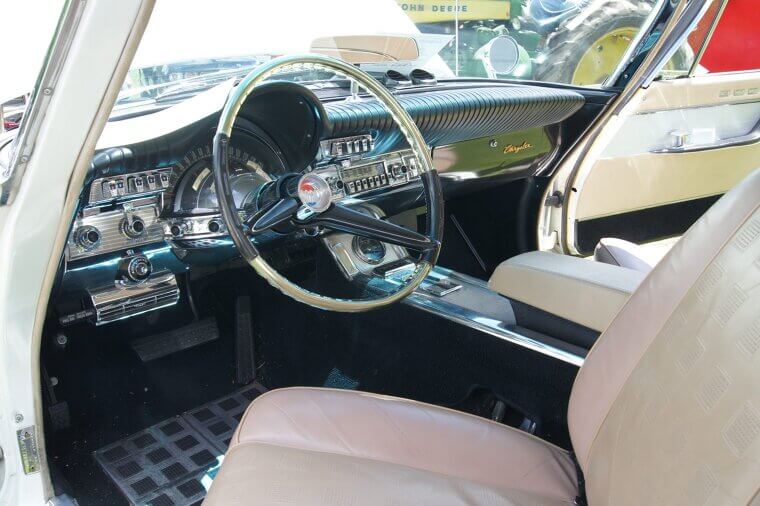
Chrysler's version used a spring-loaded pivot that required a deliberate push to activate. Ford's Thunderbird swivel seat became one of the brand's most-discussed options of the era.
Perfume Dispensers Built Into Dashboards
Would you pay extra to have your car smell like gardenias? Cadillac buyers in the late 1950s could. A small perfume capsule system was offered through the dealer network, typically integrated into the ventilation path near the glove box. Press a button, release a burst of scent. Refill cartridges were sold separately at dealerships. The option was quietly dropped when it became clear that passengers with allergies — and husbands who forgot to mention the perfume smell to their wives — were generating complaints.
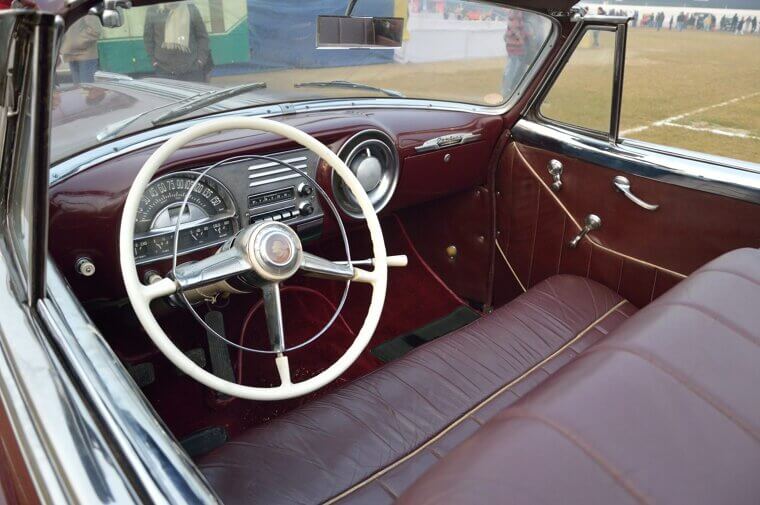
Several European coachbuilders offered similar systems on Rolls-Royce and Bentley conversions. The idea never fully died — modern luxury cars still pump synthetic 'signature scents' through their HVAC systems.
Fur-Lined Interiors From the Factory
Genuine mink and rabbit fur interior trim wasn't just a mob movie prop — it was a real factory-adjacent option in the 1970s. Companies like Tissavel supplied fur fabric to Chrysler and Lincoln dealers as dealer-installed accessories. Entire headliners, door panels, and seat bolsters were available in fake or real fur. Maintenance was a nightmare. Fur interiors held odors, attracted moths, and turned matted and grim within two summers. They looked spectacular in showrooms and catastrophic in junkyards.
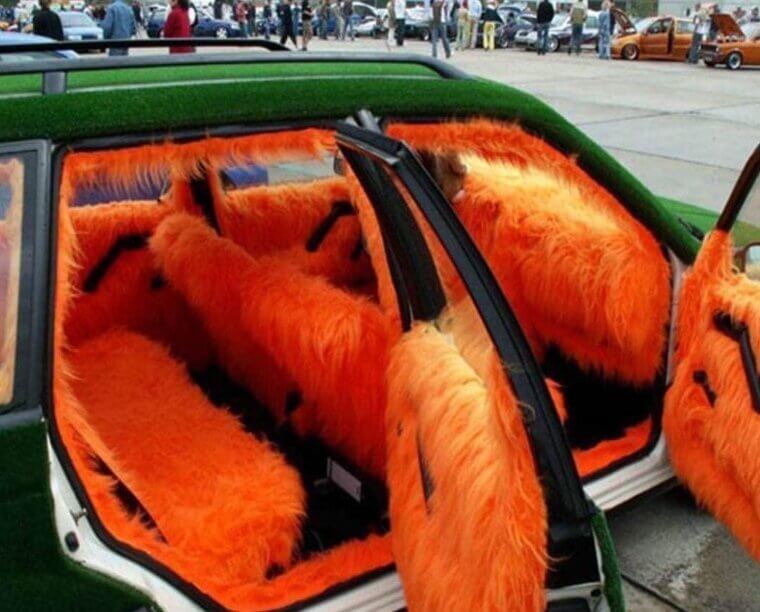
A full fur interior conversion could run $2,000 to $4,000 in 1975 dollars. That's over $11,000 today — for upholstery that smelled like a wet dog after one rainy season.
Gold-Plated Engine Components as Options
$500 for gold-plated valve covers. That was the going rate on certain 1970s Cadillac Eldorado dealer packages. Gold plating on engine components — valve covers, air cleaner lids, even dipstick handles — was offered through the GM dealer accessory catalog as a prestige add-on. The plating was thin, decorative, and served zero mechanical purpose. Under-hood heat would eventually dull the finish, which meant the gold engine bay you paid for in 1974 looked like a brass doorknob by 1977.
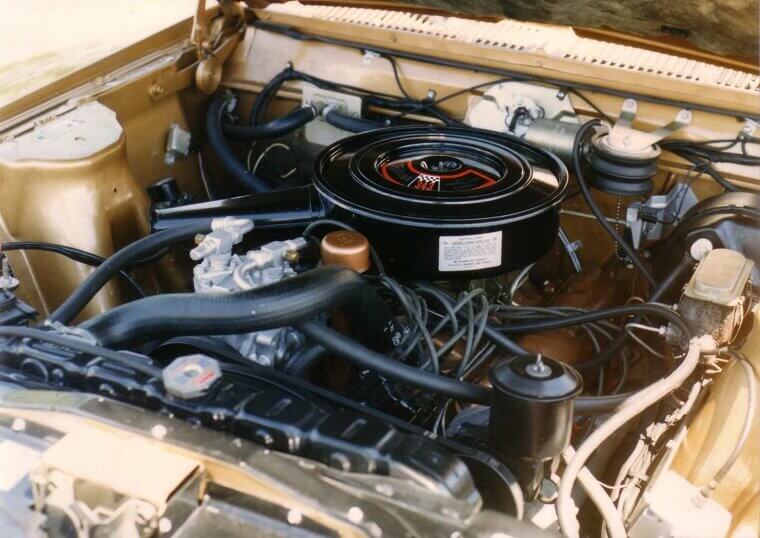
Rolls-Royce and Bentley coachbuilders took this further, offering 24-karat gold plating on exterior trim. At least those cars spent less time in the rain.
Built-In Cocktail Bars in Sedans
The Rolls-Royce Silver Shadow had one. So did the Lincoln Continental limousine. Factory-specced cocktail cabinets — complete with crystal decanters, glasses, and a fold-out bar surface — were genuine options on high-end American and British luxury cars throughout the 1960s and '70s. Some included a small chiller compartment. The irony is that these were installed in cars with chauffeurs, meaning the person doing the drinking was also the person not driving. That logic apparently satisfied everyone involved.

A full factory cocktail bar option on a 1968 Lincoln limousine could add $1,800 to the window sticker. The decanters were lead crystal — which meant a hard stop sent them straight into the partition glass. Chauffeurs learned to brake gently. Passengers learned to hold their drinks.
Factory Landau Vinyl Roofs on Coupes
Landau roofs — those padded, vinyl-covered half-roofs meant to evoke old horse-drawn carriages — were everywhere in the 1970s. Chevrolet, Ford, and Chrysler all offered them as factory options on coupes and personal luxury cars. They cost between $150 and $400 depending on the vehicle, required almost no maintenance for the first few years, and then began trapping moisture against the metal roof underneath. Rust followed. Landau roofs are now one of the leading causes of structural rust on surviving 1970s coupes.
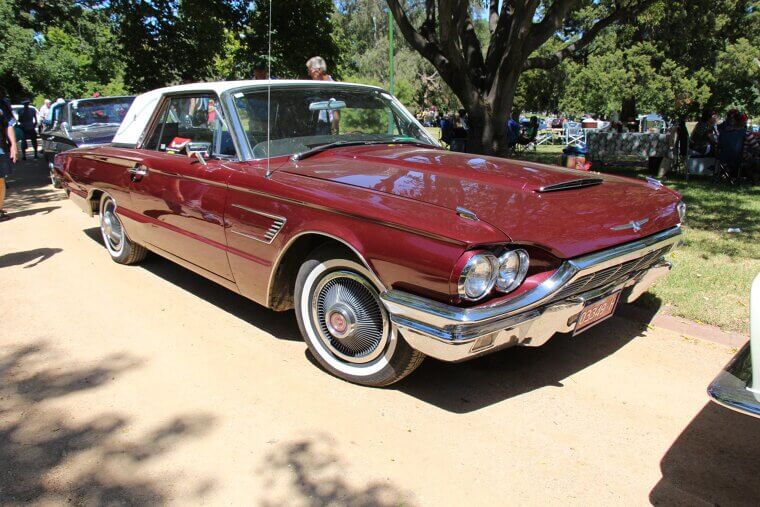
Despite the rust risk, landau roofs were ordered on millions of cars. The Chevrolet Monte Carlo and Ford Thunderbird were among the most popular recipients of the vinyl-covered treatment.
Hideaway Headlights That Spun Open
Test riders came back genuinely unsettled the first time the Pontiac GTO's hideaway headlights failed to open at highway speed. The rotating drum system — where the entire headlight assembly spun 180 degrees to reveal the bulbs — was elegant in theory and temperamental in practice. Vacuum leaks, motor failures, and cold-weather freezing were common. But visually? Nothing looked cooler than those lights spinning open at dusk. Dodge, Buick, and Oldsmobile all ran similar systems through the late 1960s and into the '70s.
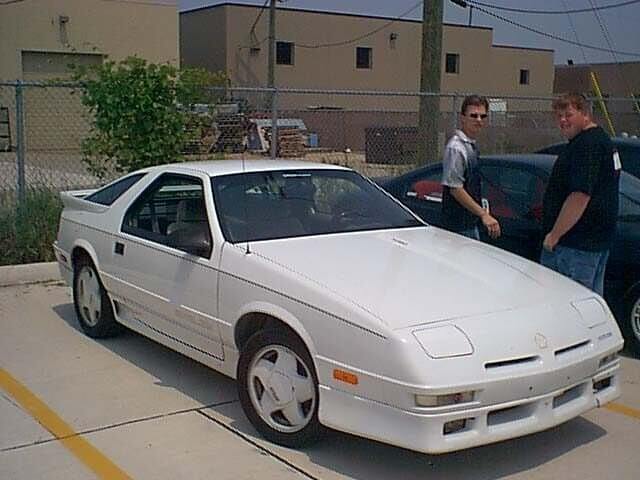
The 1967 Oldsmobile Toronado and 1968 Dodge Charger both used hideaway headlight systems. Collectors today rebuild the vacuum motors with modern seals — the failure rate drops dramatically with updated components.
Passenger-Side Vanity Mirrors With Lighting
You've probably seen one without realizing it was a factory option. The lighted vanity mirror on the passenger-side sun visor seems mundane today, but when Cadillac first offered it in the mid-1960s, it required a dedicated wiring harness, a relay switch, and a special visor assembly. The mirror illuminated when the visor was flipped down. Competitors scrambled to copy it within two model years. By 1975, it was standard equipment on most luxury cars — proof that even the strangest options eventually become expectations.
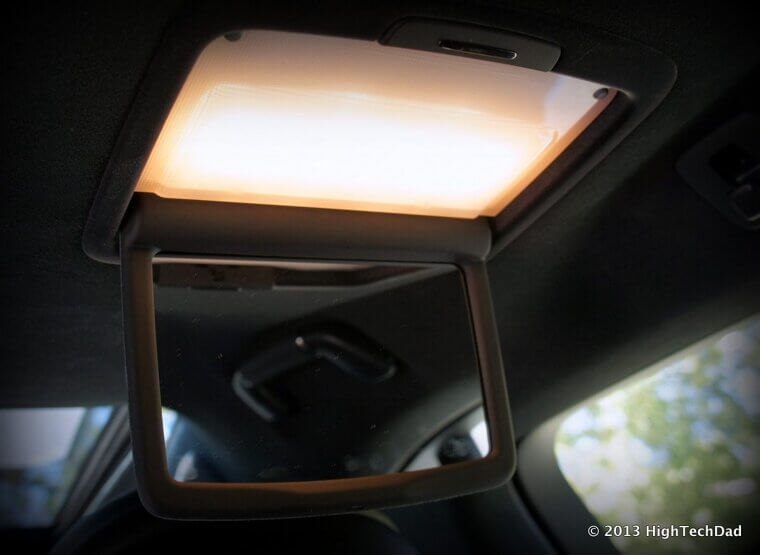
Cadillac's lighted vanity mirror option cost approximately $35 in 1966. It's now one of the most copied interior features in automotive history, appearing on virtually every car sold today.
Built-In Shoe Shine Kits in Limos
Built-in shoe shine kits were a genuine feature on coachbuilt limousines and high-spec executive sedans through the 1960s and '70s. A small compartment — usually in the rear armrest or under the rear seat — contained a brush, a buffer, and a tin of polish. Rolls-Royce Phantom limousines and certain Cadillac Fleetwood 75 conversions included them as standard equipment on the long-wheelbase versions. The logic was that executives traveling between meetings needed to look sharp at all times. The shoe shine kit was the original mobile grooming solution.
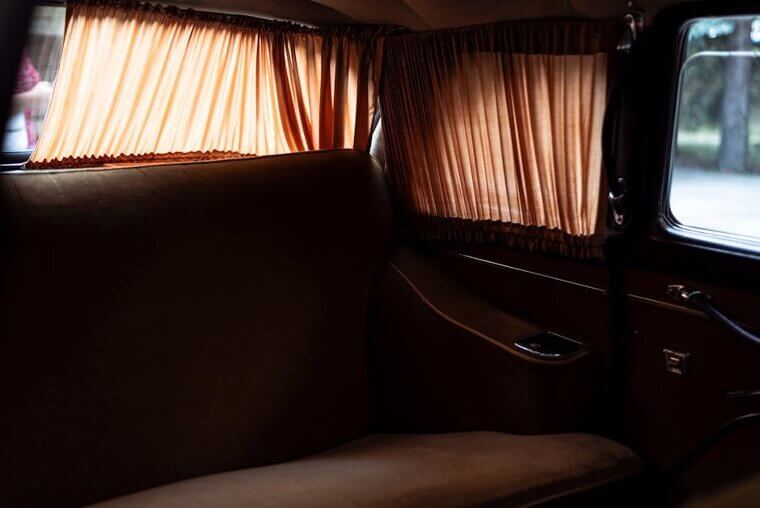
Some Bentley and Daimler limousine conversions went further, adding a full vanity drawer with comb, mirror, and cologne. The shoe shine kit was just the beginning of the rear-compartment luxury arms race.
Astro Roof Glass Panels From GM
GM's Astro Roof was introduced in 1969 and represented a genuine engineering departure from the standard sunroof. Rather than a single panel that tilted or slid, the Astro Roof used a large fixed glass panel that spanned most of the roof area, giving passengers a panoramic sky view without any moving parts. It was offered on Cadillac, Buick, and Oldsmobile models. The glass was tinted but not UV-filtered, meaning long summer drives turned rear passengers into slow-cooked passengers. Air conditioning bills increased accordingly.
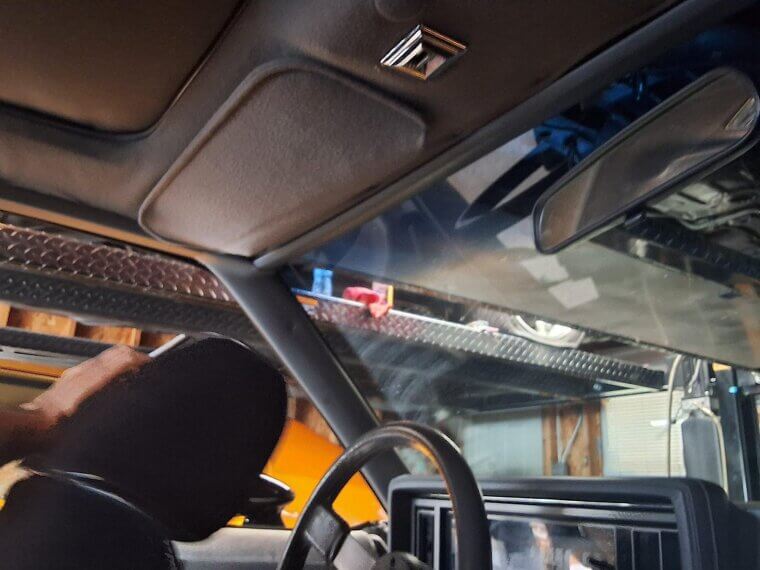
The Astro Roof option added roughly $600 to a Cadillac's price in 1970. GM sold thousands of them before competitors introduced proper sliding panoramic roofs that actually opened.
Factory-Offered Tire Chains as Options
Here's one that makes total practical sense and still looks bizarre on a factory order sheet: tire chains, sold as a factory-installed option through Chrysler and GM dealer networks in the 1950s and '60s. You ordered the chains with the car, they arrived in the trunk, and a dealer technician verified they fit the specific tire size. The option cost about $25. What makes it weird is the image of a Cadillac DeVille owner pulling over in a blizzard to manually wrap chains around 15-inch whitewalls while wearing a cashmere overcoat.

Tire chains remained on GM's official accessories list through 1971. Modern all-season tires and front-wheel drive eventually made them obsolete for most buyers — but mountain states dealers moved serious volume.
Dashboard Compass Options From Detroit
Before GPS, before digital maps, before anyone thought to put a screen in a dashboard, Ford and GM both offered magnetic compass units as dealer-installed options in the 1950s and '60s. These were liquid-dampened compasses mounted on the dash or rearview mirror stem. They worked reasonably well away from the engine block. Near the engine block — which is where dashboards tend to be — the magnetic interference made them point in whatever direction they felt like. Buyers complained. Dealers shrugged. The option sold anyway.
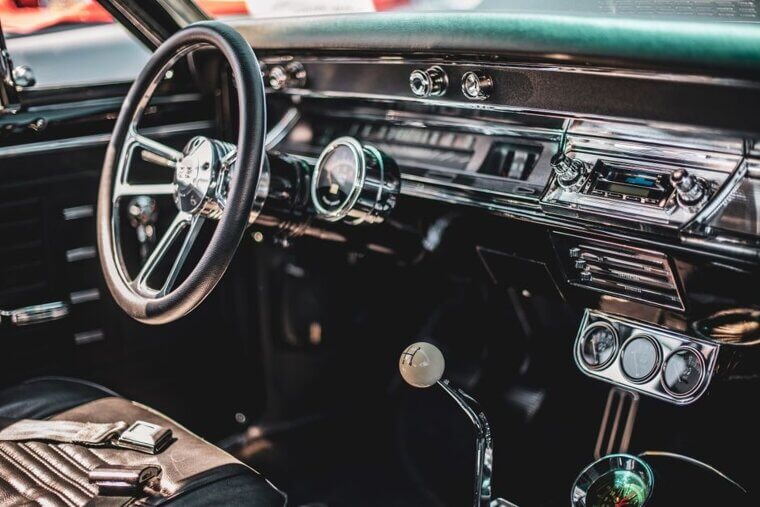
Chrysler offered a more sophisticated thermometer-compass combo in the early 1970s. The compass accuracy problem was never fully solved until electronic flux-gate compasses arrived in the 1990s.
Built-In Tissue Dispensers on Door Panels
This one is both practical and deeply strange: factory-installed tissue dispensers, built directly into door panels or center consoles, were offered on several GM and Chrysler luxury models in the 1960s. A chrome-trimmed slot held a standard tissue box insert. Cadillac's version was elegantly integrated into the rear armrest. Lincoln's version sat in the center console between front seats. Both required proprietary refill packs sold at dealerships. It was the factory option that treated your car like a very expensive waiting room.
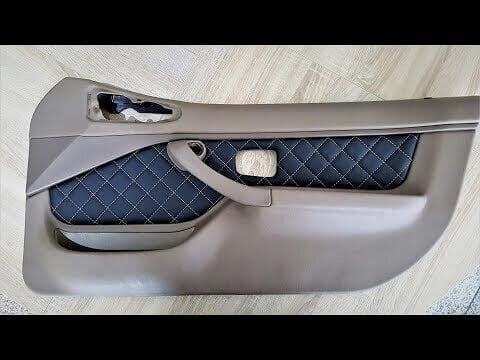
Replacement tissue packs for the Cadillac door-panel dispenser were sold at GM dealers through 1972. A surviving example with the original chrome trim intact is now a sought-after detail among full-restoration collectors.
Fender Skirts Covering the Rear Wheels
Fender skirts — those smooth metal panels that covered the rear wheel openings — were a genuine factory option on dozens of American cars from the 1940s through the 1970s. Cadillac, Buick, and Lincoln offered them as both standard equipment and delete options depending on the model year. They gave cars a sleek, unbroken silhouette that photographers loved. Mechanics hated them. Changing a rear tire required removing the skirt first, which required a special tool, which was usually lost, which meant the tire change took 45 minutes instead of 10.
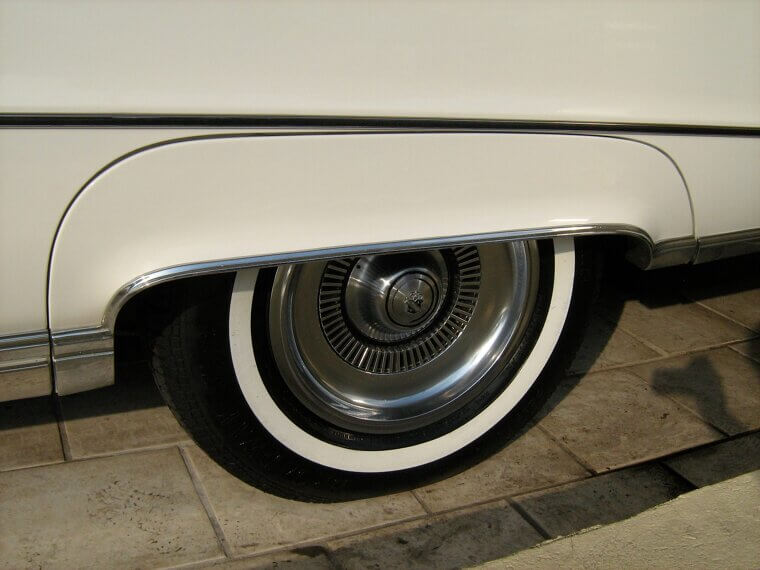
Fender skirts peaked in popularity on 1950s luxury and custom cars. Today they're a defining visual element of the lowrider scene, where the inconvenience of tire changes is considered a fair trade for the look.
Hood Ornaments With Spinning Propellers
This might be the most gloriously pointless factory option ever catalogued. Spinning propeller hood ornaments — actual miniature propellers that rotated in the airflow — were offered on certain postwar American cars and were popular dealer-installed accessories through the 1950s. They served no aerodynamic purpose. They added no performance. They did occasionally detach at highway speed and become small metal projectiles. Chrysler's accessory catalog listed them as late as 1958, described with complete seriousness as a 'decorative airflow indicator.'
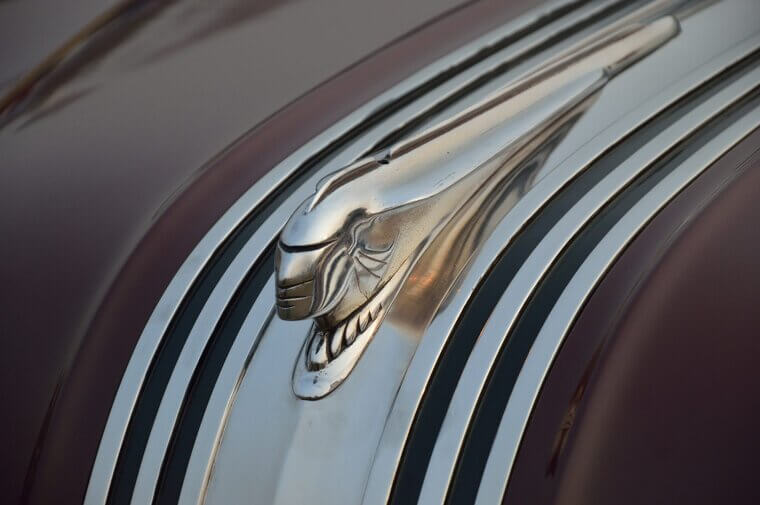
The spinning propeller ornament was particularly popular on hot rods and customs of the 1950s. Several were inspired by aircraft nose art, which tells you everything about what American men were romanticizing in the postwar years.
Factory-Installed CB Radio Systems
The CB radio craze of the mid-1970s was so intense that Ford, GM, and Chrysler all added factory-installed Citizens Band radio systems to their option sheets. Ford's version, offered on the 1976-1977 F-Series and LTD, was a Motorola unit integrated into the dash with a roof-mounted antenna. It cost $349 — about $1,800 today. The problem was that the CB craze peaked in 1977 and collapsed almost immediately after. Dealers were left with factory-order forms for a technology that became a punchline within 18 months.
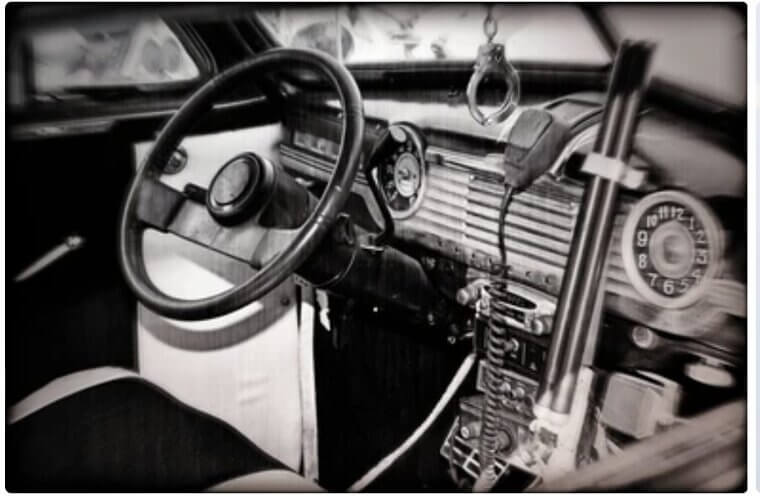
GM's factory CB option was available on Cadillac and Buick models in 1977. Many were dealer-removed before delivery as the fad faded. Finding a surviving factory CB-equipped luxury car in original condition is genuinely rare.
Trunk-Mounted Spare Tire Covers
Factory first-aid kits sound like a sensible option until you see what GM was actually selling in 1958: a chrome-lidded compartment built into the trunk floor, stocked with bandages, antiseptic, and a small instruction card. It was listed in the Cadillac and Buick dealer accessories catalog for $18.50. The kit was sized for minor roadside incidents — a cut finger, a scraped knee — not anything requiring actual medical attention. The instruction card advised calling a doctor for anything more serious, which raises the question of why the kit existed at all.
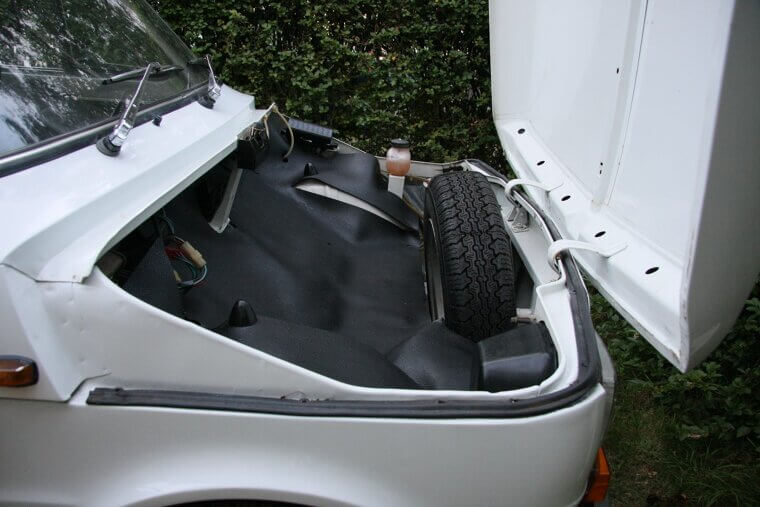
The factory first-aid kit option disappeared from GM's catalog by 1963, replaced by a simpler 'safety package' that included flares and a reflective triangle. Surviving examples with the original chrome lid and intact contents are a minor collector curiosity — mostly because nobody ever used them.
Rear-Facing Third-Row Jump Seats
Rear-facing jump seats in station wagons were a genuine factory option from the late 1950s through the 1980s. Ford, GM, and Chrysler all offered them, typically as a third-row seating option that folded flat into the cargo floor. Children loved them. Safety engineers hated them. In a rear collision, occupants in rear-facing seats absorbed the full impact with no headrest protection and minimal structural support behind them. They remained legal and available for decades before modern crash standards effectively eliminated them from new vehicles.
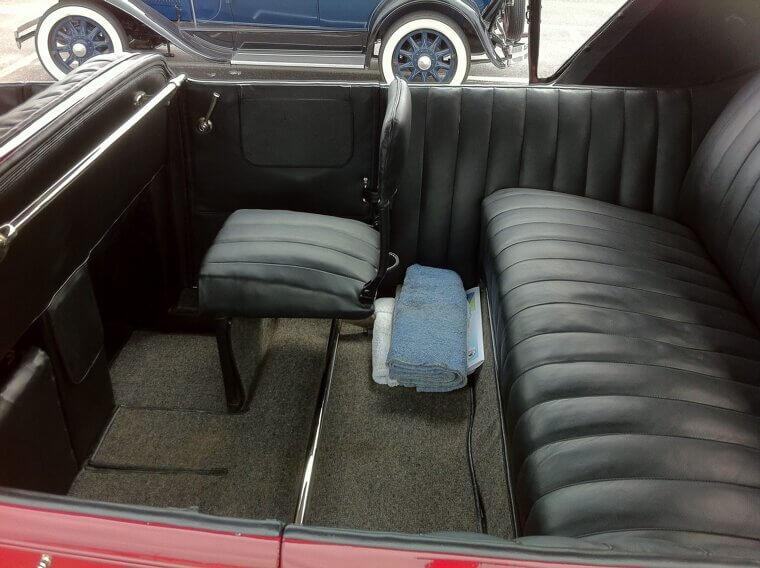
An entire generation of American kids grew up riding backward in station wagon jump seats, watching traffic disappear behind them. It was genuinely fun and genuinely dangerous, and nobody seemed particularly troubled by the combination.
Illuminated Entry Systems for Doors
Illuminated entry systems — where the door handle area or footwell lit up when you approached the car — sound like a modern feature. Cadillac offered a version of it in the mid-1970s. When you inserted the key or touched the door handle, small courtesy lights activated to help you find the lock and see the footwell. The system used a timer relay that kept lights on for 15 seconds after the door closed. It cost about $75 as an option and required a dedicated relay module that failed with some regularity in cold climates.
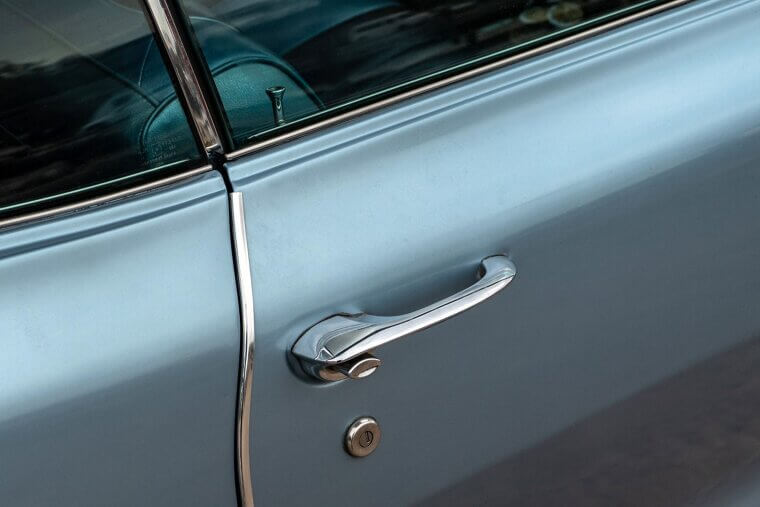
Lincoln's version used fiber optics to route light from a central bulb to multiple door handle locations simultaneously. The fiber optic harness was expensive to replace when it cracked — which it did, reliably, after about five winters.
Padded Dashboards in Psychedelic Colors
The early 1970s were a specific kind of chaos, and dashboard design reflected that. Chrysler and AMC both offered padded dashboards in colors that had no business being near a driver's field of vision — burnt orange, avocado green, and a particular shade of gold that automotive historians have never been able to name without grimacing. The padding itself was a genuine safety improvement over the hard metal dashes of the 1950s. The colors were a genuine assault on the senses. Both things were true simultaneously, and buyers ordered them by the thousands.
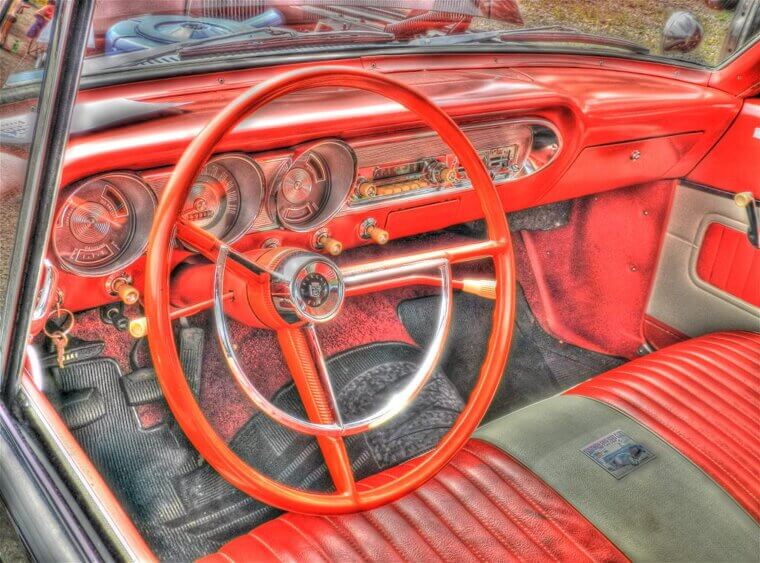
AMC's Javelin and Gremlin offered some of the most aggressively colored interior packages of the era. The 'Levi's denim' interior option — complete with copper rivets — remains the most discussed AMC factory option of all time.
Factory-Offered Teak Wood Steering Wheels
Teak wood steering wheels were a genuine factory option on certain Jaguar, Triumph, and Rover models sold in the 1960s and '70s, and they filtered into the American market through dealer-installed accessory programs. The wood was real, the finish was lacquer, and the grip was — in wet conditions — essentially nonexistent. British sports car buyers considered this a character feature rather than a flaw. American buyers who ordered them through dealer catalogs discovered the character feature the first time they drove home in the rain.
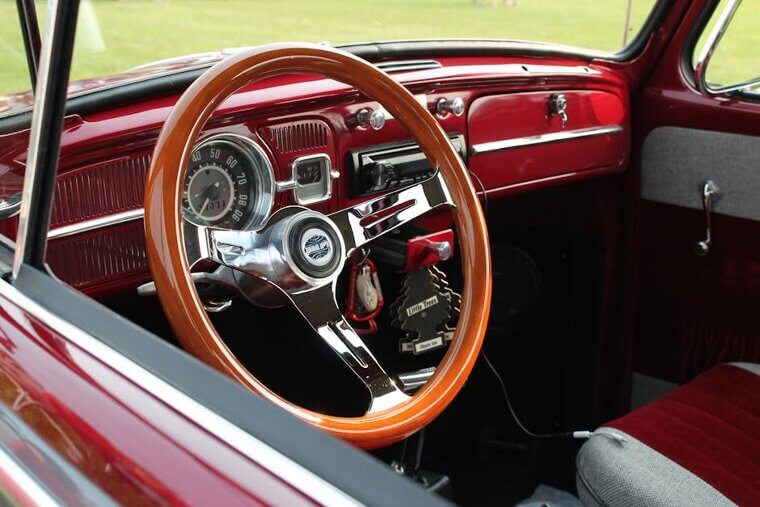
Moto-Lita and Nardi both supplied teak and mahogany steering wheels to factory programs and aftermarket dealers simultaneously. The line between 'factory option' and 'dealer accessory' was blurry enough that both companies claimed official status.
Built-In Dictation Machines for Executives
Before smartphones, before voice memos, before digital anything — executives dictated letters into machines. And because 1960s executives apparently never stopped working, both Lincoln and Cadillac offered factory-installed dictation machine options through their limousine and executive sedan programs. The unit was typically a reel-to-reel or cassette-based recorder mounted in the rear armrest or center console, with a small microphone on a retractable cord. The tapes were transcribed by a secretary upon arrival. It was the original voice-to-text workflow, and it cost about $400 in 1968.
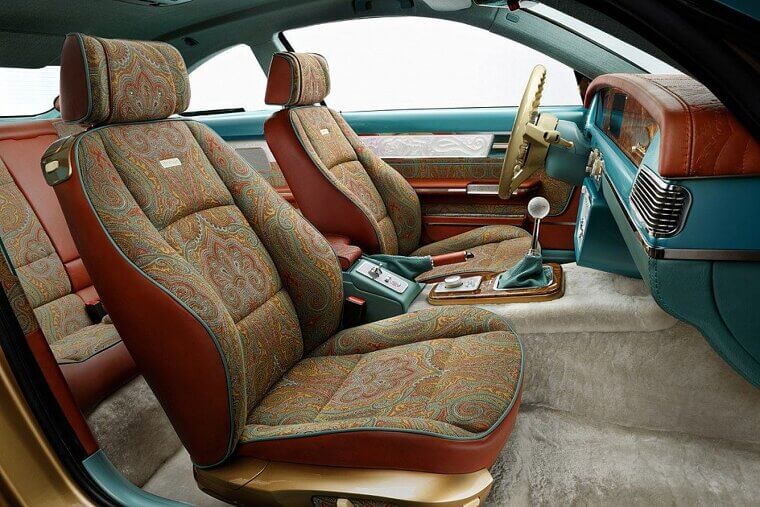
Rolls-Royce Phantom limousines offered similar dictation setups through coachbuilder Mulliner Park Ward. The idea that someone was dictating corporate memos at 70 mph on the interstate is somehow both impressive and deeply exhausting.
Transparent Roof Panels on Station Wagons
Ford's Country Squire and GM's Kingswood Estate both offered transparent roof panels — essentially large tinted glass inserts in the station wagon roof — as factory options in the late 1960s and early '70s. The idea was to give rear passengers a sky view during family road trips. In practice, the panels turned the rear compartment into a greenhouse. Summer road trips became endurance events. The glass also developed stress cracks along the seal edges after a few years, and replacements were expensive and hard to source. Buyers ordered them anyway.
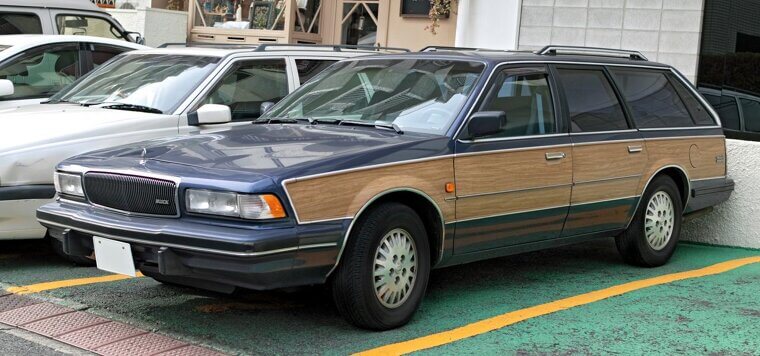
GM called their version the 'Vista Roof' on certain Kingswood and Caprice Estate wagons. The option added roughly $200 to the sticker price and approximately 15 degrees Fahrenheit to the rear passenger experience in July.
Dashboard-Mounted 8-Track Players
The 8-track player had a window of cultural dominance so narrow — roughly 1966 to 1978 — that it's remarkable how thoroughly it conquered the factory audio option sheet. Ford was the first major automaker to offer a factory 8-track in 1966, partnering with Motorola for an under-dash unit. Within two years, GM and Chrysler followed. The format had one famous flaw: tracks changed mid-song, sometimes mid-word, with a loud mechanical clunk. Factory-installed units added this experience to your new car purchase for about $130.
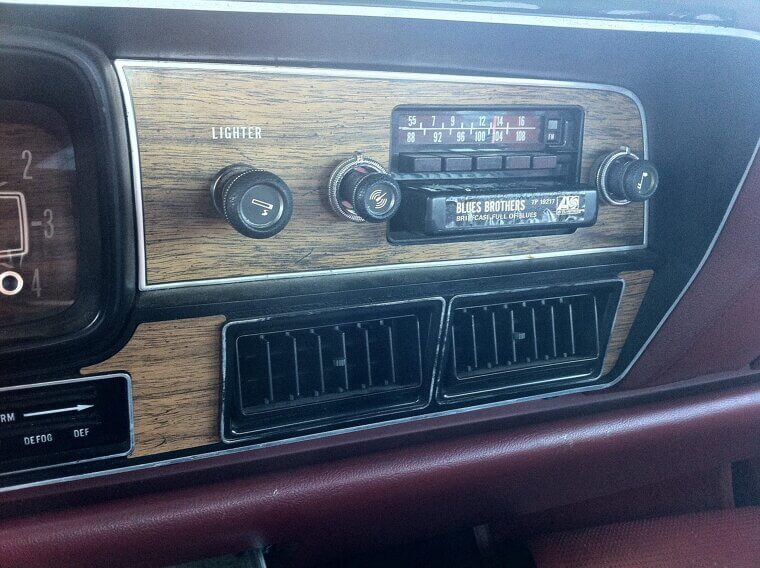
The 8-track's death was swift once cassette decks arrived in the late 1970s. Many factory 8-track head units were dealer-swapped for cassette players before delivery, leaving a generation of factory radio openings filled with mismatched aftermarket hardware.
Factory Dual Exhaust Tips as Upgrades
Dual exhaust tips as a factory upgrade option sounds like table stakes today, but in the 1950s and early '60s, it was a genuine performance signal — and occasionally a cosmetic fraud. Several automakers offered 'dual exhaust appearance packages' that added chrome tips and chrome-trimmed tail pipes to cars that still had single exhaust systems underneath. The sound was identical. The look implied otherwise. Buyers who understood what they were buying ordered it anyway because the chrome tips genuinely looked great. Buyers who didn't understand paid for theater.
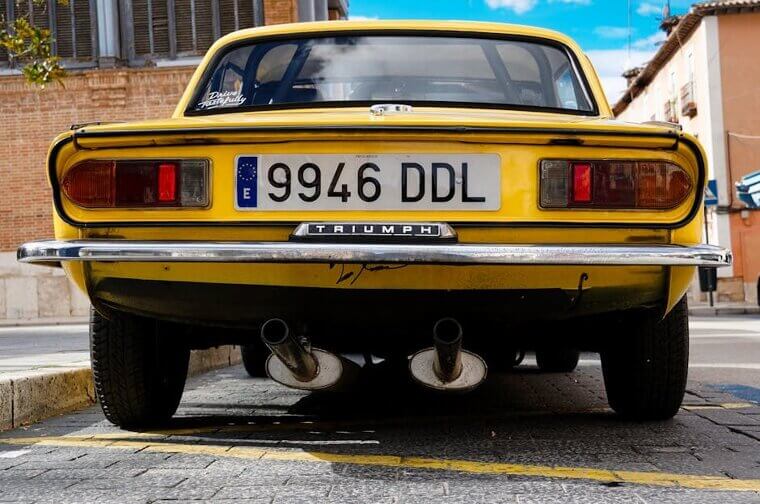
True dual exhaust systems — separate pipes from each cylinder bank — were a separate, more expensive option. The appearance package existed specifically because the real thing cost three times as much and required exhaust routing changes.
Exterior Fake Spare Tires on Trunks
The Continental spare tire kit — a decorative housing mounted on the trunk lid to simulate an external spare — became so popular in the 1950s that it spawned an entire aftermarket industry. But the factory versions, offered by Chrysler and Lincoln, were the originals. They added weight, created water traps, and made trunk access awkward. They also looked absolutely magnificent in a certain chrome-and-tailfin context that made practical objections seem small-minded. Lincoln eventually built the look into the car's actual body design, which is the automotive equivalent of admitting you've lost the argument.
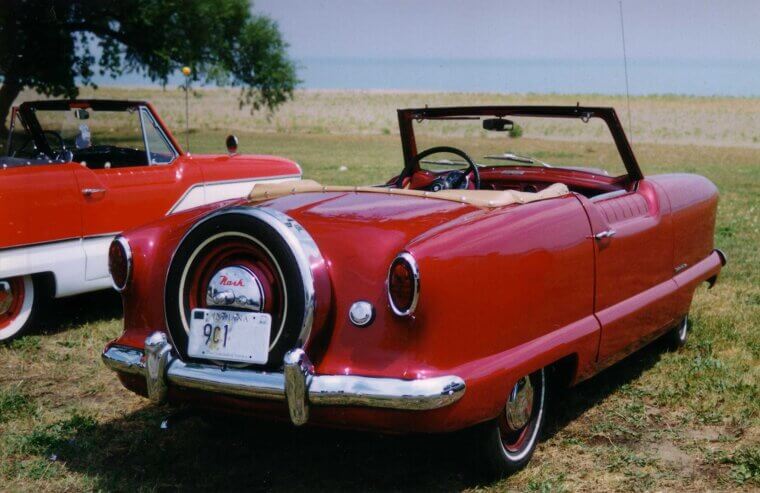
A factory Continental kit added between 40 and 60 pounds to a car's rear end. On cars already struggling with understeer, this was noticeable. On cars that looked this good parked in a driveway, it was considered acceptable.
Heated Windshields Long Before Their Time
Heated windshields — using an electrical element embedded in the glass to melt ice from the inside — sound like a recent European innovation. Ford actually offered an electrically heated windshield on the 1959 Thunderbird as a factory option. It used a fine wire grid embedded in the laminated glass. It worked. It also occasionally created visible distortion in certain lighting conditions, and the wiring connections at the glass edge were prone to failure in cold climates — which is exactly where you needed the heated windshield most. Ford quietly dropped it after two model years.
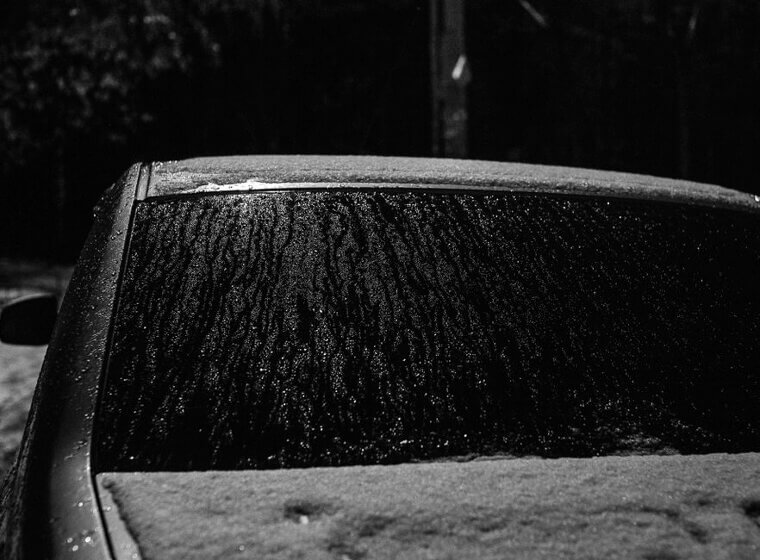
Jaguar and Citroën also experimented with heated windshield technology in the late 1950s and early '60s. The technology essentially disappeared for 30 years before returning in modern form on Ford's Quickclear system in the 1990s.
Factory-Installed Telephone Options in Cars
In-car telephones were available as factory options on Cadillac and Lincoln limousines as far back as the late 1940s, using radio-telephone technology that required a dedicated operator connection. By the 1970s, mobile radiotelephone systems — bulky, expensive, and requiring a trunk-mounted transceiver — were listed in luxury car option catalogs. A factory mobile phone installation on a 1975 Cadillac Fleetwood could cost $3,000 or more. Calls were routed through a dispatcher. Privacy was nonexistent. Wealthy buyers ordered them without hesitation.
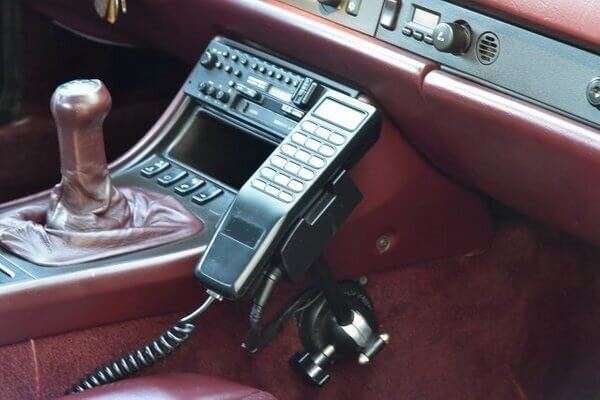
The first true cellular car phone option appeared on the 1984 Motorola DynaTAC-equipped vehicles. Before that, every 'car phone' was a radio system with a human operator in the middle of every call.
Motorized Antenna Masts on Sedans
Power-retractable antenna masts — where the antenna rose automatically when the radio was switched on and retracted when it was switched off — were a genuine factory option on GM and Ford luxury cars from the mid-1960s onward. The mechanism used a small electric motor and a nylon rack that drove the antenna sections up and down. The motor was reliable for about three years. After that, the antenna would stick in one position, usually fully extended, which meant it remained up through every car wash until it snapped off entirely.
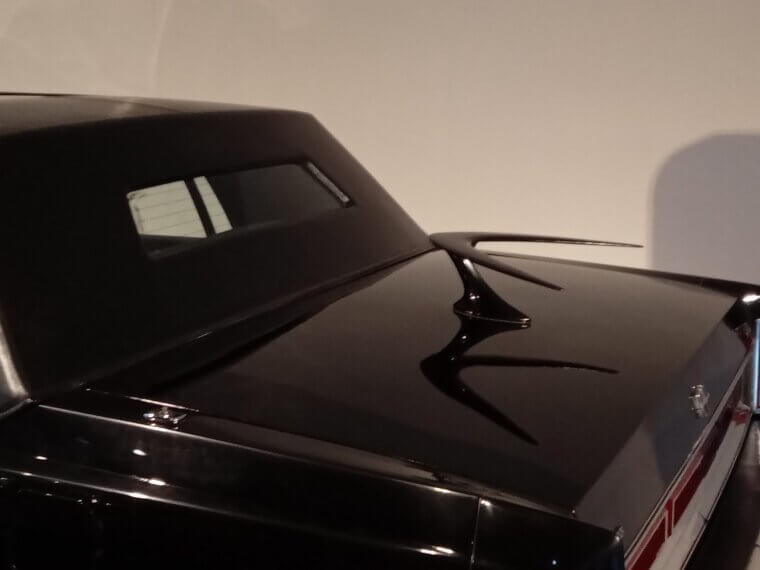
Cadillac's motorized antenna was standard equipment on the DeVille and Fleetwood by 1968. The replacement antenna mast assembly — the nylon rack and sections — became one of the most commonly sold Cadillac dealer parts through the 1980s.
Illuminated Hood Ornaments at Night
Rolls-Royce's iconic hood ornament has been illuminated since the 1950s on certain coachbuilt models. But the factory-illuminated hood ornament as a mainstream option reached its peak on American luxury cars in the 1960s, when Cadillac and Chrysler Imperial both offered versions where the hood ornament contained a small bulb powered through the grille wiring. At night, the ornament glowed. It was theatrical, expensive to repair when the connection corroded, and completely wonderful. Cadillac's version became one of the brand's most recognizable nighttime signatures.
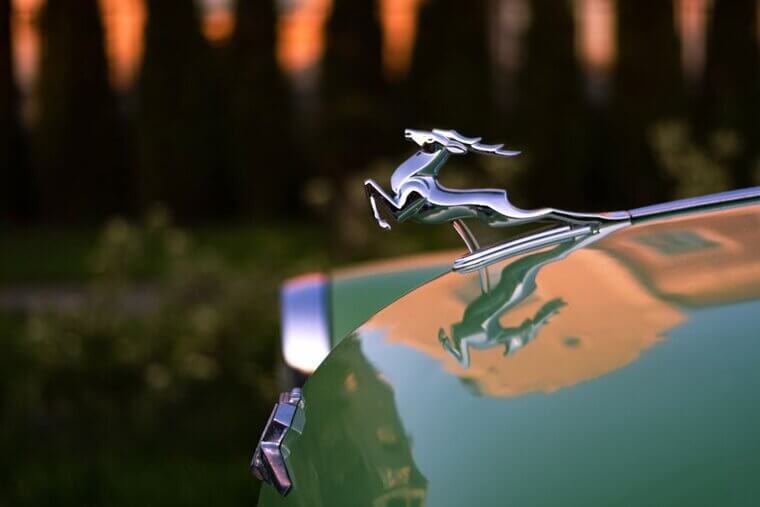
The wiring connection for illuminated hood ornaments ran through the hood hinge area, where repeated flexing eventually cracked the insulation. Most surviving examples have been rewired at least once using modern silicone-jacketed wire.
Factory-Offered Picnic Tables for Trunks
Ford offered a genuine fold-out picnic table as a factory option on the Country Squire station wagon in the early 1960s. The table stored in the tailgate area and deployed to create a surface for roadside meals. It sounds charming. It was charming. It was also made of painted steel that rusted if anyone spilled lemonade on it, which they did, because children. The table's mounting hardware was integrated into the tailgate structure, meaning a damaged table required tailgate disassembly to replace. Ford sold thousands of them to optimistic families.
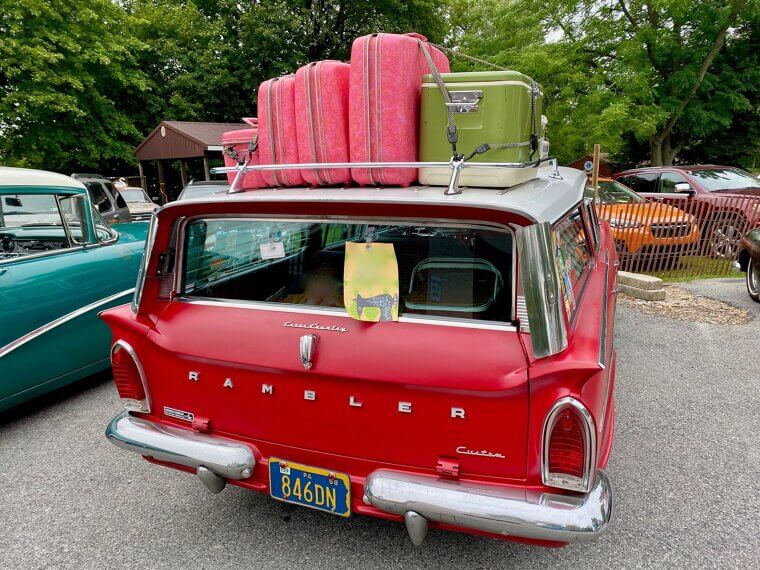
The Ford Country Squire picnic table option was priced at approximately $32 in 1962. Adjusted for inflation, that's about $320 today — a reasonable price for a piece of American family road trip mythology that rusted within three summers.
Built-In Sunscreen Dispensers on Visors
This one is so specific it sounds made up: a factory-installed sunscreen dispenser, mounted in the sun visor, was offered as a dealer-installed option on certain Chrysler and Lincoln models in the early 1980s. A small tube of SPF lotion was held in a visor-mounted bracket with a push-pump dispenser. The option was part of a broader 'personal care' accessory package that also included a tissue holder and a small mirror light. It lasted approximately two model years before disappearing without explanation from the options catalog.
The sunscreen dispenser option was priced at about $45 and included one tube of branded lotion. Replacement tubes were theoretically available at dealerships. In practice, most owners just used whatever sunscreen they had at home and ignored the dispenser entirely.
Retractable Headrests With Built-In Speakers
Retractable headrests with built-in speakers were offered on certain Cadillac and Lincoln executive packages in the late 1970s and early '80s. The headrest contained small full-range speakers connected to the rear audio zone of the car's sound system. A switch in the armrest controlled volume independently of the front speakers. The concept was sound — pun intended. The execution involved routing speaker wire through the headrest pivot mechanism, which meant every adjustment of the headrest angle stressed the wire connections. Intermittent audio followed, usually during important business calls.
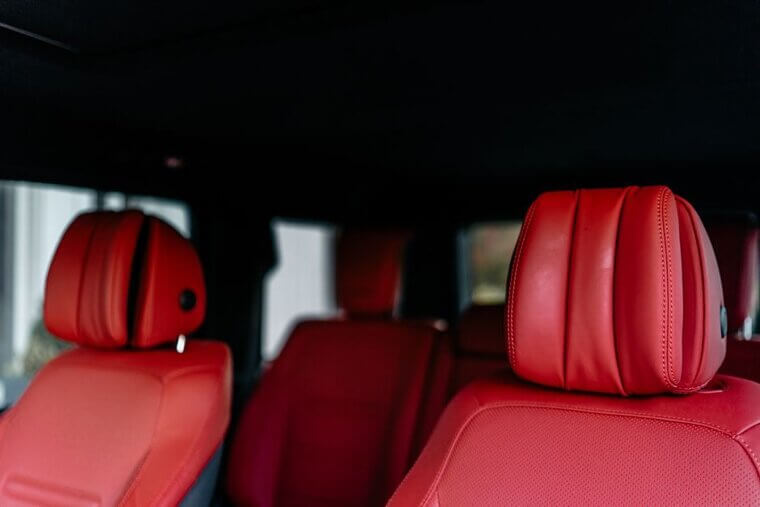
Becker and Blaupunkt both supplied speaker headrest systems to European luxury car programs simultaneously. The technology eventually matured into the active noise-canceling headrest systems found in modern business-class aircraft seats.
Glow-in-the-Dark Dashboard Instrument Panels
Radium-painted instrument panels glowed in the dark, which was genuinely useful for nighttime driving before dashboard lighting became standard. What was less useful was the radium. Early 20th century gauges used radium paint for luminosity — the same material used on watch dials by workers who were famously, tragically harmed by it. By the postwar era, safer phosphorescent compounds replaced radium in factory instruments. But the legacy of glowing dashboards persisted, and several manufacturers offered enhanced glow-in-the-dark gauge packages through the 1960s using safe tritium and phosphor compounds.
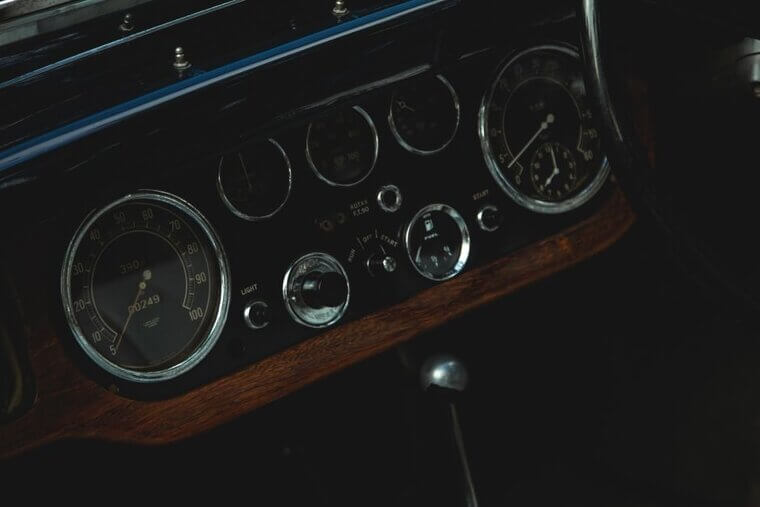
The shift from radium to phosphorescent paint in automotive instruments happened quietly in the late 1940s. Most buyers never knew the difference. Collectors handling pre-war instruments with original radium dials are advised to take that seriously.
Exterior-Mounted Fog Lights on Bumpers
Fog lights were a factory option long before they became a styling cliché bolted to every economy car bumper. In the 1950s and '60s, genuine fog lights — amber-lensed, low-mounted, with proper beam cutoff — were listed in GM, Ford, and Chrysler dealer catalogs as functional safety options. They cost between $25 and $60 and required a relay switch that was often wired incorrectly by dealer installers, meaning the fog lights came on with the high beams instead of independently. This defeated the entire purpose but looked very purposeful from a distance.
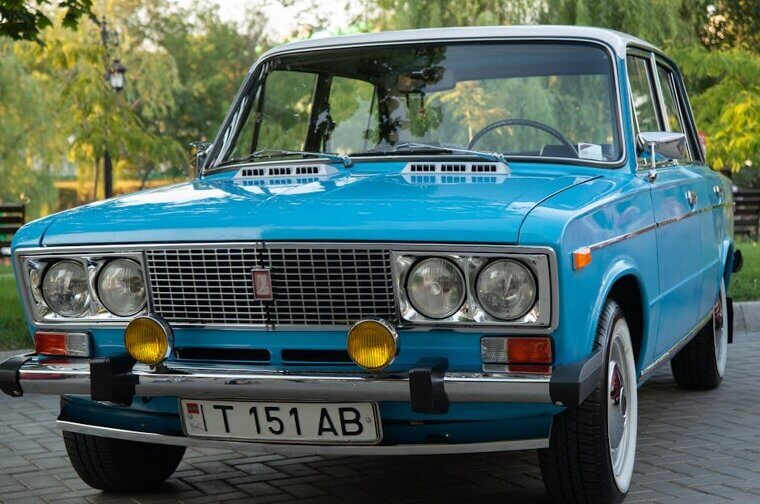
European automakers like Citroën and Saab integrated fog lights into their standard equipment far earlier than American manufacturers. The American market treated them as accessories until the 1980s, when fog lights became a near-universal styling element regardless of actual weather utility.
Factory-Offered Two-Tone Paint Combinations
Two-tone paint was the grand finale of the factory options sheet — the option that could transform a standard sedan into something that looked like it was designed by someone who genuinely cared. GM's 1957 lineup offered over 400 two-tone combinations across its divisions. Some were tasteful. Some involved colors that have never appeared together in nature before or since. The option cost between $25 and $75 depending on the complexity of the dividing line. Restorers today spend thousands chasing correct two-tone combinations, hunting down original paint codes from window stickers that have been faded for 60 years.
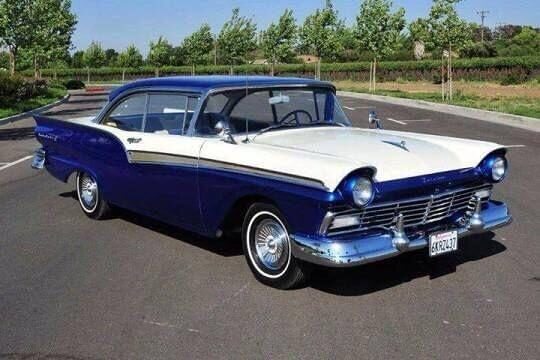
The 1957 Chevrolet Bel Air offered 16 standard colors and dozens of approved two-tone pairings. Unapproved combinations — mixed at the customer's request — exist in the wild and drive concours judges to distraction trying to verify their authenticity.