
Your grandfather's tools are still working. Here's why the ones you buy today might not be.
A Cast Iron Skillet That Never Wears Out
Most non-stick pans are landfill-bound within five years. The fix? A cast iron skillet, which you can find at hardware stores alongside the paint and plumbing supplies. Season it properly — thin layers of flaxseed oil baked at 500°F — and it builds a surface that gets better with every use. The specific detail that matters: dry it completely before storing, and it will never rust.
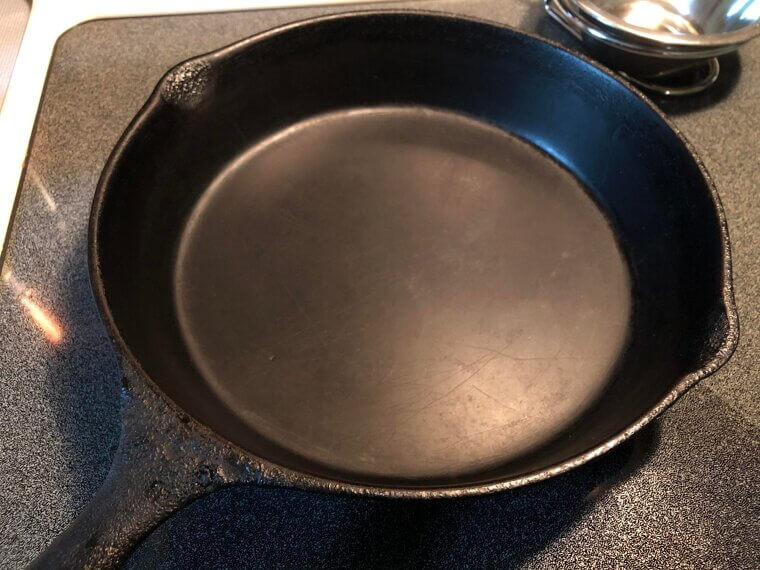
A properly seasoned cast iron skillet improves with every cook. Treat it right and it genuinely becomes a family heirloom.
Channellock Pliers That Grip for Generations
Most people who've used Channellock pliers say they'd pay twice as much without hesitating. The problem with bargain pliers is soft jaws that round off and loose pivot points that wobble under load. Channellock's tongue-and-groove design and high-carbon steel construction hold their geometry decade after decade. The specific fix: buy the 440 model — it's the one professionals keep reaching for.
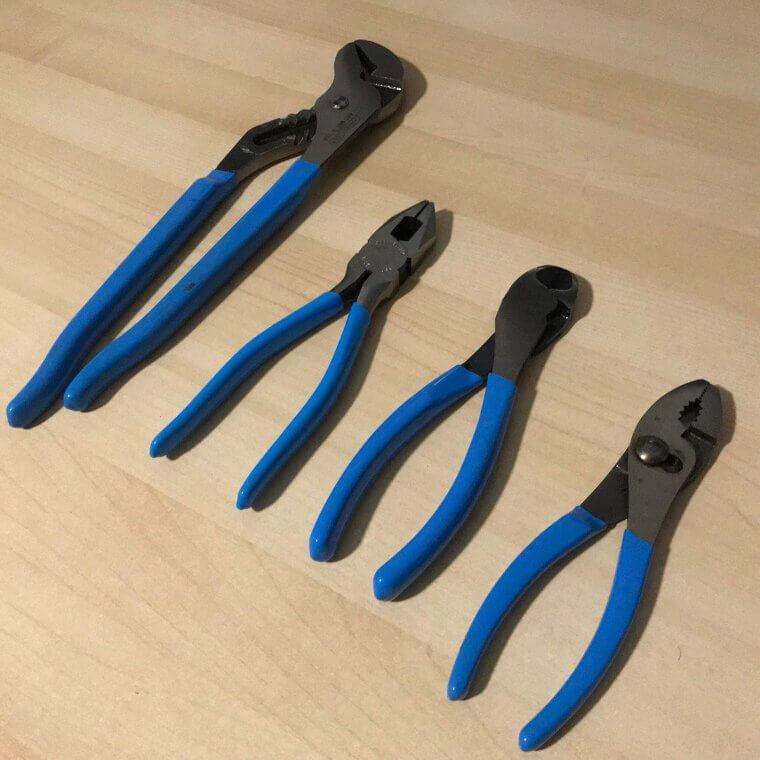
The pivot on a cheap pair loosens within a year. The pivot on a Channellock 440 is still tight when the rest of your toolbox has been replaced twice over.
A Solid Steel Hammer With Real Heft
Cheap hammers flex on impact, sending vibration straight into your wrist and driving nails crooked. A solid steel hammer — forged, not cast — transfers energy cleanly to the nail head every single time. The fix is simple: spend more once instead of replacing a flimsy handle every two years. Look for a drop-forged steel head and a weight between 16 and 20 ounces for general framing and finish work.
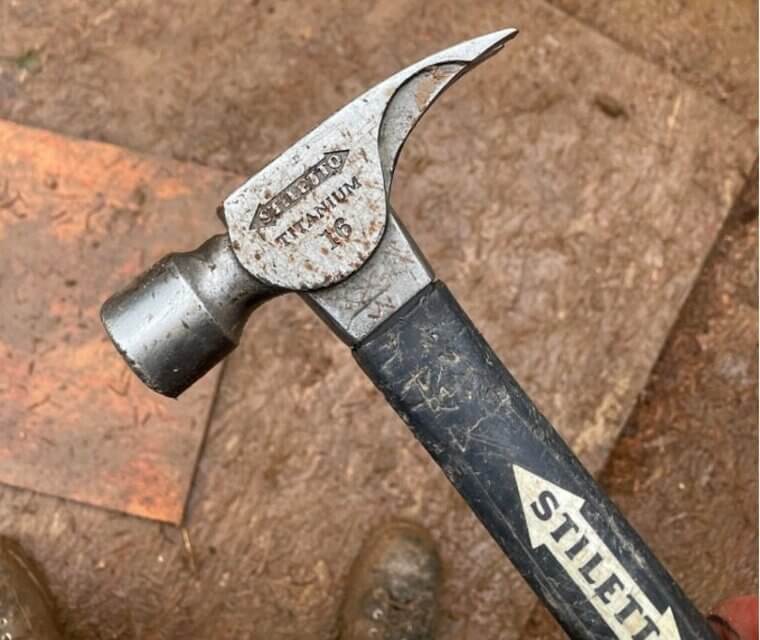
Your grandchildren will argue over who gets it. That's not a metaphor — drop-forged steel heads simply don't wear out on a human timescale.
A Heavy-Duty Extension Cord Worth Keeping
Thin-gauge extension cords overheat, trip breakers, and quietly damage the tools plugged into them. The solution is a heavy-duty cord rated for the amperage you actually use — at minimum 12-gauge for anything running a saw or compressor. The specific detail most people miss: cord length matters as much as gauge. Every extra 25 feet drops voltage, so buy the shortest cord that actually reaches your work, not the longest one that fits the budget.
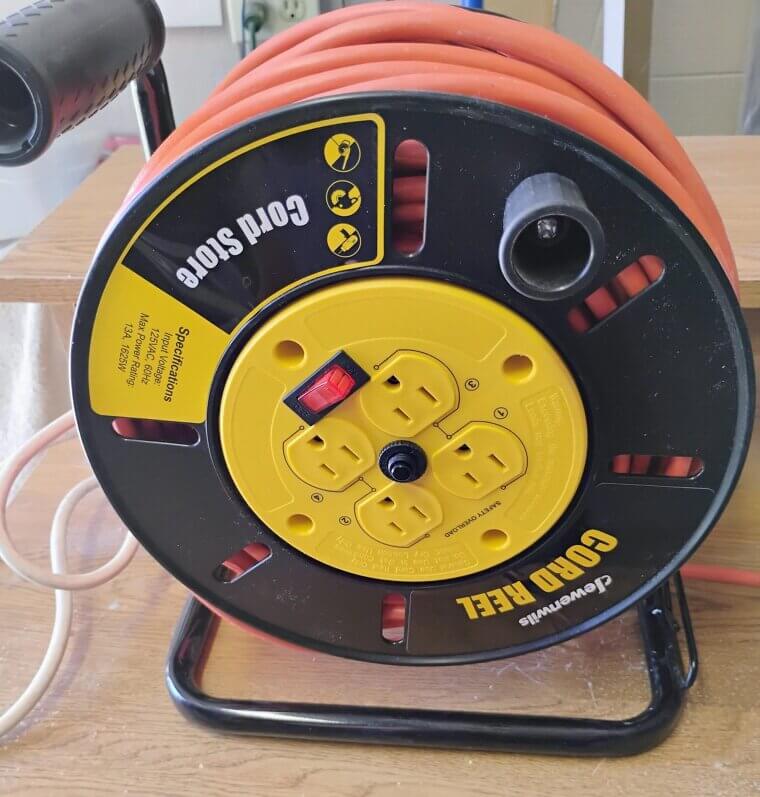
Voltage drop from an undersized cord is invisible and relentless — it shortens motor life, reduces torque, and never shows up on the receipt when your tool dies early.
The Stanley Thermos Built to Last Decades
A thermos dented, scratched, and still keeping coffee scalding hot after thirty years on a job site — that's Stanley's classic vacuum bottle in a nutshell. They've been doing exactly that since 1913. The problem most people face is cheap insulation that fails within a season. Stanley's all-steel construction and double-wall vacuum seal solve it permanently. Look for the green hammertone finish — that's the original formula nobody has improved on.
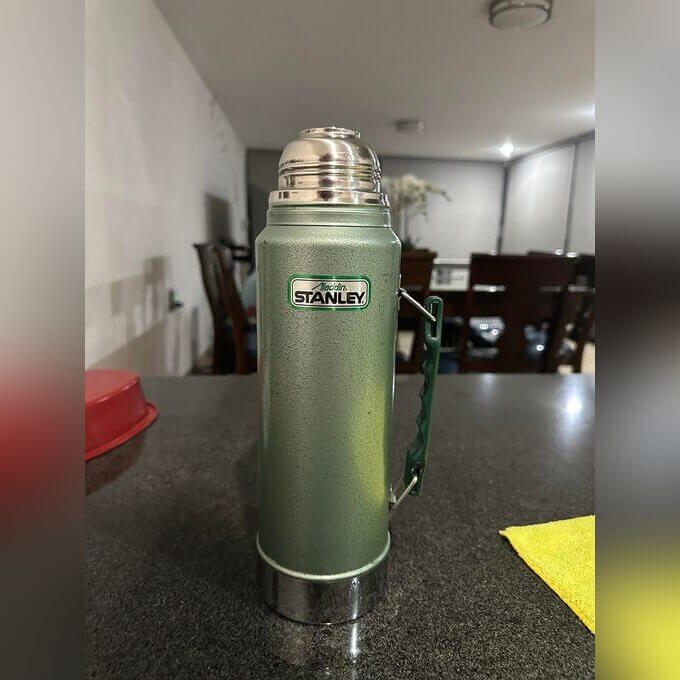
Stanley thermoses hold temperature for up to 24 hours. The original green hammertone model is still the benchmark everything else gets measured against.
The Classic Tape Measure That Never Fails
You've probably walked past a dozen tape measures without noticing that most of them lie. Blade flex, worn hooks, and cheap spring mechanisms add up to measurements that are off by a sixteenth of an inch — enough to ruin a cabinet door or a stair riser. The fix is a tape with a reinforced blade coating and a true-zero hook that moves exactly one blade-thickness when you switch from inside to outside measurements. Stanley FatMax nails this detail.
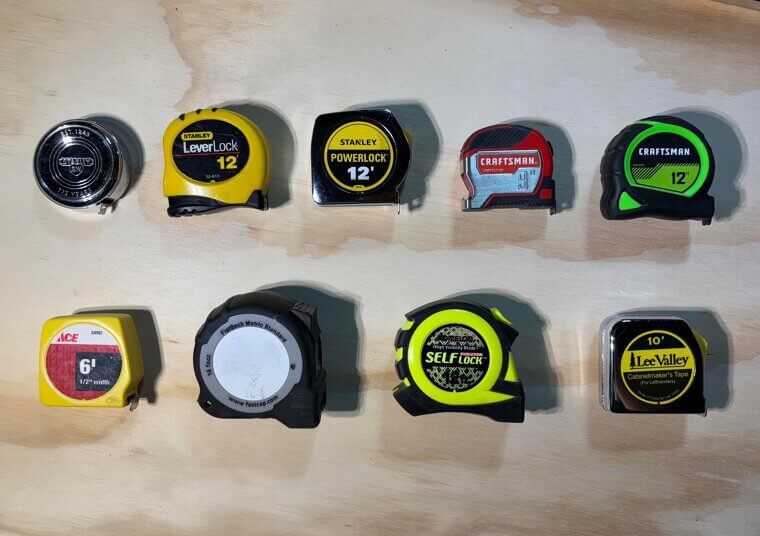
A sixteenth of an inch sounds forgivable until it's a cabinet door that won't close. The tape measure is where every measurement error either starts or stops.
A Solid Wooden Sawhorse Built to Endure
Plastic sawhorses crack in cold weather and wobble under real loads. A solid wooden sawhorse built from 2x4 stock solves both problems permanently — and costs almost nothing to make. The specific detail that determines longevity: use half-lap joints at the leg braces instead of just screws. That single joinery choice takes a sawhorse from a few seasons to a few decades. Cut the legs at 15 degrees and it'll stand steady on any surface.
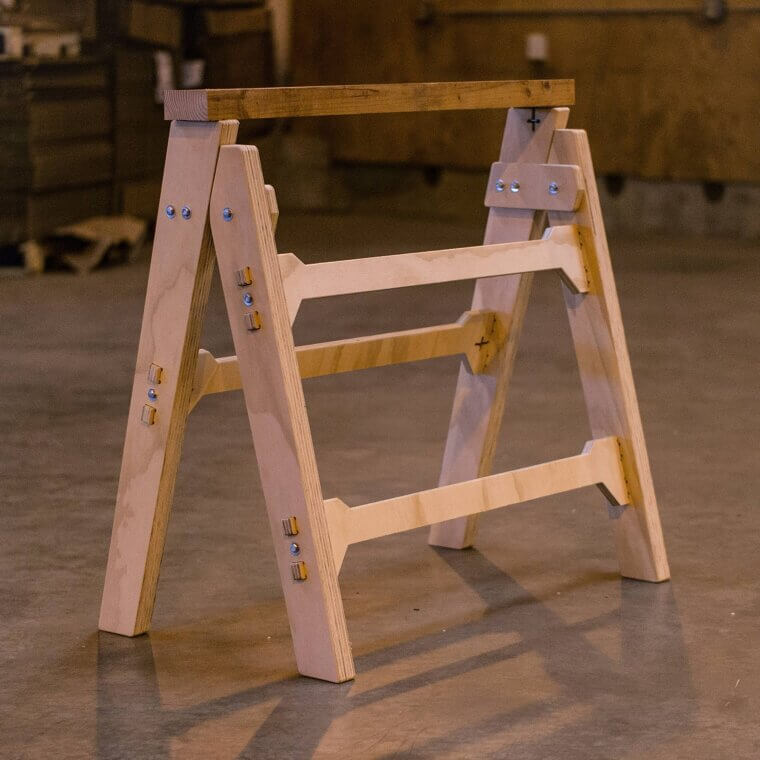
Half-lap joints at the brace points prevent racking under load. That one detail is the difference between furniture and firewood.
Vise-Grip Locking Pliers From Another Era
$12. That's what a pair of Vise-Grip locking pliers cost when they were first introduced in 1924. The design hasn't changed meaningfully since, which tells you everything. The problem they solve is holding something in place while both your hands do something else — a third hand that locks on and doesn't let go. The specific trick most people skip: adjust the jaw tension so it takes firm pressure to close. Too loose and it slips; too tight and it mars the work.
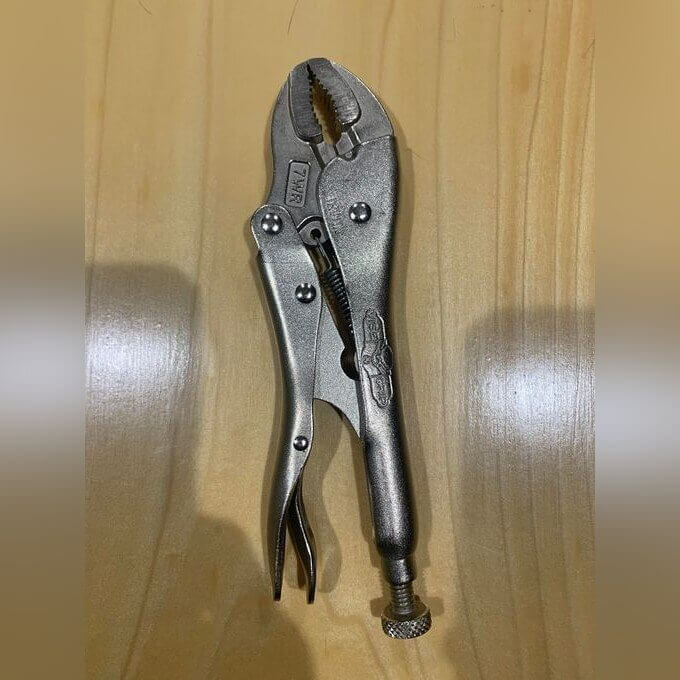
Set jaw tension so the pliers snap shut with firm hand pressure. That adjustment makes every other feature work the way it's supposed to.
A Sturdy Wheelbarrow for Every Season
A flimsy wheelbarrow is one of the most frustrating tools on a job site — wobbly tray, soft handles, a tire that goes flat mid-haul. The fix is a steel-tray model with a pneumatic tire and hardwood handles, not the plastic-bodied versions that crack under a full load of wet concrete. The specific detail worth checking before you buy: look at the leg braces. Welded steel legs outlast bolted ones by years of hard seasonal use.
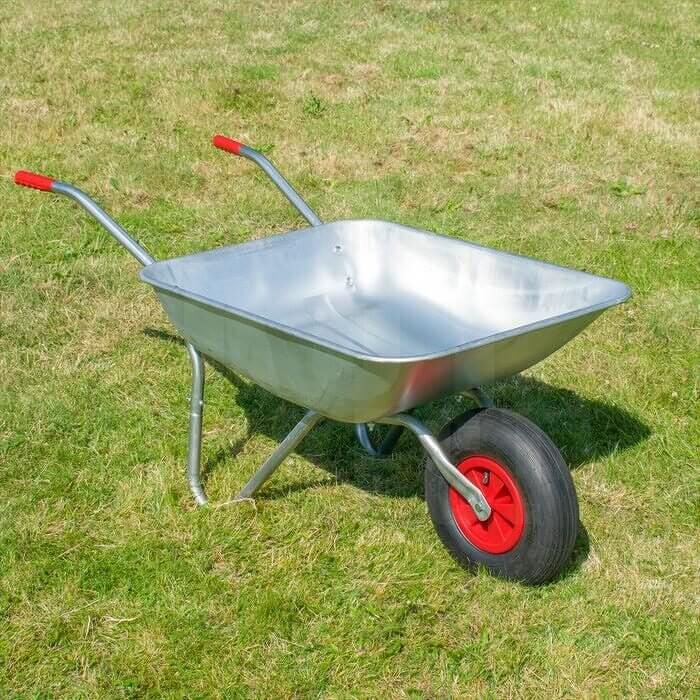
Check the leg welds before you buy. A wheelbarrow that wobbles empty will absolutely collapse full — and always on the day you're moving wet concrete.
The All-Steel Pipe Wrench That Outlasts Trends
This might be the most underrated tool in any plumber's arsenal. Adjustable wrenches slip. Strap wrenches don't have the torque. But an all-steel pipe wrench — a genuine Ridgid, forged and assembled in the USA — bites harder the more you pull. The problem most DIYers face is buying the wrong size. For household plumbing, a 14-inch and an 18-inch cover nearly every situation. Buy both once and you're done for life.
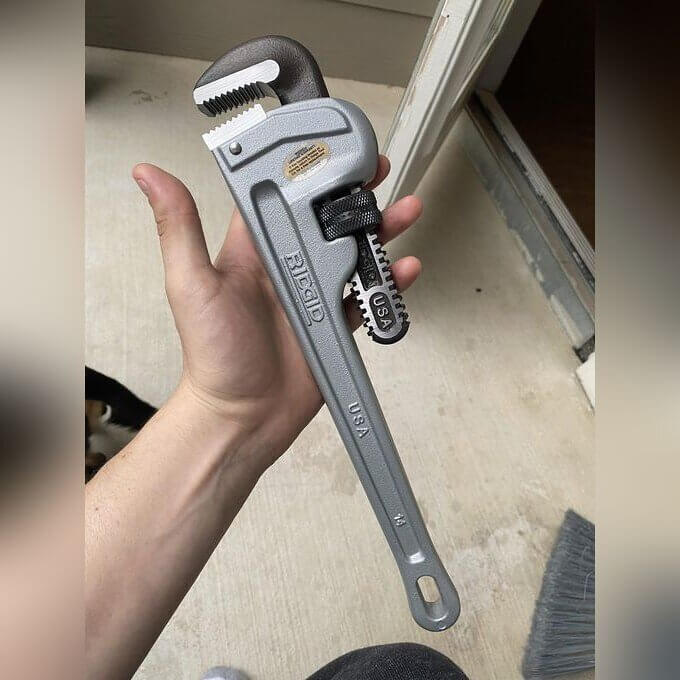
A Ridgid pipe wrench is still made to the same forged-steel standard it was in 1923. That's not marketing — it's why plumbers keep them for decades.
A Solid Wooden Workbench in the Garage
Test builders came back from decades of use with the same verdict: a solid wooden workbench doesn't flex, doesn't vibrate, and doesn't walk across the floor when you're planing hardwood. The problem with metal benches is resonance — they ring under a mallet blow and slide on smooth concrete. A bench built from 4x4 legs and 2x6 top planks, bolted and glued, absorbs impact and stays put. Add a tail vise and you've built the last workbench you'll ever need.
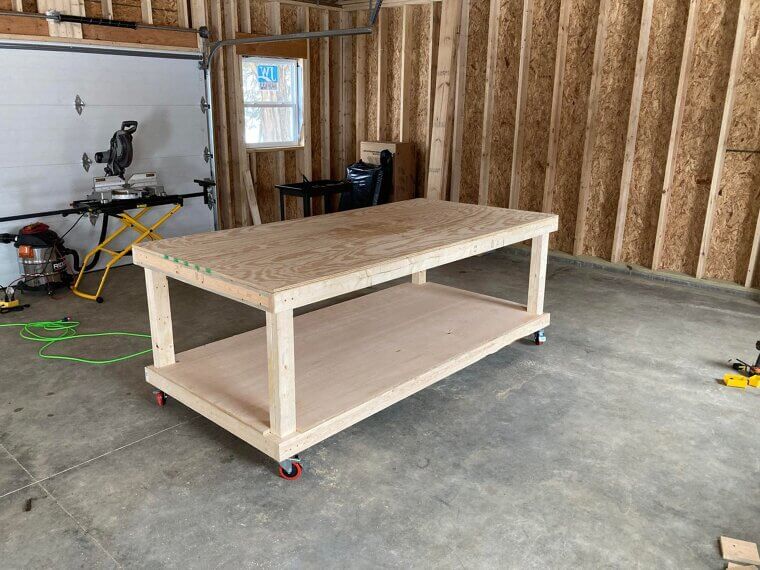
Bolt and glue every joint — don't choose one or the other. That combination is what keeps a wooden workbench rigid for generations of heavy use.
The Level That Keeps Everything Perfectly True
A level that's slightly off is worse than no level at all — it gives you false confidence in crooked work. The fix is a quality spirit level with acrylic vials and machined edges, not the stamped aluminum versions that warp in temperature swings. The specific maintenance detail most people ignore: check your level against itself every few months by flipping it end-for-end on the same surface. If the bubble reads the same both ways, it's still true.
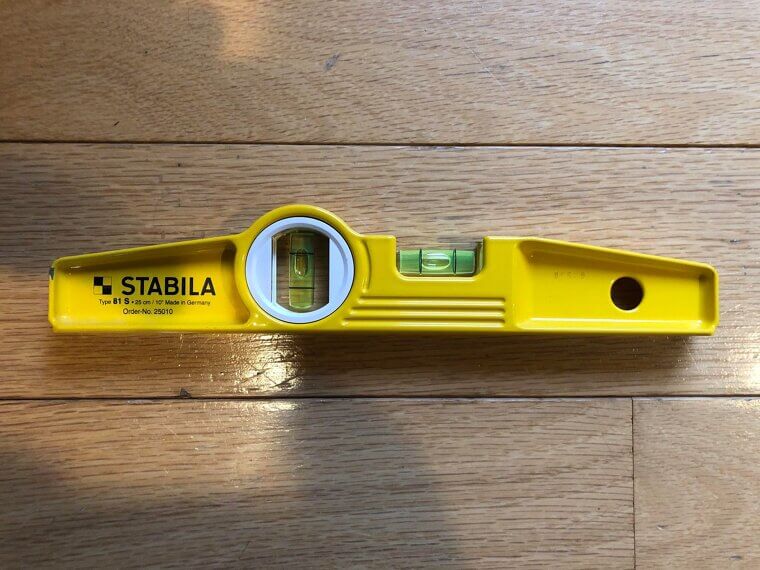
Flip your level end-for-end on the same surface to verify accuracy. If the bubble shifts position, the level needs calibration — or replacement.
A Heavy Bolt Cutter Built Like a Tank
Heavy bolt cutters have one job, and a cheap pair fails at it spectacularly — jaws that dull after a dozen cuts, handles that flex instead of transmitting force. The solution is a pair with compound-action handles and hardened alloy steel jaws. The specific detail most buyers overlook: jaw hardness matters more than jaw size. A properly hardened 18-inch cutter outperforms a soft-jaw 24-inch one on every material except the thickest chain stock.
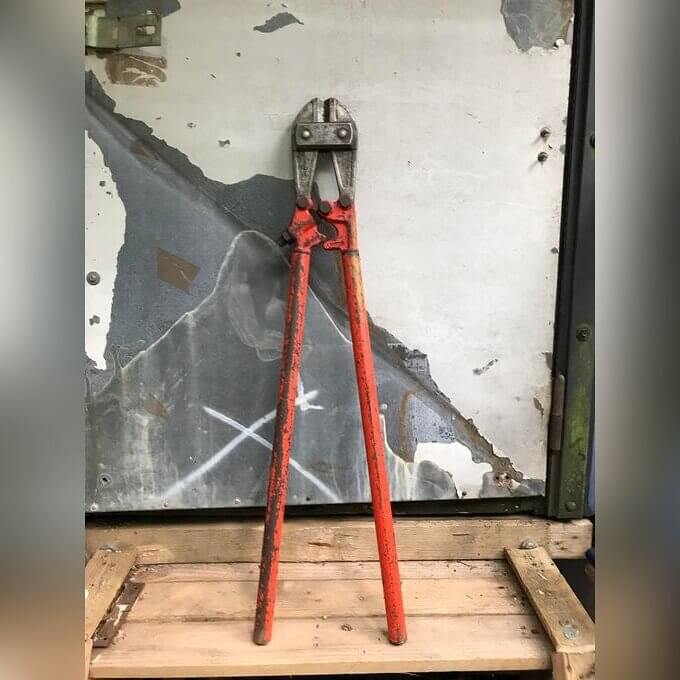
Most people buy bolt cutters by length. Professionals buy them by jaw hardness. That's the entire difference between a tool that works and one that just looks like it should.
The Flat Pry Bar for Every Tough Job
Flat pry bars get abused in ways that would destroy lesser tools — pried against concrete, hammered with a framing hammer, levered under subfloor sheeting. The fix for a pry bar that bends or chips is simple: buy one made from high-carbon steel, not mild steel. The specific detail that separates quality from junk is the finish. A black oxide or heat-treated surface resists corrosion and indicates the steel was properly hardened all the way through.
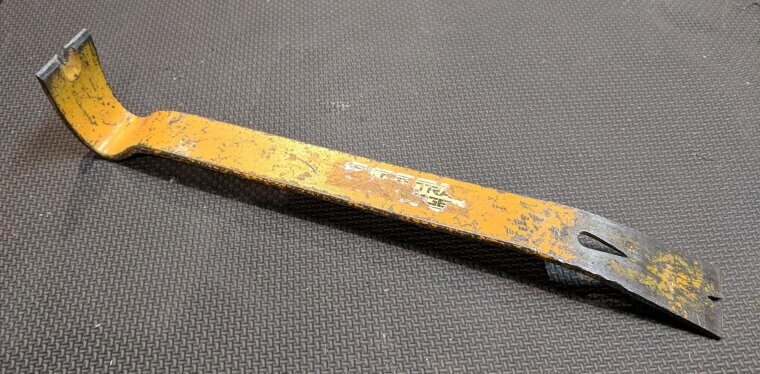
Black oxide finish isn't just cosmetic — it signals properly hardened high-carbon steel underneath. That's the one spec worth checking before you buy.
The Socket Set That Stays in the Family
Some socket sets are still rattling around in their original cases, every piece accounted for, forty years after being bought at a hardware store going-out-of-business sale. That's what chrome-vanadium steel actually delivers. The problem is cheap chrome-plated sets that crack under torque. Chrome-vanadium flexes slightly before it fails, giving you warning instead of a broken knuckle. Buy a set with a lifetime warranty and you'll never buy another.
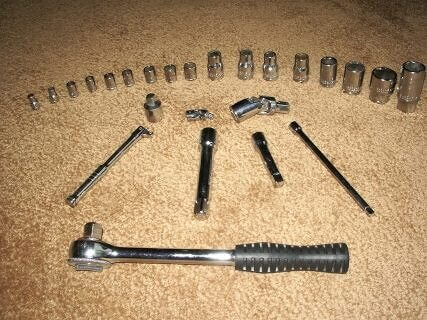
Chrome-vanadium steel flexes under extreme torque instead of shattering. The cheap alternative doesn't warn you — it just lets go, usually at the worst possible moment.
The Utility Knife That Never Lets You Down
You've probably burned through three or four utility knives without thinking much about it. The problem isn't the blade — it's the blade-locking mechanism. Cheap knives let the blade rattle and creep forward under pressure, which is both inaccurate and genuinely dangerous. The fix is a knife with a positive-lock mechanism that holds the blade absolutely rigid at every extension position. Stanley's classic 99E has done this since 1936 and still hasn't been improved on.
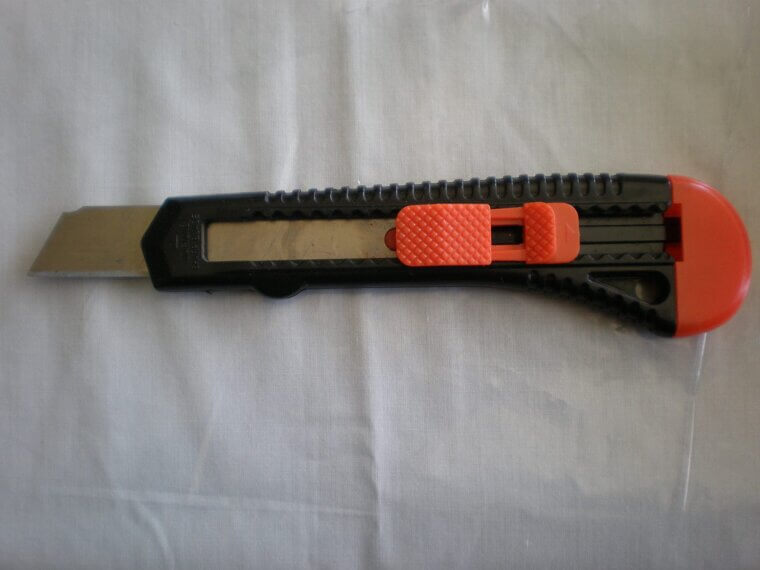
Stanley's 99E has had the same positive-lock mechanism since 1936. The fact that nobody has meaningfully improved on it in nearly ninety years is the review.
A Solid Steel Shovel for Decades of Digging
Cheap shovels have two failure points: the handle breaks at the socket and the blade folds under a full load of wet clay. The fix is a solid steel shovel with a closed-back socket — where the handle is fully encased in steel rather than just pinned — and a tempered blade that springs back instead of bending. The specific detail worth checking in the store: grab the handle near the socket and try to twist it. Any movement means it'll fail within a season.
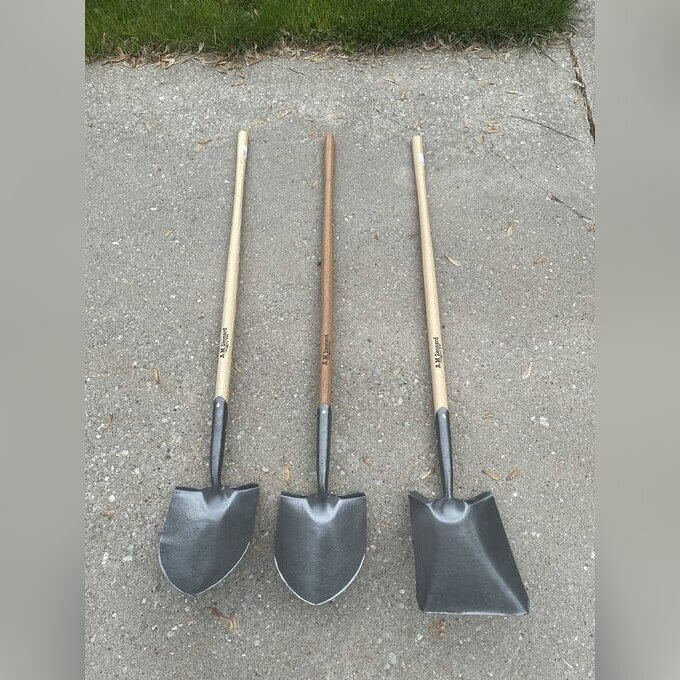
A closed-back socket encases the handle in steel on all sides. That design eliminates the number-one failure point on every bargain shovel ever made.
A Wooden-Handled Axe Built for Real Work
A wooden-handled axe is a tool that rewards maintenance in a way fiberglass and composite handles never do. The problem with synthetic handles is that when they fail, they fail completely — there's no warning, no repair, just replacement. A hickory handle, by contrast, shows stress before it breaks and can be replaced for under $20 at any hardware store. The specific detail that matters: hang the head with a wooden wedge and a steel cross-wedge, never epoxy alone.
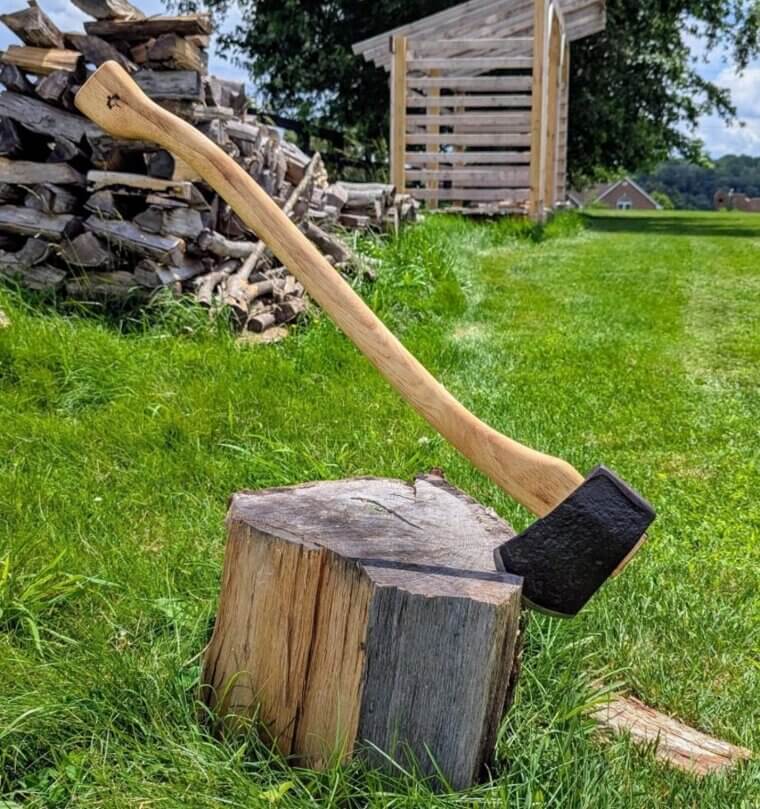
A hickory handle that's starting to fail will tell you — it creaks, it flexes, it shows stress. A composite handle that's starting to fail just waits for the worst moment.
The Classic Hacksaw for Cutting Through Anything
Would you believe a hacksaw frame from the 1970s still cuts faster and truer than most modern versions? The reason is frame tension. A quality hacksaw holds the blade under significant tension — around 50,000 PSI — which prevents blade flex and keeps the cut tracking straight. The problem with cheap frames is that they can't maintain that tension, so the blade wanders. The fix: buy a frame with a wing-nut tensioner you can actually crank down hard, and use 18 TPI blades for most metal work.
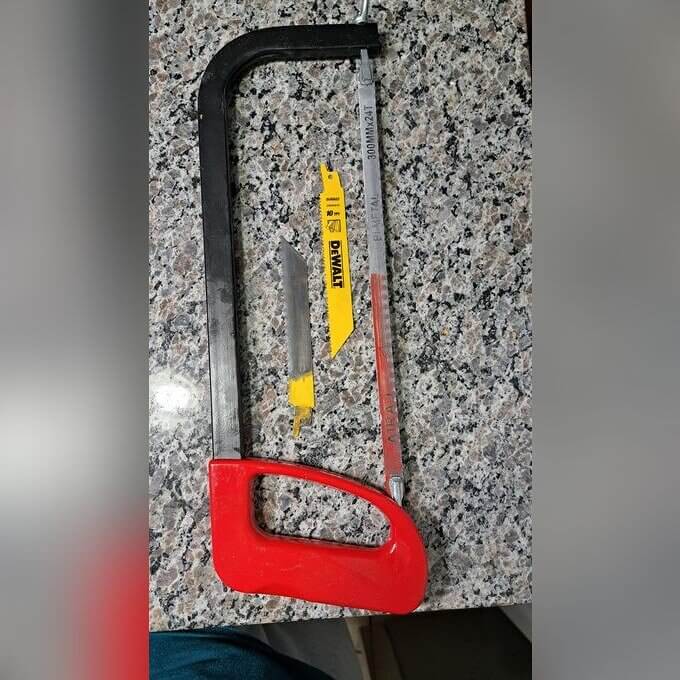
Blade tension is the single most important factor in hacksaw performance. A frame that can't hold tension properly is just an expensive blade holder.
A Rubber Mallet That Softens Every Blow
Rubber mallets solve a specific, infuriating problem: you need to move something — a chisel handle, a drawer box, a tile — without leaving a mark. Steel hammers dent. Dead-blow mallets are great but expensive. A solid rubber mallet from the hardware store costs almost nothing and lasts for years if you keep it out of direct sunlight, which degrades the rubber. The specific tip: use the face, not the side, and it'll stay round and true through thousands of strikes.
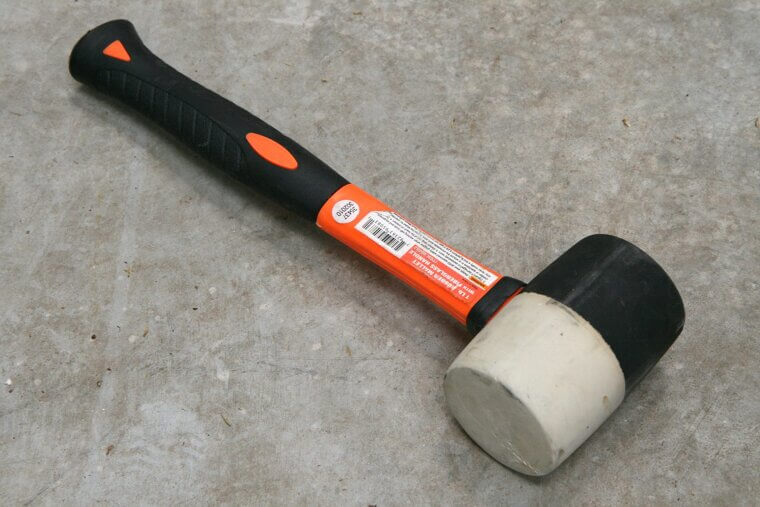
Store rubber mallets away from UV light and heat sources. Direct sunlight hardens and cracks the rubber faster than any amount of actual use.
The Hand Plane That Smooths Wood Beautifully
Most people think hand planes are antiques replaced by power tools. They're wrong. A hand plane does things a random-orbit sander and a thickness planer can't — it levels glue-up joints, fits doors in humid weather, and leaves a surface so smooth it doesn't need sandpaper. The problem is setup. A new plane needs its sole flattened and its iron sharpened before it works properly. Do that once, and a quality Stanley or Lie-Nielsen plane will outlast every power tool in your shop.
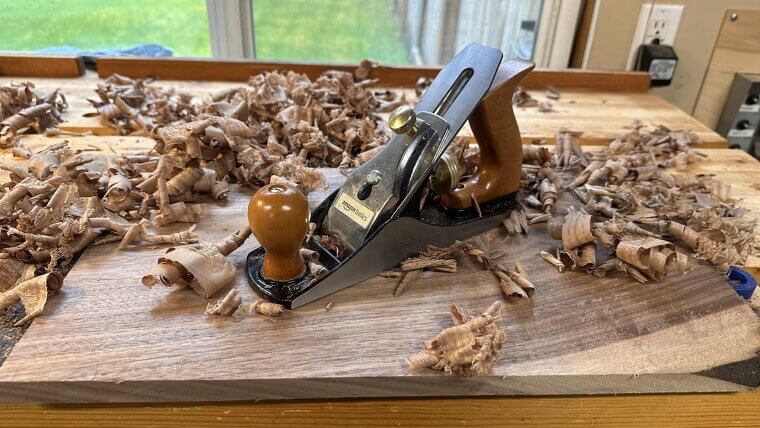
Flatten the sole on a sheet of wet-dry sandpaper on glass before the first use. That one setup step transforms a new plane from frustrating to phenomenal.
A Sturdy Step Ladder for Every Household Job
A step ladder that wobbles is one of the most dangerous tools in any home. The problem is usually worn or missing rubber feet — a two-dollar fix that most people ignore until something goes wrong. A solid fiberglass step ladder with type-I or type-IA load rating handles 250 to 300 pounds and resists both electricity and weather. The specific detail worth checking: look at the spreader braces. If they don't lock fully open, the ladder isn't safe to stand on.
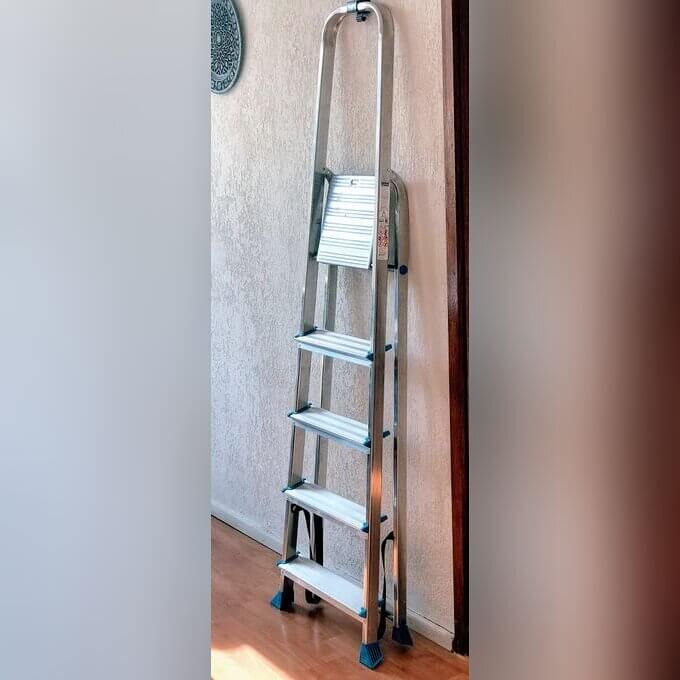
Replace worn rubber feet before the first use of the season — not after a close call. It's a two-dollar fix that keeps a $200 ladder safe for decades.
The Torque Wrench Every Mechanic Swears By
Overtightened lug nuts crack wheel studs. Under-tightened ones let wheels come loose. A torque wrench solves both problems with a satisfying click when you hit the right spec. The fix most mechanics learn too late: never use a torque wrench to loosen fasteners — it damages the internal mechanism and throws off calibration. The specific maintenance tip: store it at its lowest setting, not zero, to keep the spring from taking a permanent set and reading high.
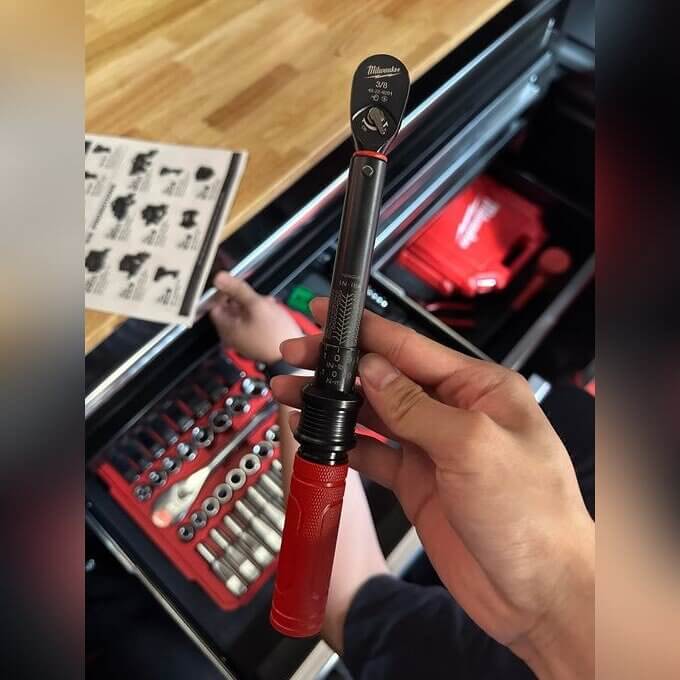
Store your torque wrench at its lowest setting, not fully backed off. That one habit keeps the internal spring calibrated for years of accurate readings.
A Solid Steel Chisel for Woodworking Perfection
A dull chisel is more dangerous than a sharp one — it requires more force, slips more easily, and tears wood fibers instead of cutting them. The fix is a sharpening routine: flatten the back on a 400-grit waterstone, then work through 1000 and 4000 grit on the bevel. The specific detail that separates a lifetime chisel from a disposable one is steel grade. Look for O1 or A2 tool steel — they hold an edge far longer than the chrome-vanadium used in budget sets.
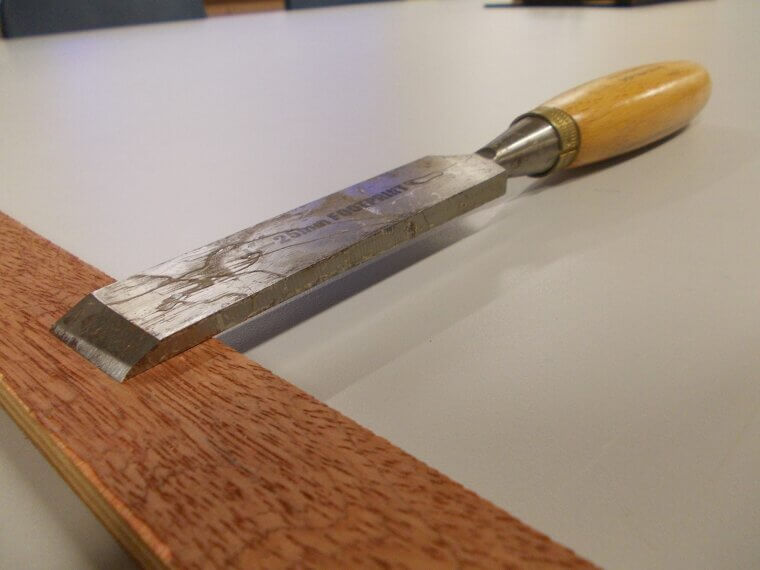
O1 steel takes a finer edge; A2 holds it longer under punishment. Pick the wrong one for your work style and you'll be sharpening twice as often as you need to.
A Heavy-Duty C-Clamp for Holding Things Tight
Glue-ups fail when clamp pressure is uneven. Joints open when the clamp loosens overnight. A heavy-duty C-clamp — all steel, with a swivel pad — applies more consistent pressure than any quick-release clamp and holds it indefinitely without creep. The specific detail most people get wrong: don't overtighten. Enough pressure to close the joint and squeeze out a thin bead of glue is exactly right. More than that crushes wood fibers and starves the joint of adhesive.
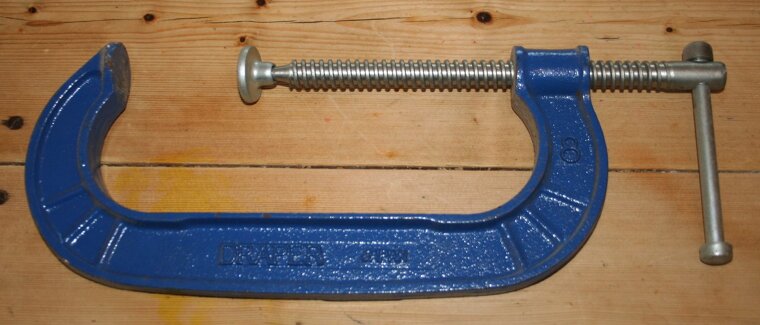
Squeeze until a thin bead of glue appears at the joint line, then stop. Over-clamping is as bad as under-clamping — it starves the joint of adhesive.
The Scratch Awl That Marks Every Surface
Pencil lines smear. Chalk lines are hard to see on dark wood. A scratch awl leaves a precise, permanent mark exactly where you need it — and never needs sharpening the way a pencil does. The problem most woodworkers face is using the awl to start screws, which rounds the tip and ruins its marking accuracy. Keep one awl strictly for layout work and use a separate punch for screws. That single habit keeps the tip sharp for decades.
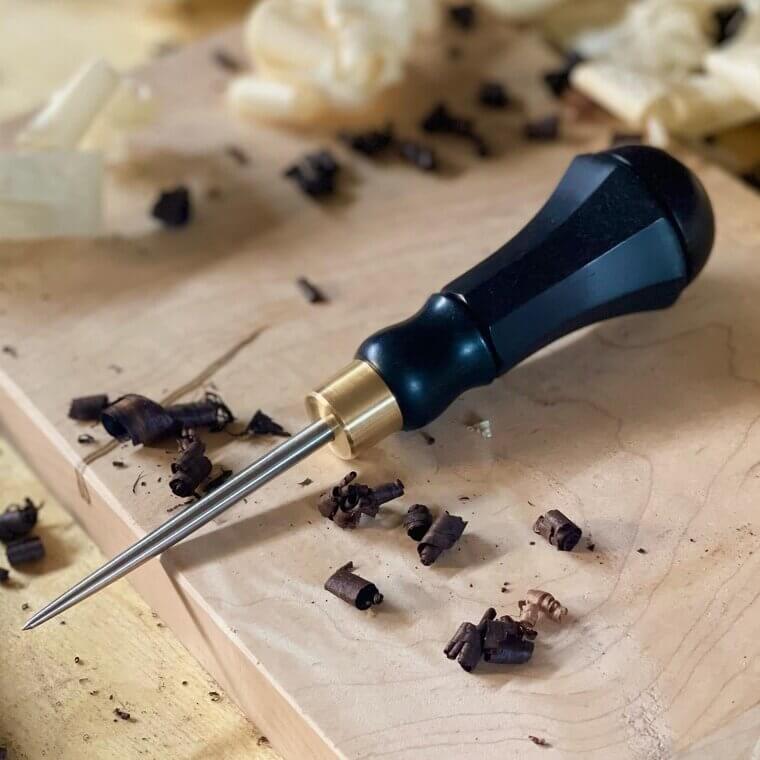
One awl for layout, one punch for screws — sounds fussy until you've ruined a fine tip and spent twenty minutes trying to mark a dovetail with a blunted point.
The Speed Square Every Carpenter Reaches For
Every carpenter reaches for a speed square more than almost any other tool — for marking cut lines, setting saw angles, and checking corners in a hurry. The problem with cheap versions is that the lip warps, throwing every measurement off by a degree or two. A solid aluminum speed square from Swanson — the company that invented the tool in 1925 — stays true through decades of job-site abuse. The specific tip: use the diagonal scale for roof pitches without doing any math.
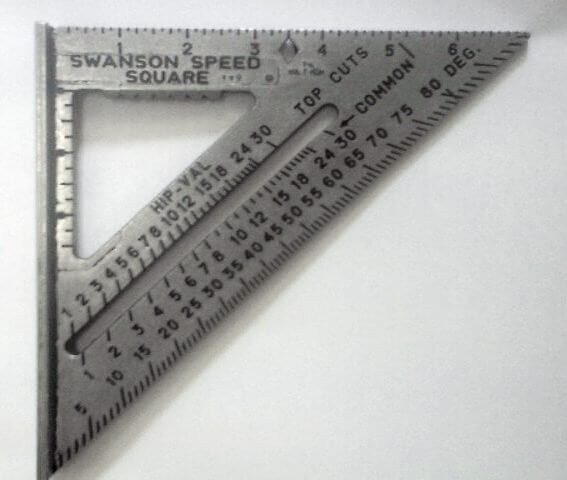
Swanson invented the speed square in 1925 and still makes the best one. A century of competition and nobody has found a meaningful improvement. That's a strong argument for just buying the original.
A Solid Tin Snips for Cutting Sheet Metal
Sheet metal laughs at utility knives and defeats most saws. Tin snips are the specific fix — but only if you buy the right type. Aviation snips come in three colors: red for left curves, green for right curves, and yellow for straight cuts. Most hardware stores sell all three as a set for less than $30. The specific detail that extends their life: never use them on wire or hardened rod. That single misuse chips the blade edge and ruins the shear action permanently.
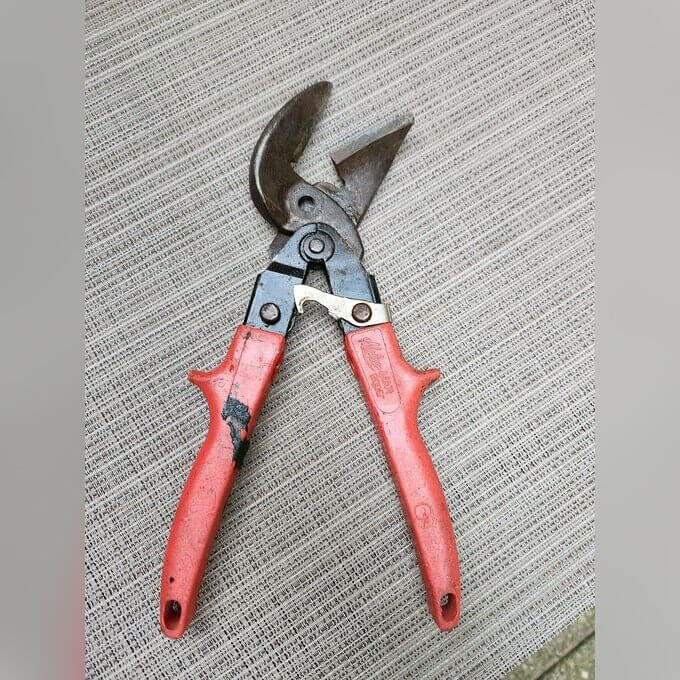
Red, green, and yellow aviation snips each cut a different direction — they're not interchangeable. Buying the set once covers every sheet metal cut you'll ever make.
The Hand Saw That Cuts Straight Every Time
Power saws bind, kick back, and require extension cords. A quality hand saw requires none of those things and cuts just as cleanly when the blade is sharp and the stroke is controlled. The problem most people have with hand saws is pushing too hard — the saw cuts on the pull stroke or the push stroke depending on tooth geometry, and fighting it tires you out fast. The fix: let the weight of the saw do the work. A sharp blade in a relaxed hand cuts faster than a dull one forced through.
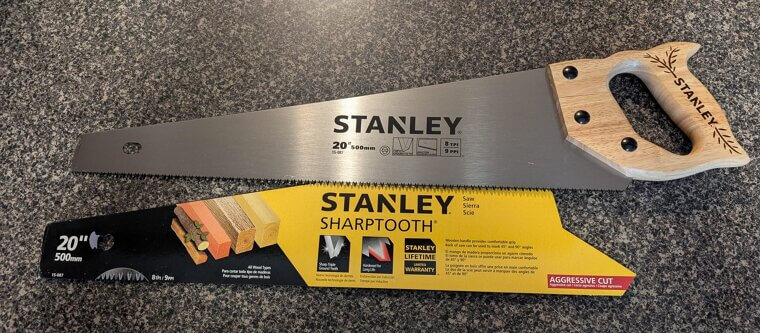
Let the saw's own weight provide the cutting force — don't push down. That single technique adjustment makes a hand saw feel effortless and leaves a cleaner kerf.
A Wooden Mallet for Joinery Done Right
Joinery done with a steel hammer splits mortise walls and damages chisel handles. A wooden mallet delivers the same driving force without the shock that blows apart delicate joinery. The specific detail that makes wooden mallets worth keeping: the head should be slightly heavier than feels natural, because the slower, softer impact gives you more control over chisel depth than a fast steel strike. Lignum vitae or hard maple are the traditional head materials — both last indefinitely.
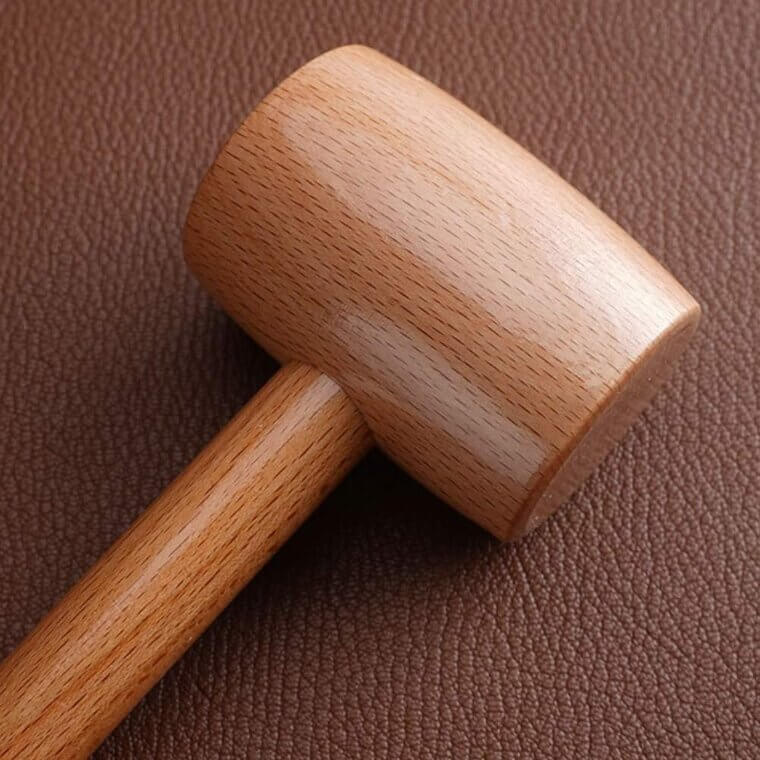
A heavier mallet head gives you more control, not less — the slower impact is easier to modulate. That's why traditional joiners preferred them over steel hammers.
The Needle-Nose Pliers for Precision Work
Needle-nose pliers are the tool you grab when nothing else fits — reaching into a junction box, forming a wire loop around a terminal screw, retrieving a dropped screw from inside a wall cavity. The problem is that cheap versions have soft jaws that spread under load and lose their grip. The fix is a pair with knurled jaws and a spring return, made from chrome-vanadium steel. The specific tip: never use them to tighten nuts — that's what damages the tip geometry permanently.
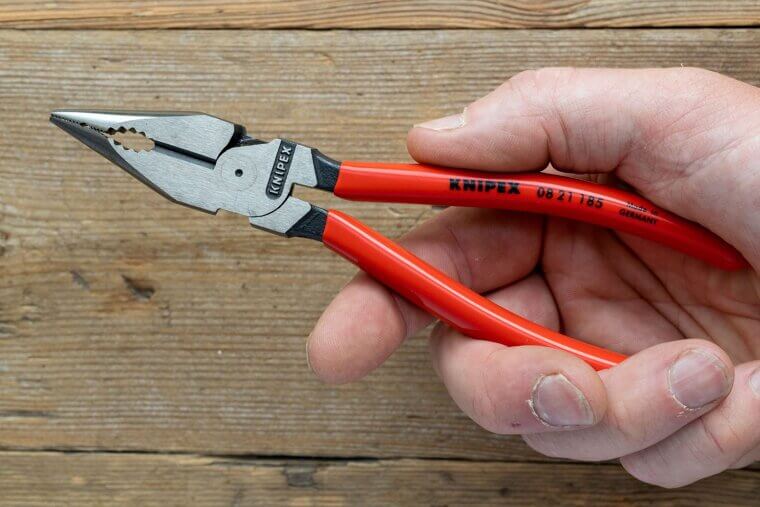
Knurled jaws grip wire without slipping; a spring return saves hand fatigue on repetitive work. Both details matter more than jaw length or brand name.
The Wire Stripper Every Electrician Trusts
Nicked wire insulation causes shorts. Stripped insulation that's too short makes poor connections. A quality wire stripper solves both problems with calibrated notches sized to specific wire gauges — no guessing, no nicks. The specific detail most electricians know but rarely share: the stripping notch should remove insulation cleanly in a single pull without scoring the copper underneath. If you see bright copper with any nicks after stripping, the tool is dull or the wrong size for that gauge.
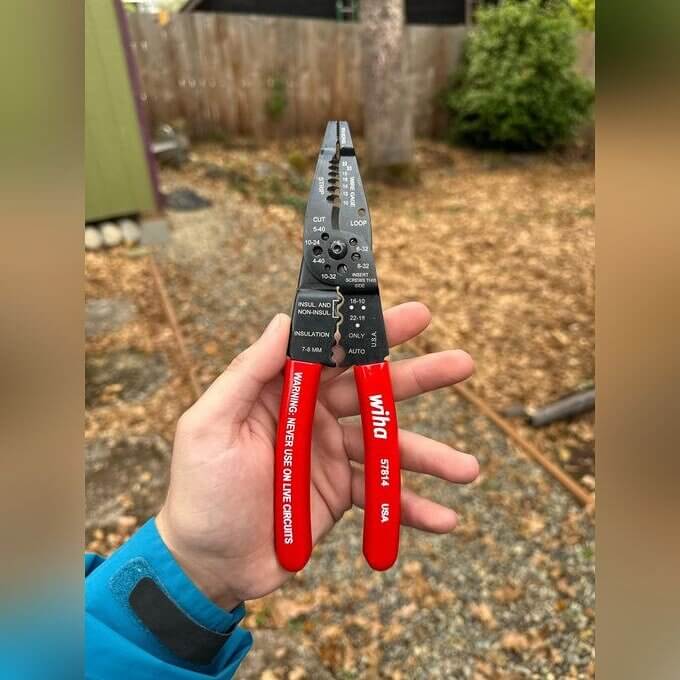
A clean strip leaves bright, unmarked copper — any nicks mean the tool is wrong for that gauge. That standard is worth holding every single time.
The Classic Putty Knife for Every Repair
Putty knives get used for everything — scraping old caulk, spreading wood filler, lifting floor tiles, even mixing small batches of epoxy. The problem is that cheap versions have flexible blades that fold under scraping pressure and handles that crack when you tap them with a hammer. The fix is a stiff-blade model with a solid steel handle or a handle designed to be struck. The specific detail: a 3-inch stiff blade handles 80 percent of repair tasks; add a 6-inch flexible blade for the rest.
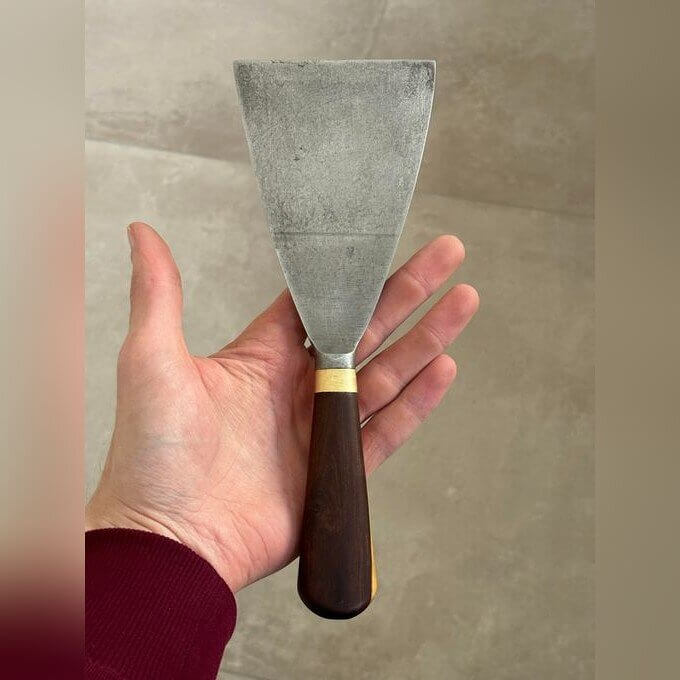
A 3-inch stiff blade and a 6-inch flexible blade cover nearly every putty knife task you'll face. Buy both once and stop improvising with whichever wrong one is closest.
A Solid Rake That Handles Every Season
A steel-tined garden fork is the tool most people skip and then regret skipping. It breaks compacted soil, lifts root vegetables without slicing them, and turns compost in ways a spade simply cannot. The detail that separates a lifetime fork from a seasonal one: look for tines forged as a single piece with the head, not welded on separately. Welded tines flex and eventually snap under leverage. A solid-forged fork, stored dry, will work as hard in thirty years as it does today.
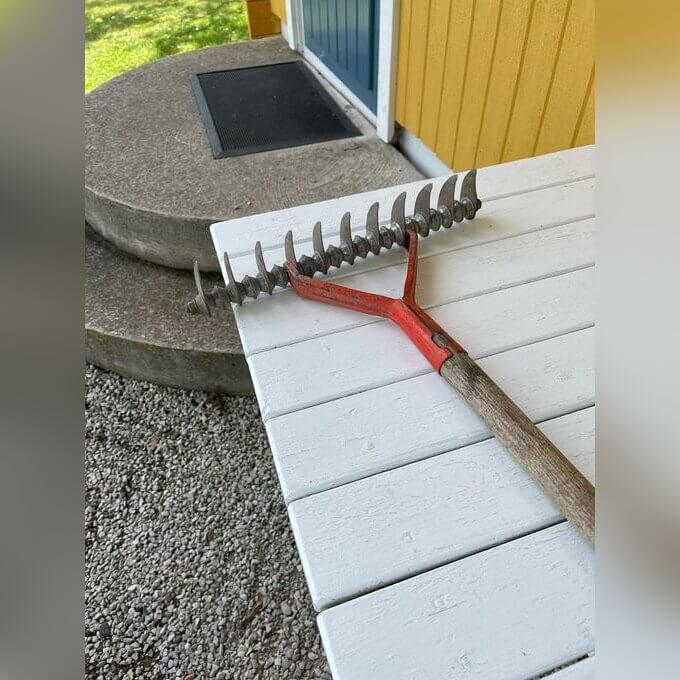
Welded tines look identical to forged ones in the store. They do not look identical after you hit a root at full leverage — one bends back and one snaps clean off.
A Solid Steel Rake for Clearing the Yard
Most people own two rakes without realizing they need two different ones. A steel bow rake moves soil, levels gravel, and breaks up clods — it's a ground tool. A fan rake moves leaves and debris without disturbing the surface beneath. Using a bow rake for leaves is exhausting; using a fan rake for soil is useless. The specific fix: hang both in the garage, label them if you have to, and reach for the right one. Both last decades when the handles are stored dry.
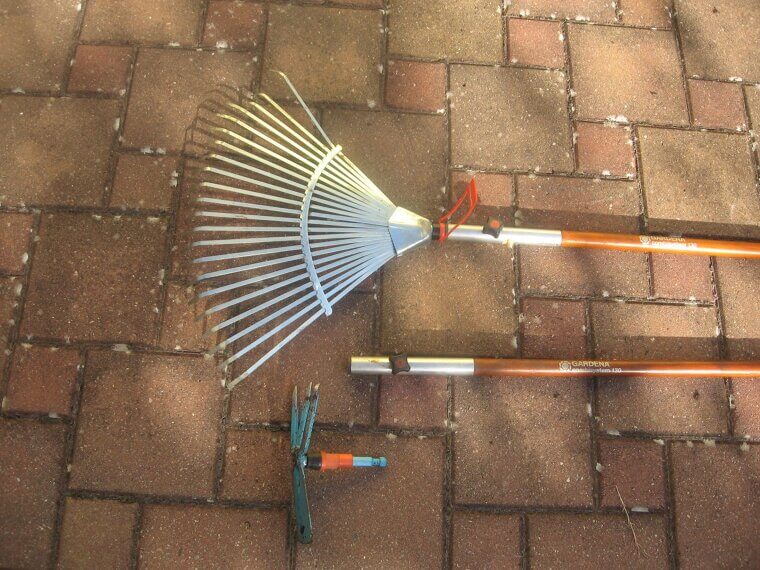
A bow rake and a fan rake look like they do the same job. Using the wrong one for an hour will convince you they are completely different tools that happen to share a name.
A Solid Splitting Maul for Firewood Season
A splitting maul is not a heavy axe — it's a different tool entirely, designed to split wood along the grain rather than cut across it. The problem most people have is using an axe for splitting, which buries the blade and wastes energy. A maul's wide, wedge-shaped head uses mass and geometry to force wood apart. The specific detail that matters: aim for existing checks — the cracks that appear as wood dries — and the wood splits with a fraction of the effort needed to start a new split.
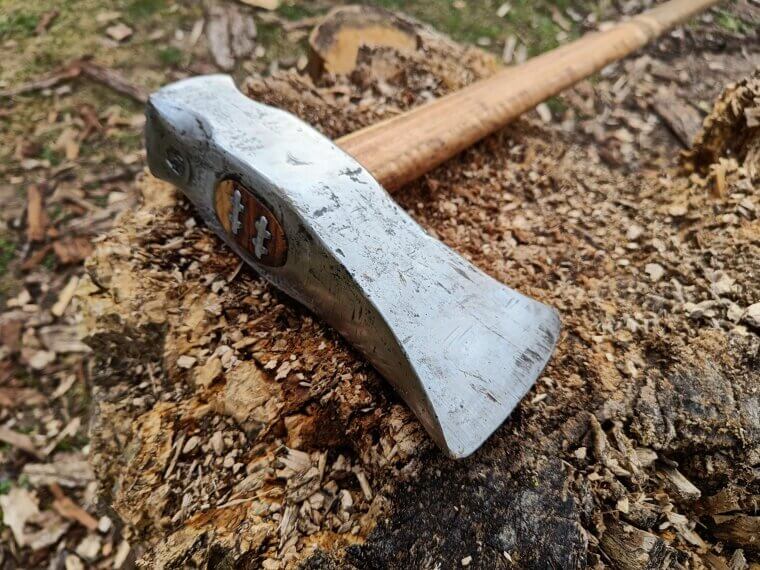
Aim for existing checks in the wood — those natural cracks do half the splitting work for you. Ignoring them doubles the effort and dulls the maul faster.
The Trusty Plumb Bob That Hangs True Always
Every laser level you've ever owned will eventually need batteries, calibration, or a replacement part that's no longer available. A plumb bob needs none of those things. It's a pointed weight on a string — physics does the work, and physics doesn't need firmware updates. The specific detail that makes it last forever: the bob should be solid brass or steel, not hollow, so it dampens its own swing quickly and settles to true vertical without you holding it still.
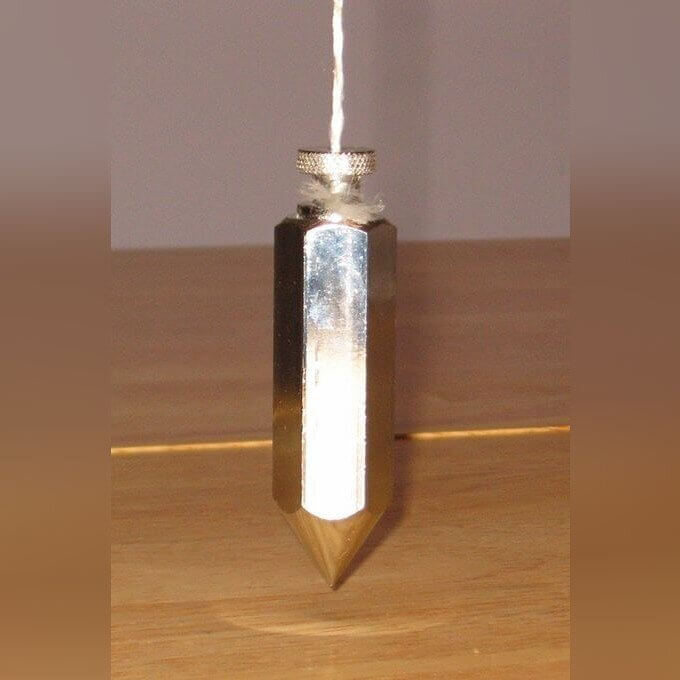
A solid brass bob has been the correct answer to 'is this wall plumb?' for roughly four thousand years. It will still be the correct answer long after every laser level you've owned is landfill.