
During the Great Depression, glassware manufacturers gave away colorful dishes with flour sacks and cereal boxes just to survive. Families kept them out of necessity. Collectors hunt them now out of obsession — and some are paying serious money to track down the rarest pieces.
Pink Depression Glass Dinner Plates
Pink Depression glass dinner plates were the workhorses of 1930s kitchens — mass-produced, affordable, and handed out as grocery store premiums. Today, a single plate in excellent condition can fetch $15 to $40, while a complete set of eight climbs past $300. The key is condition: no chips, no scratches, and that signature rosy blush still intact. Collectors prize the deeper pink shades over the washed-out versions.
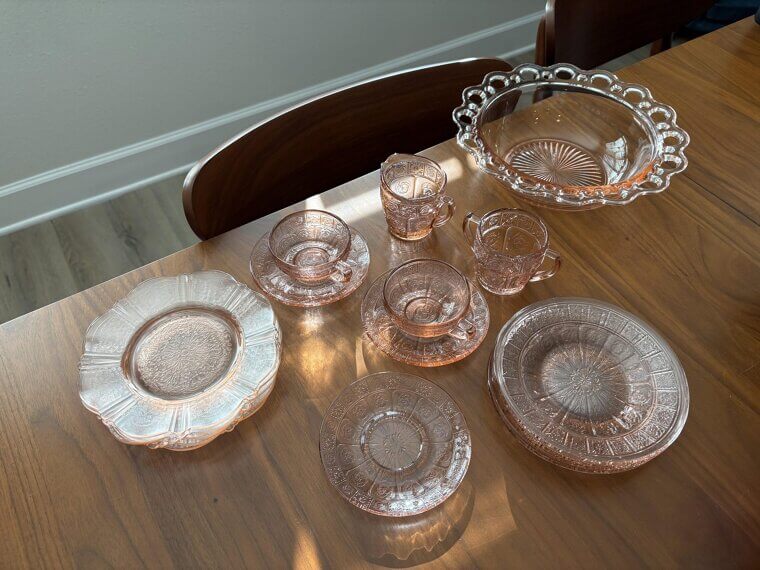
Pink was the most popular Depression glass color by far. Manufacturers like Jeannette Glass and Anchor Hocking produced millions of pieces, yet complete matching sets are surprisingly hard to assemble today.
The Beloved Cherry Blossom Pattern
Picture this: a delicate pink plate covered in blooming cherry trees, each blossom molded in crisp glass relief. Jeannette Glass introduced Cherry Blossom in 1930, and it became one of the most beloved patterns of the entire Depression era. Collectors go wild for the pink and green two-tone pieces. A pink Cherry Blossom pitcher alone can command $75 to $150, and a full dinner service in this pattern is the kind of thing estate sale hunters dream about finding.
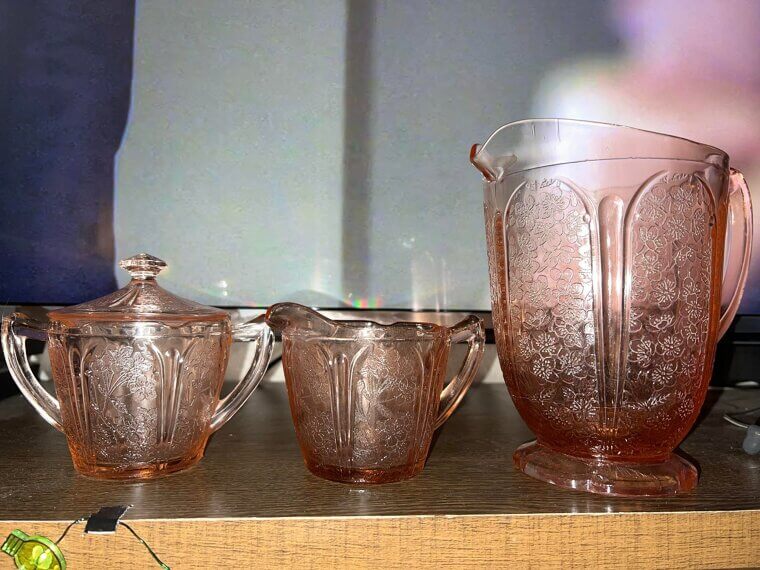
Beware of Cherry Blossom reproductions — they've flooded the market since the 1970s. Originals have sharper mold detail, lighter weight, and a slightly different shade of pink than modern knockoffs.
Delicate Pink Sherbet Glasses
They held a single scoop of ice cream and cost almost nothing. Delicate pink sherbet glasses were Depression-era luxuries disguised as giveaways, tucked inside oatmeal boxes and handed out at movie theaters on dish nights. A set of six in the American Sweetheart or Cherry Blossom pattern can sell for $60 to $120 today. What's remarkable is how thin the glass is — it's almost translucent when held up to light, which makes finding unchipped examples genuinely difficult.
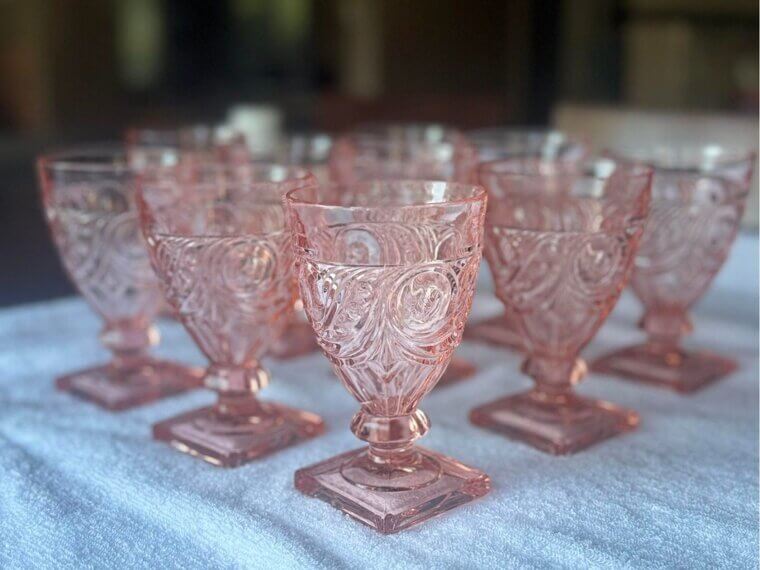
Sherbet glasses were among the most-used pieces in any Depression glass set, which is exactly why pristine examples are so scarce. Rim chips — even tiny ones — drop the value dramatically.
Amber Glass Pitchers from the 1930s
Amber glass pitchers from the 1930s have a warm, honey-toned glow that looks stunning on a windowsill. They were originally sold as everyday water pitchers, often paired with matching tumblers in sets. Today, a single amber pitcher in the popular Mayfair or Madrid pattern runs $35 to $65 on a good day. Find one with all six matching tumblers still together? That set could top $200 at auction — assuming nobody dropped one in the last ninety years.
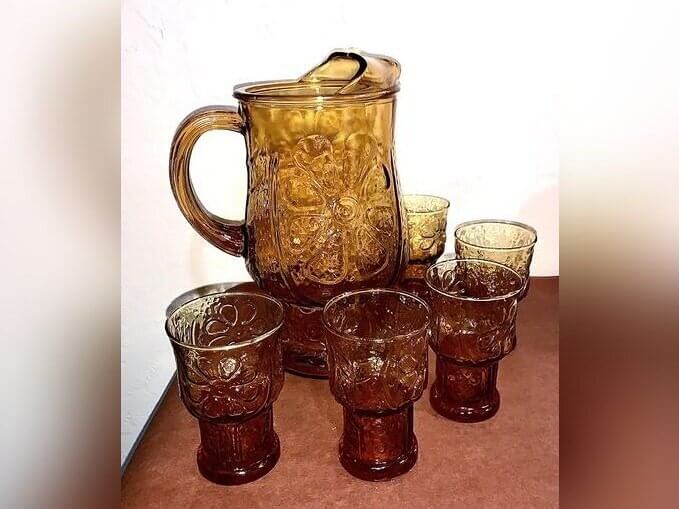
Amber, sometimes called 'topaz' by original manufacturers, was produced in smaller quantities than pink or green. That relative scarcity makes amber pieces consistently stronger performers at auction.
Green Glass Canister Sets for the Kitchen
Green glass canister sets were meant to hold flour, sugar, coffee, and tea — the four essentials of any Depression-era kitchen. Finding a complete four-piece set with all lids and all original labels still legible is like finding buried treasure. Individual canisters sell for $20 to $50 each, but a matched set with original metal lids can fetch $150 to $250. Most were separated long ago when one lid broke and the whole set got scattered to different cupboards.
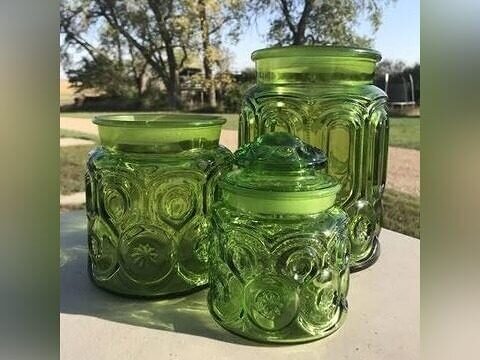
Original metal lids on Depression glass canisters are often rusty or missing entirely. Glass replacement lids exist but aren't original — purists insist on the correct metal tops, which can be harder to find than the jars themselves.
Cobalt Blue Glass Tumblers
Cobalt blue Depression glass tumblers are the showoffs of any collection — deep, rich blue that turns any shelf into a display case. Hazel-Atlas produced some of the most striking cobalt pieces during the 1930s, and their tumblers remain highly sought after. A single cobalt tumbler in excellent condition sells for $15 to $35, while a set of six can push $150. The color was harder to produce than pink or green, which kept quantities lower and prices permanently higher.
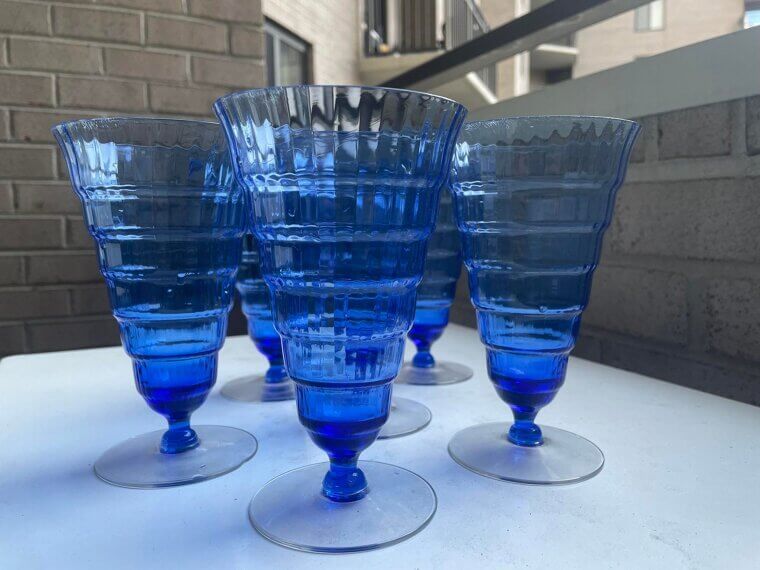
Cobalt blue glass was never as widely distributed as other Depression glass colors, partly because the deeper color required more expensive raw materials during an era when every penny counted.
Iridescent Carnival Glass Bowls
Technically, iridescent carnival glass predates the Depression era, but the two collecting worlds overlap significantly. The marigold, amethyst, and green iridescent finishes were created by spraying hot glass with metallic salts — a process that gives each piece a rainbow shimmer. A carnival glass bowl in a rare pattern like Peacock at the Fountain can sell for $200 to $500. Common patterns still bring $20 to $60, making carnival glass one of the most accessible entry points for new collectors.
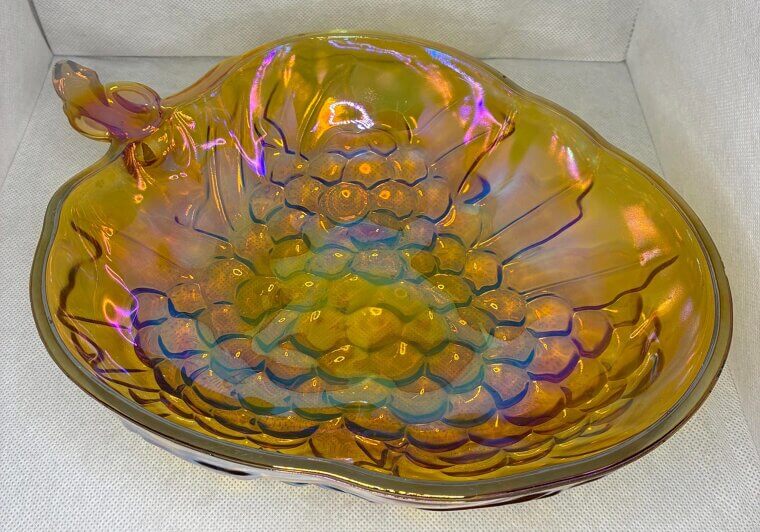
Carnival glass was originally called 'poor man's Tiffany' — a mass-market imitation of expensive art glass. That nickname aged badly. The rarest carnival glass pieces now sell for more than many genuine Tiffany items.
Green Glass Butter Dishes Worth Collecting
Green Depression glass butter dishes were practical household staples that somehow survived decades of daily use. That survival rate is exactly why they're valuable — most didn't make it. A covered green butter dish in a common pattern like Sharon or Mayfair runs $40 to $80, but rarer patterns push well above $100. The lid is almost always the problem: separated from its base for generations, lids crack, chip, or simply disappear.
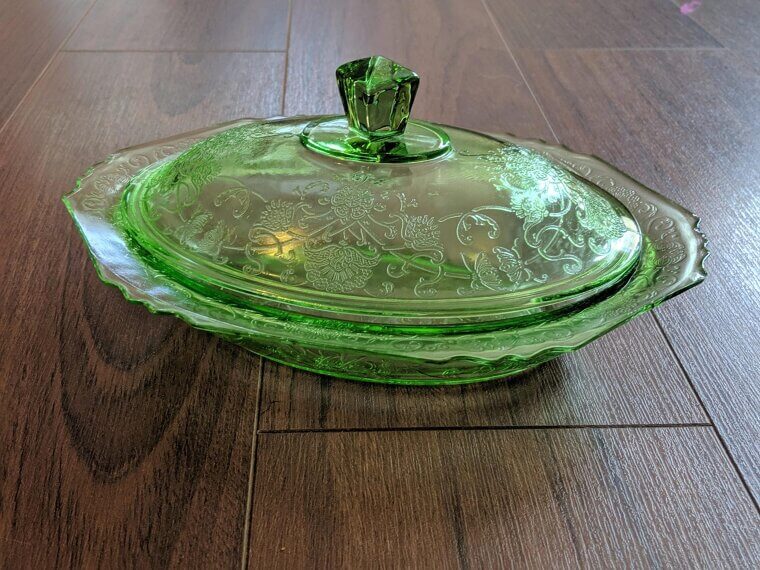
Always buy butter dishes as a matched set — lid and base together. Mismatched pieces from different patterns look similar but lose significant collector value when separated from their original companions.
The Rare Mayfair Open Rose Pattern
Would you pay $500 for a cookie jar made of pink glass? Mayfair Open Rose collectors absolutely would. Produced by Anchor Hocking from 1931 to 1937, this pattern features an intricate open rose and scroll design that pushed the limits of 1930s mold-making. The cookie jar is the holy grail of the pattern — pink examples in perfect condition have sold for $400 to $600. Even common Mayfair pieces like the footed tumbler trade at prices that surprise first-time sellers.
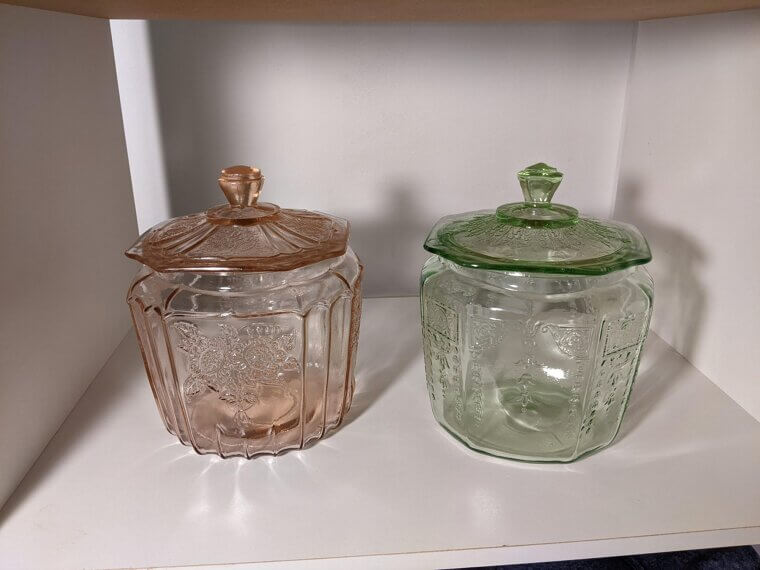
Mayfair Open Rose was produced in pink, blue, green, and yellow. The blue pieces are rarest and most valuable, but pink remains the most actively collected color with the deepest pool of serious buyers.
Depression Glass Cake Stands Worth Finding
Here's a number worth sitting with: $175. That's what a Depression glass cake stand in the right pattern can bring at a well-attended estate sale. Cake stands were produced in limited quantities compared to plates and tumblers, making them legitimately scarce. Green examples in the Cameo or Mayfair pattern are especially desirable. The pedestal base is almost always the weak point — inspect it carefully for hairline cracks before paying collector prices.
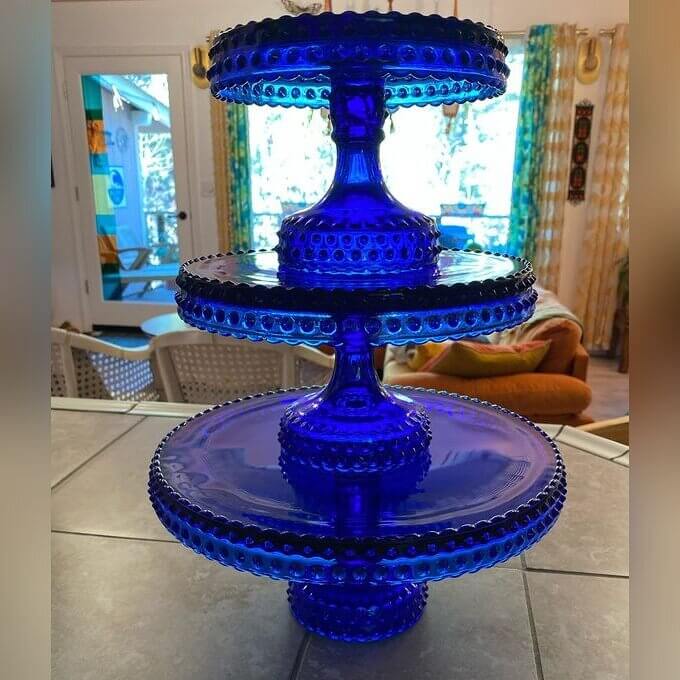
Cake stands served double duty in Depression-era homes — they displayed desserts but also elevated serving platters. That versatility made them popular gifts, which is why some survived in better condition than everyday dishes.
The Classic Hobnail Pattern in Pink
The Hobnail pattern — rows of raised dots covering every surface — is one of the most recognizable glass designs ever made. In pink Depression glass, it takes on a soft, almost romantic quality. Fenton Art Glass popularized hobnail, and their pink pieces are among the most actively traded in the entire Depression glass market. A pink hobnail vase runs $25 to $60; a complete water set with pitcher and six tumblers can reach $200. The dots also make chips easier to spot, which keeps fakes rare.
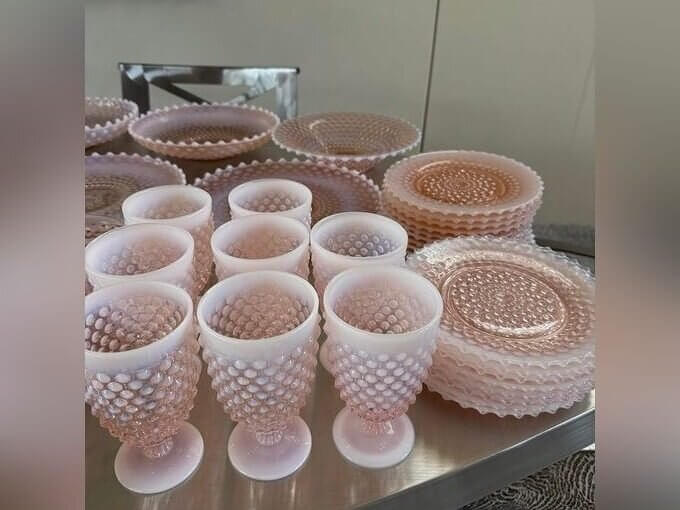
Fenton's hobnail pattern was produced continuously from the 1940s through 2011, when the company closed. Earlier pieces have a slightly different hue and sharper dot definition — details that matter enormously to serious collectors.
Uranium Glass That Glows Under Blacklight
Pull out a blacklight at your next antique mall visit. Some of that green Depression glass? It glows. Uranium glass — sometimes called vaseline glass — contains actual uranium oxide in the formula, which causes a vivid yellow-green fluorescence under UV light. It's safe to handle and display, but it's also wildly collectible. A uranium glass bowl in a common pattern sells for $30 to $80, while rare forms like uranium glass perfume bottles have topped $300 at specialized auctions.
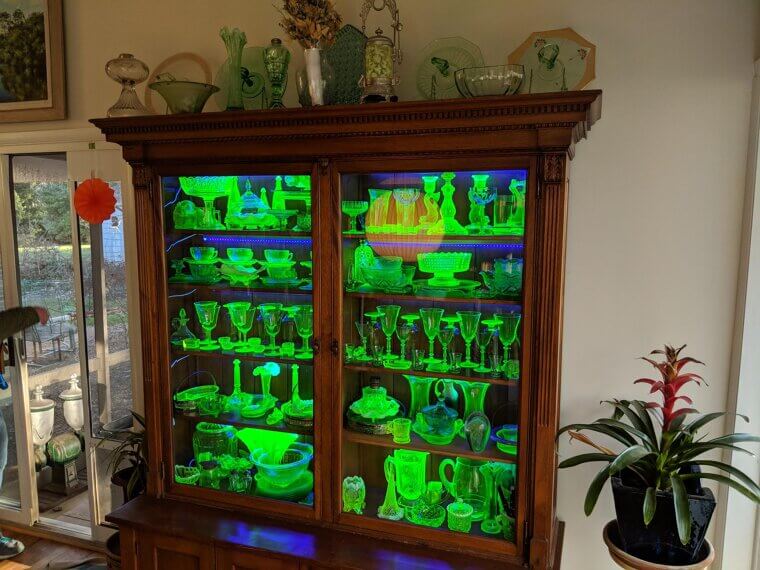
Uranium glass production peaked in the 1930s and was halted during World War II when uranium became a controlled material. Post-war pieces exist but are less common — the wartime pause created a natural scarcity that collectors appreciate.
The Sought-After Royal Lace Pattern
$400 for a soup bowl. That's not a typo. Royal Lace, produced by Hazel-Atlas from 1934 to 1941, features an intricate lace-like pattern that was technically difficult to produce — and the results show. The cobalt blue pieces are the most valuable, but even pink Royal Lace commands serious premiums. The soup bowl is the rarest piece in the pattern because it was produced in limited quantities. Collectors have been known to pay extraordinary prices just to complete their sets.
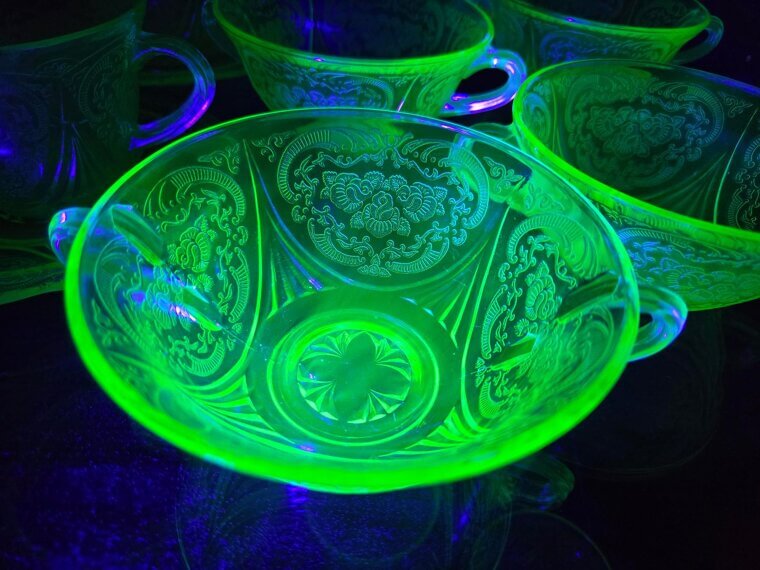
Royal Lace was one of the most complex patterns ever produced in Depression glass — the molds required more detail work than almost any competitor. That complexity limited production and created the scarcity that drives today's high prices.
The Elegant American Sweetheart Pattern
MacBeth-Evans Glass Company made American Sweetheart from 1930 to 1936, and the pattern earned its name honestly — fine ribbed lines, a delicate center motif, and a grace that set it apart from chunkier Depression glass designs. Pink and monax (milky white) are the most common colors, but red and blue examples are extraordinarily rare. A red American Sweetheart plate has sold for over $400 at specialized auctions. Even the common pink pieces trend upward as complete sets grow harder to find.
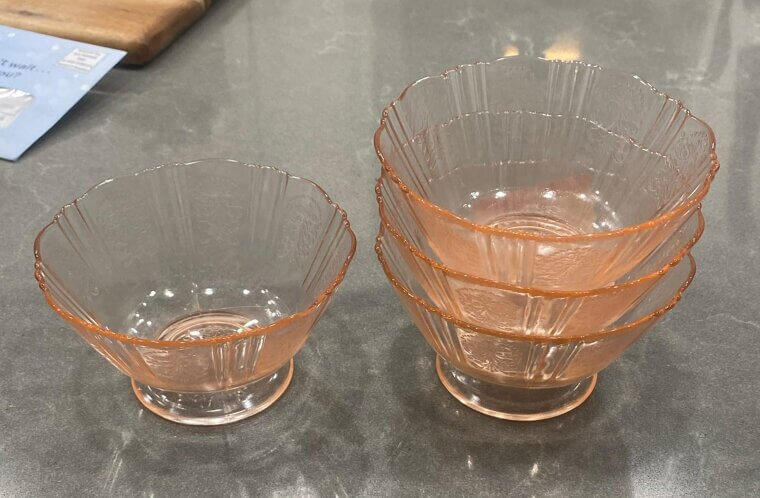
The monax color — an opaque white with a slight blue tint — was unique to American Sweetheart and produced exclusively by MacBeth-Evans. It photographs beautifully and commands a strong premium over standard pink.
Green Glass Mixing Bowls from Grandma's Kitchen
Green glass mixing bowls spent decades doing actual work — bread dough, cake batter, potato salad for family reunions. The fact that any survived in collectible condition is almost miraculous. Nested sets of three or four bowls in patterns like Pyrex's Primary Colors or Anchor Hocking's Swirl command $80 to $180 at antique malls. Single large bowls in Depression green sell for $25 to $50. The interior surface condition matters most — look for staining, scratches, and utensil marks.
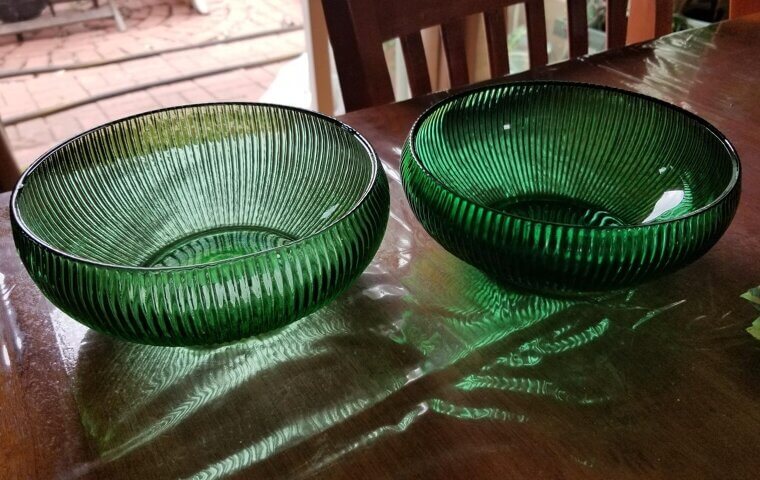
Mixing bowls were kitchen tools first and collectibles second, which means most show honest wear. A lightly used bowl with minor scratches is normal; deep gouges or cloudiness from dishwasher damage significantly reduce value.
Pink Glass Candy Dishes on Every Shelf
Pink glass candy dishes were the decorative accessories of the Depression era — pretty enough to display, practical enough to justify keeping. They sat on parlor tables holding hard candies, mints, and whatever small treats a family could afford. Today, a covered pink candy dish in a desirable pattern like Cherry Blossom or Miss America sells for $35 to $90. Open candy dishes run cheaper at $15 to $40. They're one of the best entry points for new collectors because good examples still appear regularly.
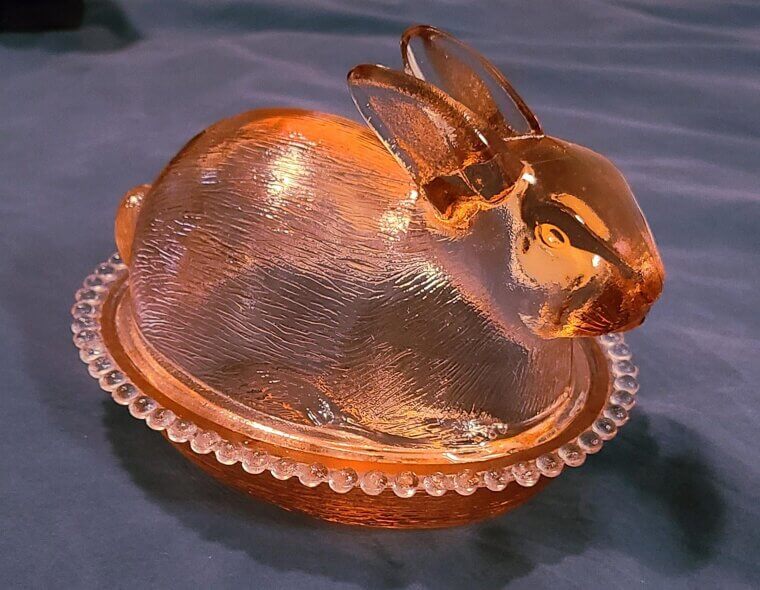
Candy dishes were often given as wedding and shower gifts during the 1930s, which means many survived in excellent condition — stored away rather than used daily. Those gift-quality pieces are exactly what collectors want.
Depression Glass Creamer and Sugar Sets
A creamer and sugar set seems like the most ordinary thing imaginable — until you realize that keeping both pieces together, with the sugar's lid intact, for ninety years is a minor miracle. Depression glass creamer and sugar sets in desirable patterns like American Sweetheart or Cameo sell for $30 to $80 as a pair. The sugar lid is almost always missing. Find a complete three-piece set — creamer, sugar, and lid — and you've found something genuinely worth celebrating.
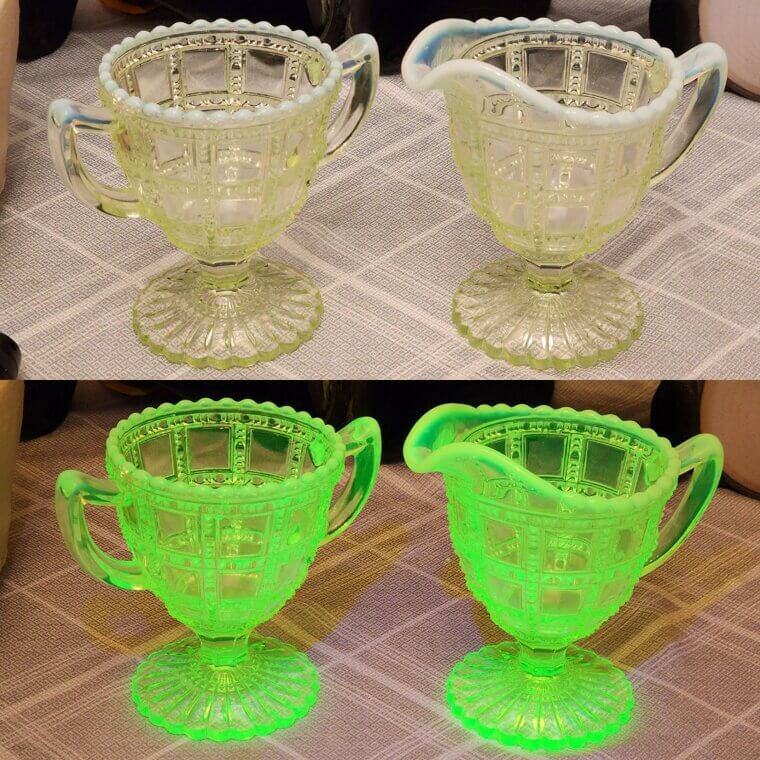
Sugar lids were the first casualties of Depression-era kitchens. They were small, easy to knock off, and prone to chipping. A complete sugar with original lid commands roughly double the price of a lidless example.
The Timeless Cameo Ballerina Pattern
The tiny dancing figure at the center of every Cameo Ballerina plate has been charming collectors since Anchor Hocking introduced the pattern in 1930. Green is the most common color, but yellow Cameo pieces are significantly rarer and command strong premiums. Here's the twist: the 'ballerina' was actually a classical dancer, and the pattern was originally marketed under the name 'Ballerina' — the 'Cameo' name came from collectors later. A complete green Cameo dinner set in excellent condition can approach $400.
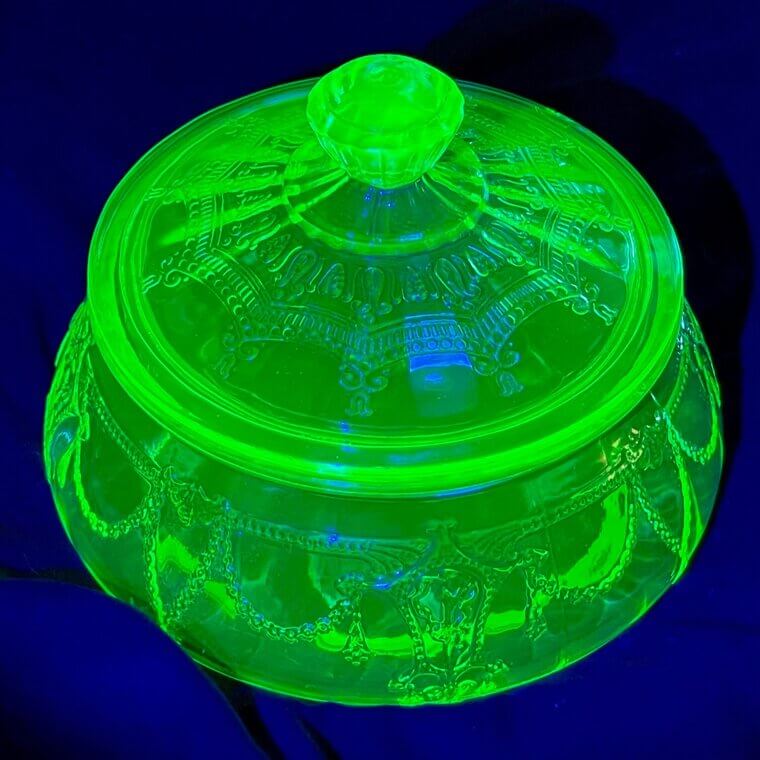
Yellow Cameo pieces were produced in much smaller quantities than green, making them the collector's prize within the pattern. A yellow Cameo water pitcher alone can sell for $150 to $200 — three times the green equivalent.
Frosted Glass Refrigerator Dishes
Refrigerator dishes were a Depression-era innovation — when electric refrigerators became accessible to middle-class families, manufacturers rushed to produce glass storage containers sized to fit the new shelves. Frosted or clear glass refrigerator dishes with original lids are quietly valuable. A Jeannette Glass or Anchor Hocking refrigerator set with four matching pieces and all lids can fetch $60 to $120. They're practical enough that some buyers actually use them, which keeps prices grounded compared to purely decorative pieces.
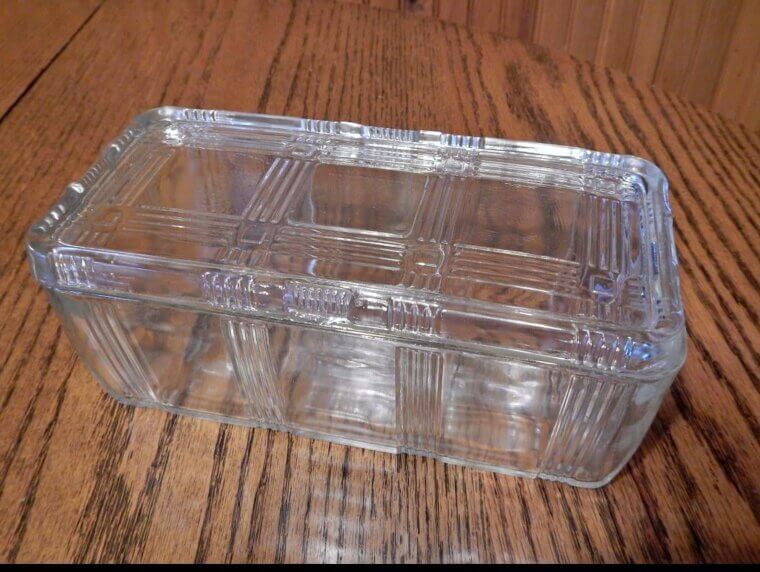
Depression-era refrigerator dishes were designed to fit specific refrigerator models — some Frigidaire sets were sold alongside the appliances as accessories. Those branded sets are especially collectible and command premium prices.
Pink Glass Sandwich Servers for Entertaining
Sandwich servers — large handled plates designed to pass around at parties — were among the most elegant pieces in any Depression glass pattern. The center handle lifts out, making them stackable and easy to store. Pink glass sandwich servers in the American Sweetheart or Harp pattern sell for $40 to $100 depending on condition and pattern rarity. They photograph beautifully, which has driven up prices as Instagram-era collectors discovered Depression glass in the last decade.
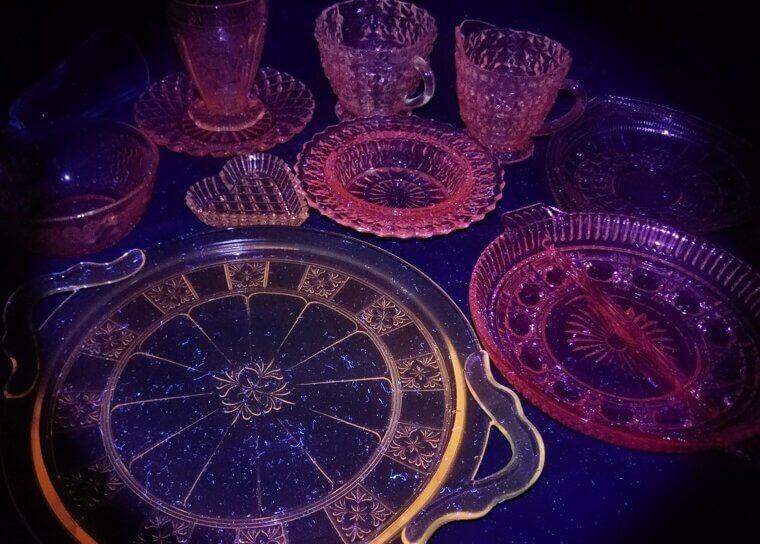
The handled sandwich server was a specifically American entertaining format — European glass manufacturers rarely produced them. That makes these pieces uniquely tied to 1930s American domestic culture, which adds a layer of historical appeal for collectors.
The Highly Collectible Miss America Pattern
Bold claim: Miss America might be the most perfectly designed Depression glass pattern ever made. The sunburst of radiating diamond points catches light from every angle, transforming ordinary pink glass into something that looks genuinely expensive. Anchor Hocking produced Miss America from 1935 to 1938, and the pattern has never lost its following. A pink Miss America pitcher sells for $60 to $100; the cookie jar — rare and desirable — has topped $500 at auction. Complete sets in excellent condition are genuinely difficult to assemble.
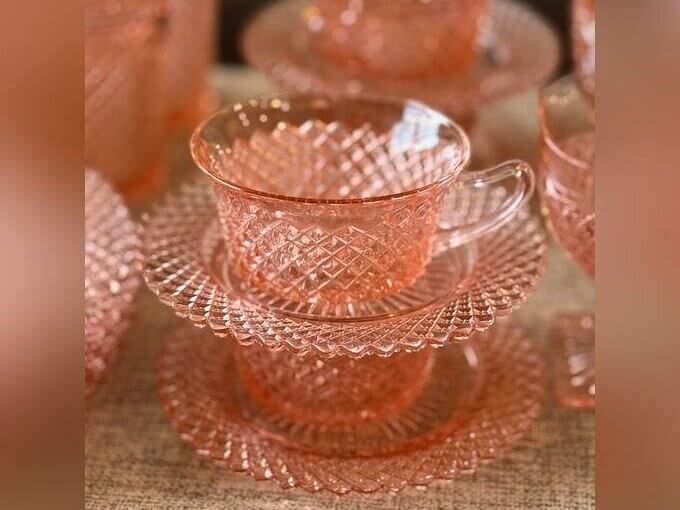
Miss America was reproduced extensively starting in the 1970s. Reproductions have a slightly different diamond pattern and heavier feel. The original pink has a warmer, more golden tone than the cooler pink of reproduction pieces.
Green Glass Salt and Pepper Shakers
You've probably walked past green glass salt and pepper shakers at a flea market without giving them a second look. That was a mistake. In the right pattern — Royal Lace, Cameo, or Florentine — a matched pair of Depression glass shakers sells for $25 to $75. The challenge is finding pairs with original metal tops that aren't rusted through. Shakers were used constantly and replaced often, which means truly original matched pairs in excellent condition are harder to find than they appear.
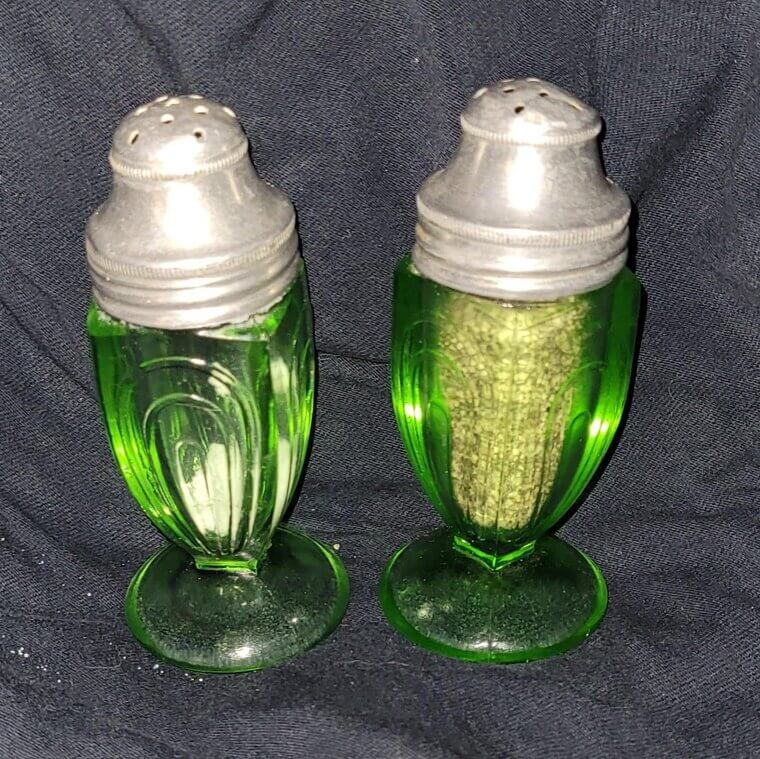
Metal tops on Depression glass shakers were often replaced over the decades, which means many 'original' pieces actually have reproduction tops. Collectors look for the correct top style for each specific pattern — wrong tops reduce value significantly.
Depression Glass Compotes in Every Color
Compotes — footed bowls designed to hold fruit or candy at table height — were produced in virtually every Depression glass pattern and color. They're the chameleons of the collecting world: common enough to be accessible, varied enough to fill an entire display cabinet with different colors and patterns. Prices range from $15 for a simple green compote to $150 for a rare cobalt blue example in the Royal Lace pattern. Condition of the foot is critical — hairline cracks there are nearly invisible but devastating to value.
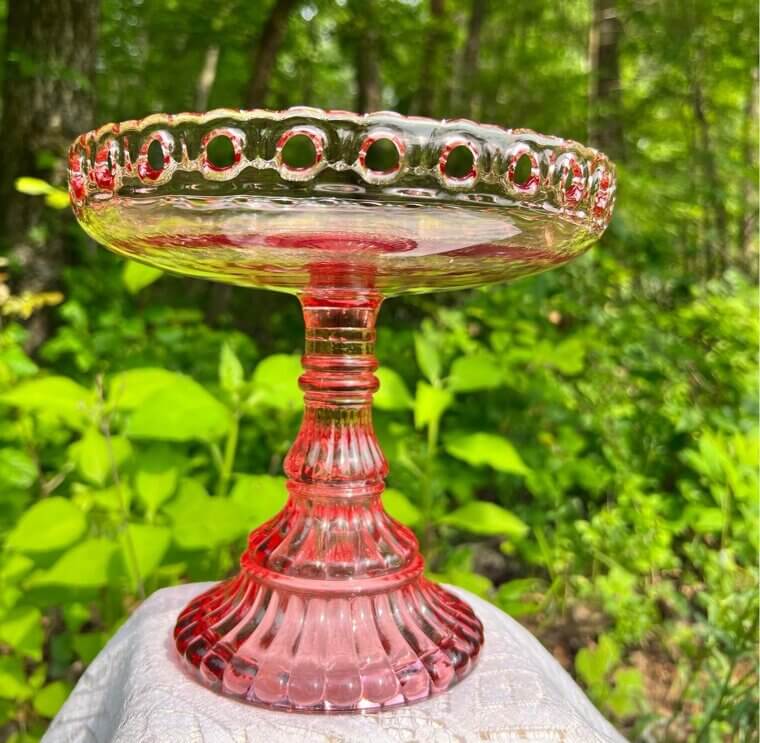
The word 'compote' comes from the French term for a dish of stewed fruit — these pieces were literally designed to hold preserved or fresh fruit as a table centerpiece, a practice that seems charmingly formal today.
The Beautiful Iris and Herringbone Pattern
Jeannette Glass introduced Iris and Herringbone in 1928, and it remained in production for decades — which means examples span from Depression-era originals to much later reproductions. The pattern features a bold iris flower surrounded by a herringbone background, and it translates beautifully into iridescent glass. An iridescent Iris and Herringbone ruffled bowl sells for $30 to $60; the rare pink dinner plate has topped $200. The pattern's long production run makes dating pieces tricky but also keeps the collector community actively engaged.
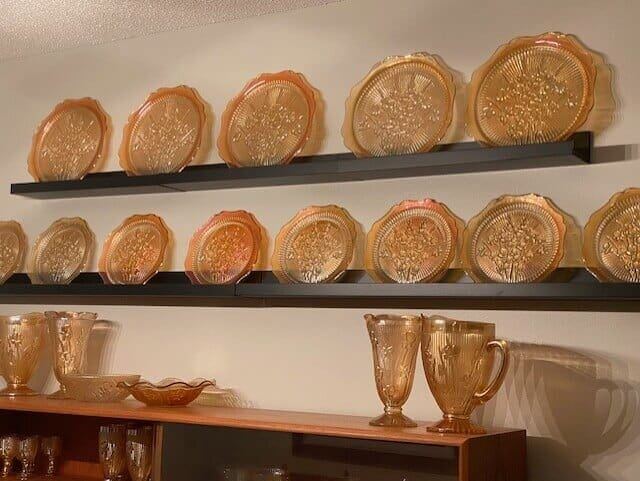
Iris and Herringbone was produced in crystal, iridescent, and pink. The iridescent pieces are most associated with the pattern, but pink examples are significantly rarer and consistently fetch higher prices at specialized glass shows.
Amber Glass Candlestick Holders
Amber glass candlestick holders have a quiet, warm presence that makes them genuinely useful as well as collectible. Pairs are essential — a single candlestick is worth a fraction of a matched set. In common patterns, amber candlestick pairs sell for $20 to $50. But here's where it gets interesting: candlesticks in the ultra-rare Floral and Diamond Band pattern have sold for over $100 per pair. The amber color photographs especially well in candlelight, which has made these pieces popular with lifestyle bloggers and vintage decorators.
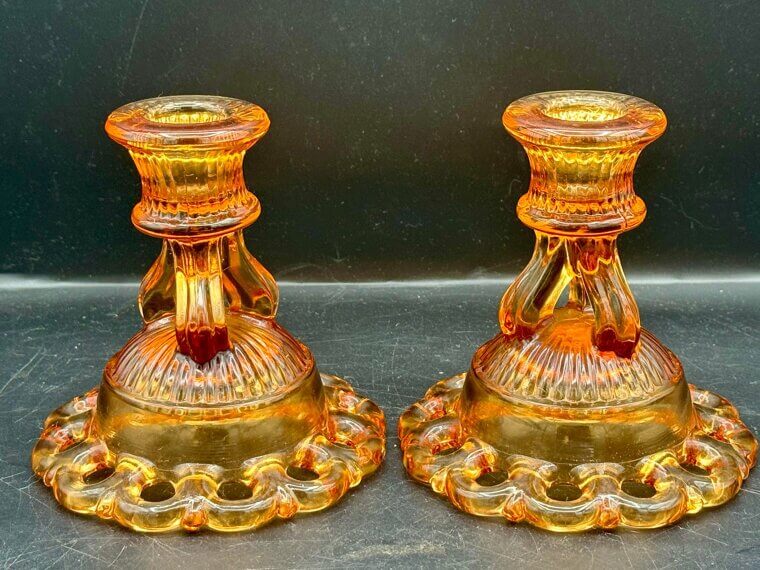
Depression-era candlesticks were used for both decoration and practical lighting during power outages — a real concern in 1930s rural America. That dual purpose made them common household items, which is why so many survived in good condition.
Pink Glass Relish Trays for the Table
Pink glass relish trays were the social media of the 1930s — a way to signal hospitality and taste without spending money you didn't have. Divided into sections for olives, pickles, and condiments, they were centerpieces of Depression-era entertaining. A pink relish tray in the Miss America or Cherry Blossom pattern sells for $25 to $65. The dividers inside are molded glass, not separate inserts, which means any crack across a divider is a dealbreaker for serious collectors.
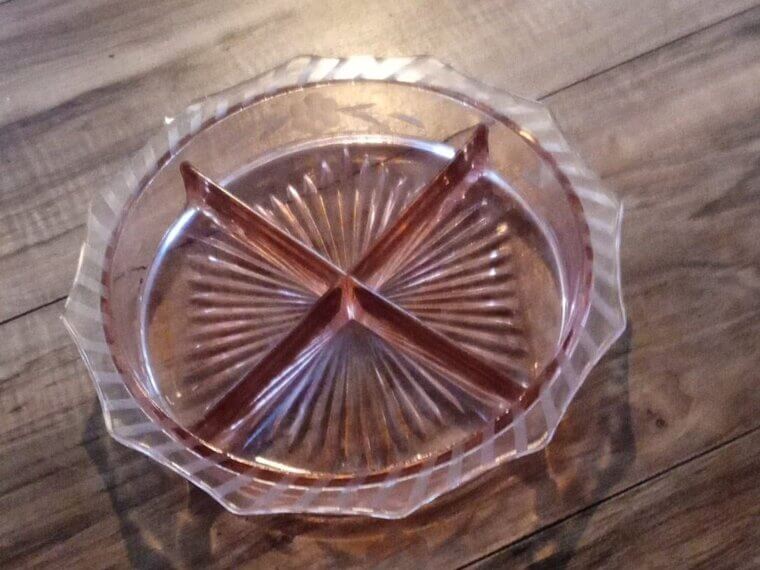
Relish trays fell out of fashion after World War II as entertaining styles changed, which means many were stored away unused for decades. Those stored examples often surface in near-perfect condition at estate sales.
The Rare Adam Pattern in Pink Glass
The Adam pattern has a secret. Produced by Jeannette Glass from 1932 to 1934 — a remarkably short run — it features a distinctive center medallion surrounded by feathery plumes. That brief production window makes genuine Adam pieces legitimately scarce. A pink Adam butter dish has sold for over $200; the covered candy dish approaches $150 in excellent condition. Green Adam pieces exist but are far rarer than pink. Collectors who specialize in Adam often spend years tracking down a complete service.
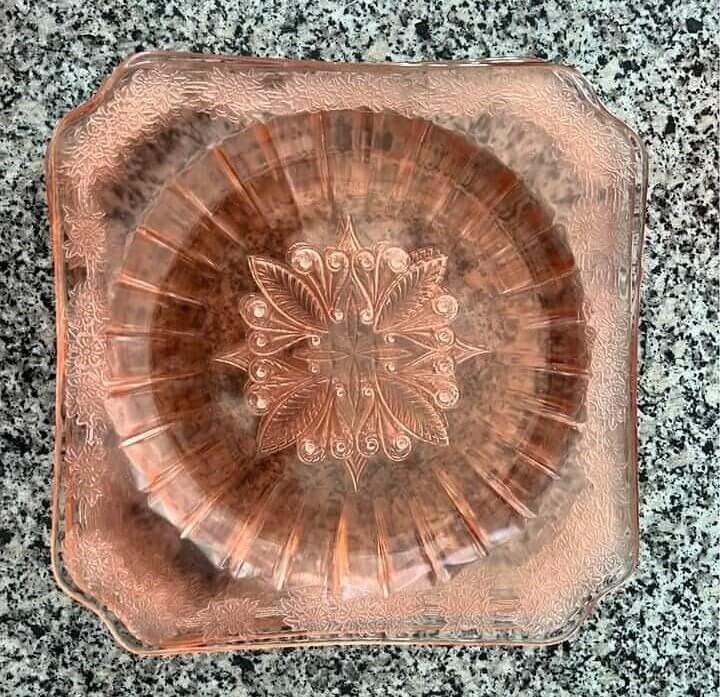
Adam's two-year production run was unusually short even by Depression glass standards. Jeannette Glass discontinued the pattern in 1934, possibly due to mold complexity or slow sales — either way, that decision created today's scarcity.
Pink Glass Lemonade Sets with Pitcher
A pink glass lemonade set — pitcher and six matching tumblers — sitting on a summer porch table is one of the most evocative images of 1930s American life. These sets were premium items even when new, often purchased rather than received as premiums. Today, a complete lemonade set in the Mayfair or Cherry Blossom pattern can sell for $150 to $350. The pitcher alone in perfect condition brings $60 to $100. Finding all six tumblers still matched to their original pitcher is the real challenge.
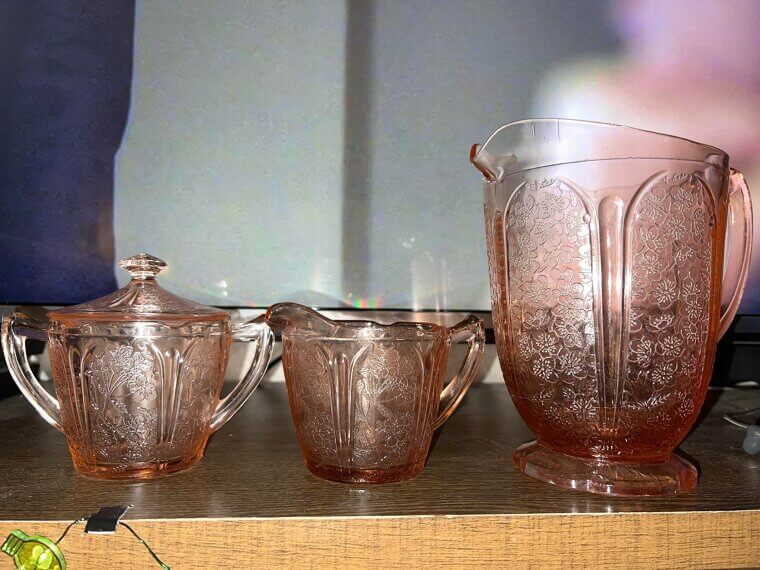
Lemonade sets were summer wedding gifts throughout the 1930s — practical, beautiful, and affordable. Many were wrapped carefully and stored, which is why some complete sets surface in remarkable condition nearly a century later.
Green Glass Footed Compote Dishes
Here's a pattern most casual collectors walk right past: Floral, also called Poinsettia, by Jeannette Glass. The footed compote in this pattern looks almost identical to common green Depression glass at a glance — but in excellent condition it sells for $80 to $120, double what a Sharon or Cameo compote brings. The secret is the production window: Jeannette made Floral only from 1931 to 1935, and the footed compote was never a high-volume piece. Dealers who know it price it accordingly; dealers who don't sometimes let it go for $15.
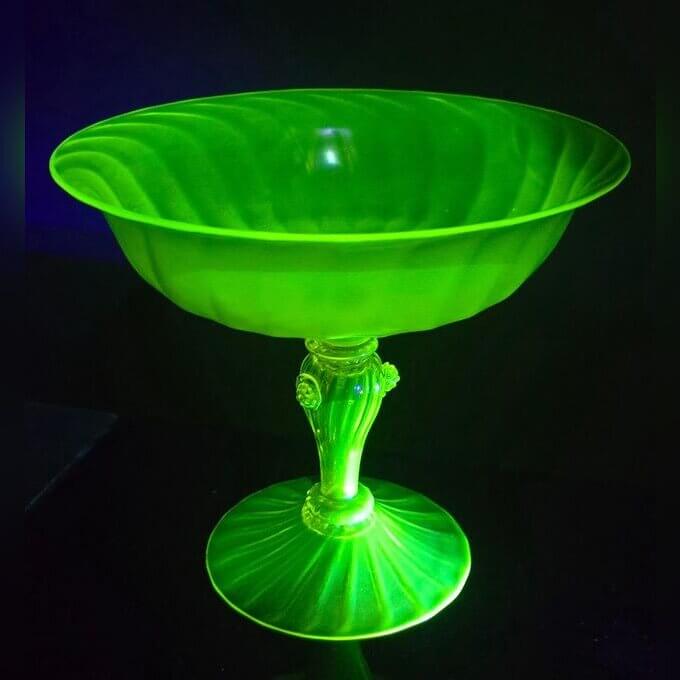
The 'Poinsettia' nickname came from early collectors who thought the flower motif looked more like a holiday poinsettia than a floral spray. Jeannette never used that name — but it stuck, and you'll still hear it at glass shows today.
The Elegant Patrician Spoke Pattern
Federal Glass Company produced Patrician Spoke from 1933 to 1937 in amber, crystal, green, and pink. The spoke pattern radiates from the center like a wheel, giving each piece a bold geometric presence unusual in Depression glass. Amber Patrician is the most common color; green is significantly rarer. Here's the price reality: a green Patrician cookie jar has sold for $200 to $300 at Depression glass shows. Even the humble amber creamer commands $20 to $35 — not bad for something that came free with a bag of flour.
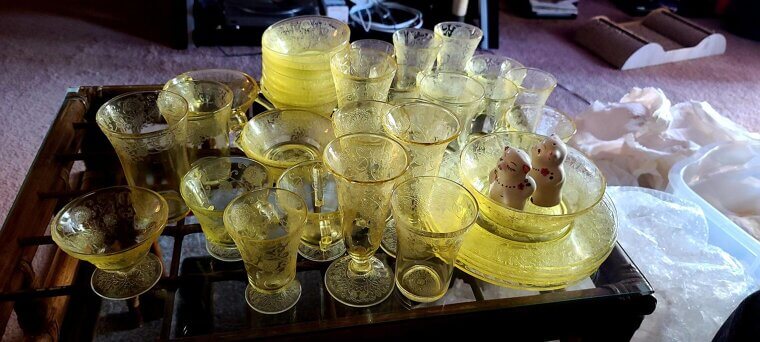
Patrician Spoke is sometimes confused with other spoke-pattern Depression glass, but Federal's version has a distinctive outer border that sets it apart. That border detail is the quickest authentication check for new collectors.
Pink Glass Cookie Jars Worth a Fortune
$500. For a cookie jar made during the Great Depression, when families were scraping together nickels. Pink glass cookie jars in the Mayfair Open Rose pattern are among the most valuable single pieces in the entire Depression glass market. The combination of a difficult pattern, a large piece requiring perfect molds, and ninety years of kitchen use has made pristine examples extraordinarily rare. Even cookie jars with minor lid chips sell for $150 to $200 — the demand is that strong.
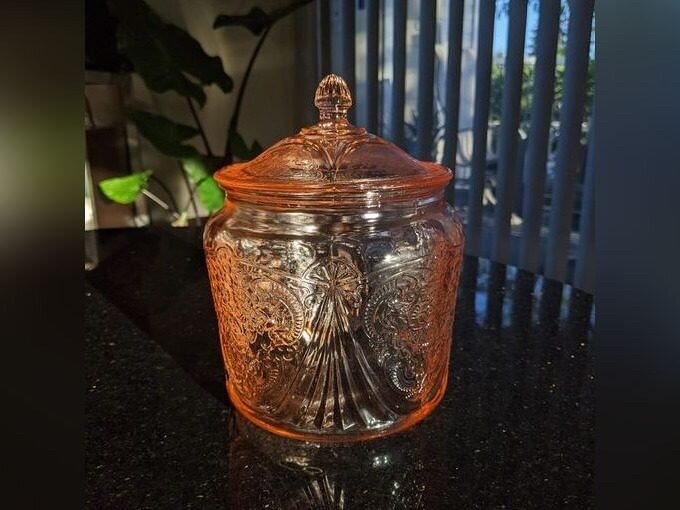
Cookie jars were among the largest pieces produced in Depression glass patterns, which made them both expensive to produce and prone to damage. Large pieces require more glass, more precise molds, and more careful handling — all of which limited survival rates.
Anchor Hocking Fire-King Jade-ite Mugs
Anchor Hocking's Fire-King Jade-ite technically postdates the Depression era, but it belongs in every conversation about collectible American glass. The opaque, minty green color is instantly recognizable, and the mugs — thick, sturdy, restaurant-grade — have become cultural icons. A single Jade-ite mug in excellent condition sells for $15 to $40; a set of four can reach $100. But here's the twist: the rare 'D-handle' mug variant, with a different handle shape, has sold for over $200 at specialized auctions.
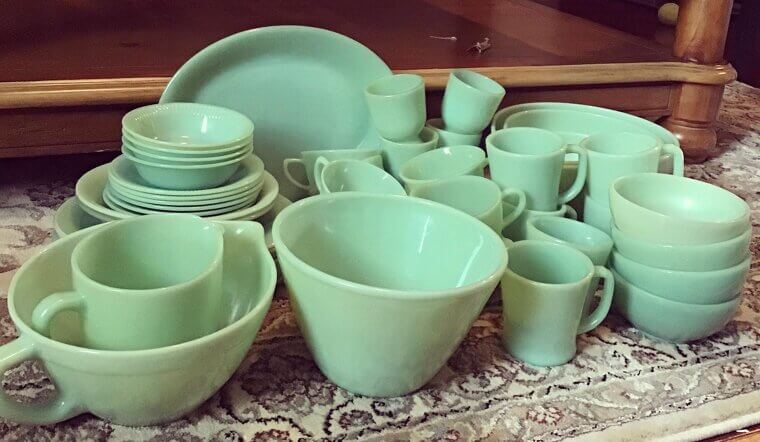
Jade-ite mugs were standard issue in American diners from the 1940s through the 1970s. Their association with diner culture — and Martha Stewart's very public collecting obsession — drove prices sharply upward in the early 2000s.
The Gorgeous Florentine Poppy Pattern
Hazel-Atlas produced two Florentine patterns — confusingly called Florentine No. 1 and Florentine No. 2 — from 1932 to 1935. The poppy-inspired design on No. 2 is considered the more elegant of the two, featuring a softer, more naturalistic flower motif. Yellow Florentine No. 2 is significantly rarer than green. A yellow Florentine No. 2 pitcher has sold for $100 to $150; the matching tumblers add $20 to $30 each. Collectors who mix up the two patterns at auction occasionally get very lucky — or very disappointed.
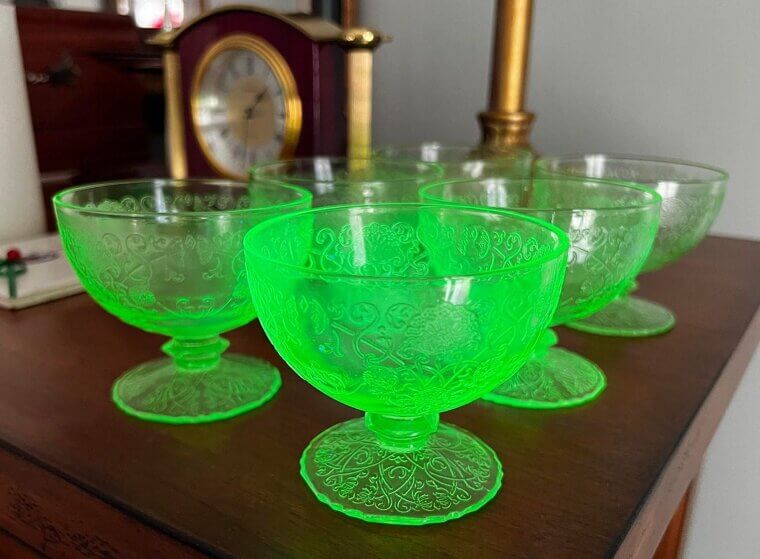
Florentine No. 1 has a ruffled edge on most pieces; No. 2 has a plain edge. That single detail is the quickest way to tell them apart — and the difference between paying $30 and $130 for the same-looking pitcher.
Amber Glass Serving Platters from the Era
Amber glass serving platters from the 1930s were the unsung heroes of holiday tables — big enough to hold a roast, beautiful enough to display, and cheap enough that families actually used them. That regular use is why pristine examples are increasingly rare. A large amber serving platter in the Madrid or Patrician pattern sells for $25 to $55. Find one with no utensil scratches on the surface and no rim chips? You've found something that spent ninety years being carefully handled, which is genuinely unusual.
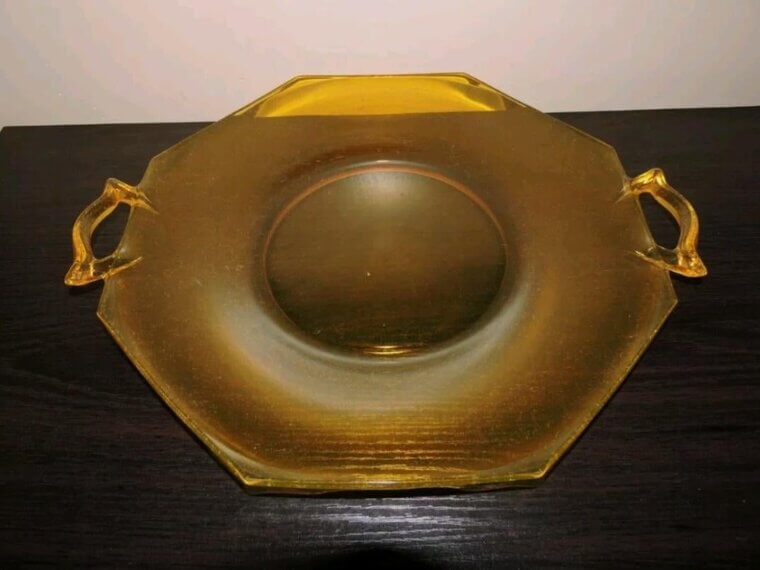
Madrid was one of the most widely produced Depression glass patterns — Federal Glass made millions of pieces. That abundance keeps prices accessible, but it also means collectors focus intensely on condition, since common patterns must be perfect to command top dollar.
Pink Glass Vases That Light Up a Room
Put a pink Depression glass vase on a windowsill with afternoon sun behind it and the whole room turns rose. That's not marketing — it's physics. The manganese in 1930s pink glass creates a genuine warmth that modern reproductions can't replicate. Vases in patterns like Florentine or Iris and Herringbone sell for $25 to $75 depending on size and condition. Bud vases at the smaller end are the most affordable entry point; large footed vases in rare patterns have topped $150 at glass shows.
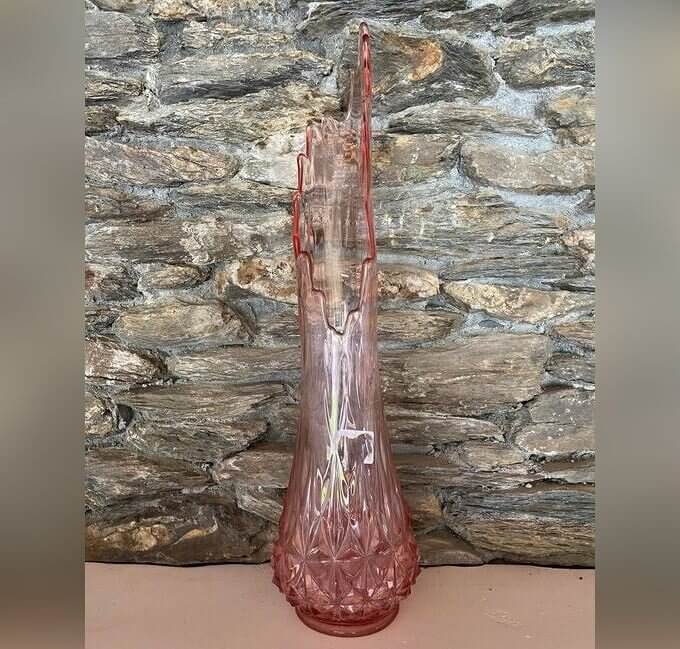
Pink Depression glass gets its color from selenium or manganese added to the glass batch. The exact shade varies by manufacturer and production year — experienced collectors can often identify the maker from the pink tone alone.
The Collectible Windsor Diamond Pattern
Jeannette Glass produced Windsor Diamond from 1936 to 1946 — one of the longer production runs in Depression glass history. The diamond point pattern is bold and geometric, catching light aggressively and looking more expensive than it was. Pink Windsor pieces are the most collected; green runs slightly cheaper. Here's the sleeper value: the Windsor Diamond powder jar with lid has sold for $80 to $120 in pink — a piece many casual collectors overlook entirely while hunting for plates and tumblers.
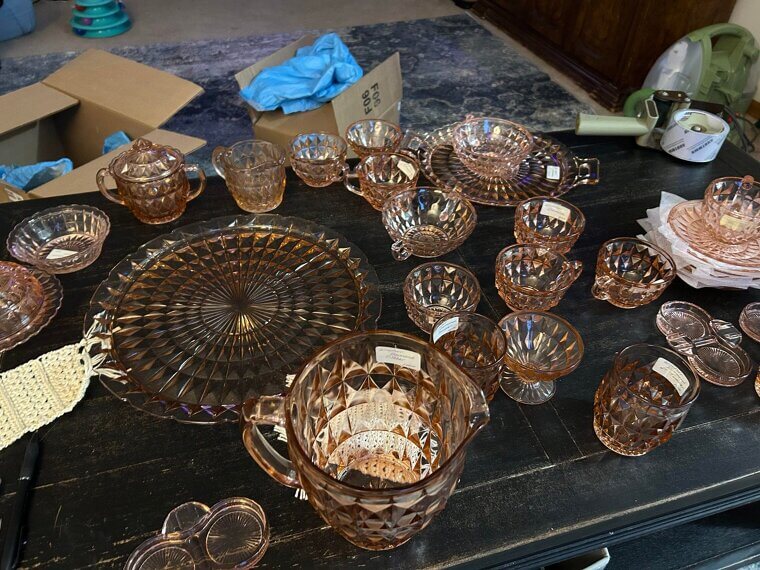
Windsor Diamond's long production run means pieces span different quality levels — early examples have sharper diamond definition than later production pieces. Collectors specifically seek the crisper early mold impressions, which are visible when pieces are held at an angle to light.
Depression Glass Punch Bowls for Parties
Finding a complete Depression glass punch bowl set — bowl, base, and twelve matching cups — intact after ninety years is like finding a ship in a bottle. Each piece was fragile; the cups were tiny and easily broken; the bowl itself was enormous and prone to cracking. A complete punch bowl set in the American Sweetheart or Miss America pattern can sell for $200 to $500 depending on color and condition. Even incomplete sets with eight or ten cups command strong prices from collectors determined to finish their services.
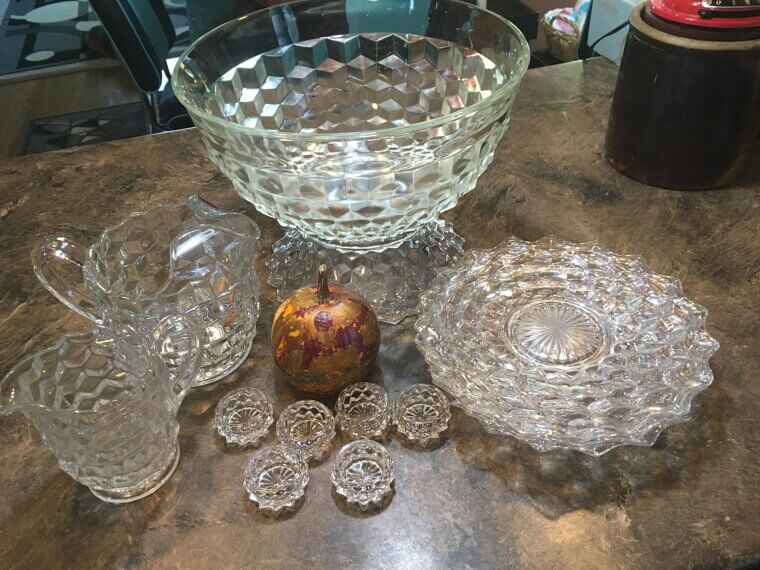
Punch bowl sets were aspirational purchases in the 1930s — bought for special occasions and stored carefully between uses. That careful storage is why complete sets occasionally surface at estate sales in near-perfect condition, stunning everyone in the room.
Green Glass Gravy Boats Still in Demand
Green glass gravy boats are the quiet achievers of the Depression glass world. Nobody talks about them at shows; nobody writes blog posts about them. But collectors who need them for complete dinner services will pay $40 to $90 for a gravy boat with its matching underplate. The underplate is almost always missing — it was the piece most likely to be repurposed as a small dish. A gravy boat with original underplate in the Cameo or Sharon pattern is genuinely difficult to find and priced accordingly.
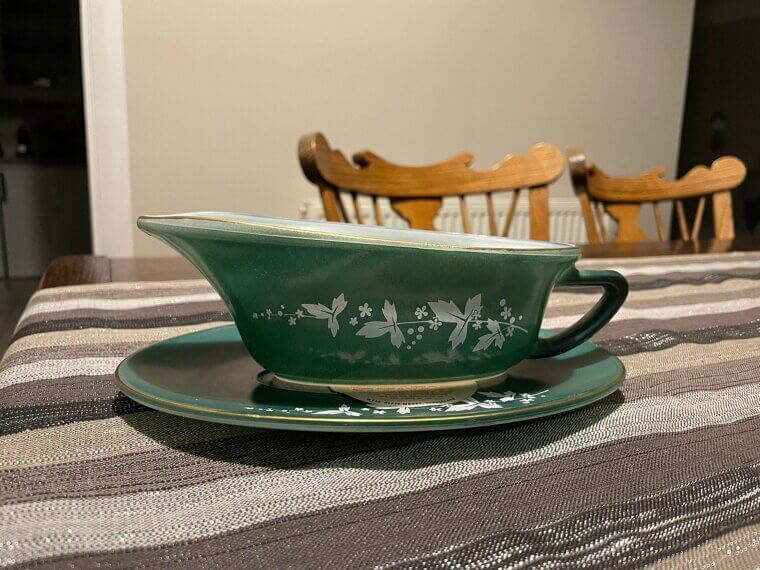
Pro tip from experienced pickers: search estate sale tables for small oval dishes that seem oddly purposeless on their own. That 'random little plate' is often a gravy boat underplate separated from its mate decades ago — and it's usually priced at a dollar.
The Prized Sharon Cabbage Rose Pattern
Federal Glass produced Sharon — also called Cabbage Rose — from 1935 to 1939, and it became one of the most beloved patterns in the entire Depression glass canon. The large, open rose design has a lush, almost Art Nouveau quality. Pink Sharon is the most collected color, but amber Sharon has its devoted following. The Sharon butter dish in pink has sold for $50 to $80; the covered candy dish climbs to $100 to $150. A complete pink Sharon dinner service in excellent condition? Expect to pay over $600 — if you can find one.
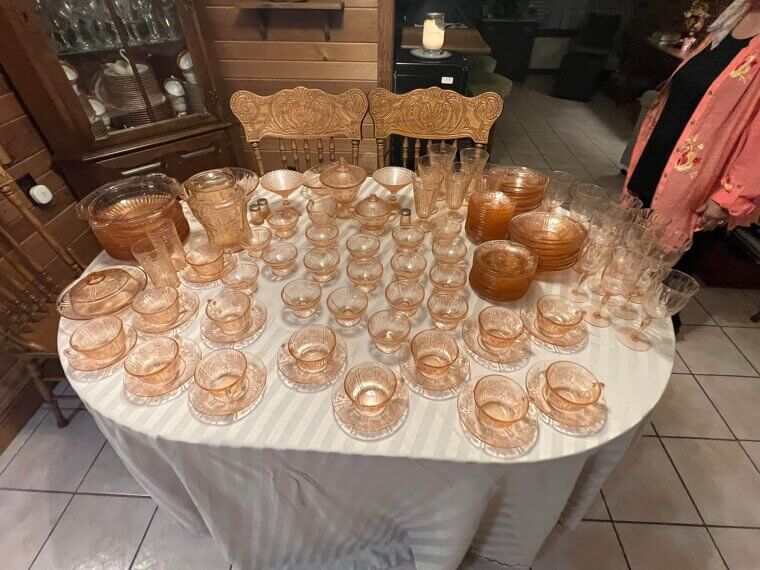
Sharon was produced during Federal Glass's most prolific period, yet complete services are remarkably hard to assemble. The pattern's popularity meant heavy use — and heavy use meant chips, cracks, and pieces that didn't survive to become collectibles.
Green Glass Divided Grill Plates
Divided grill plates were a Depression-era innovation — three sections molded directly into the plate kept food separated without extra dishes. They were practical, space-saving, and very much a product of their time. Green glass divided grill plates in patterns like Cameo or Patrician sell for $20 to $45 individually. But here's the finale worth noting: a complete set of four green Cameo grill plates in excellent condition recently sold for $160 at a Midwest estate sale — proving that even the humblest Depression glass, in the right pattern and condition, is now genuine treasure.
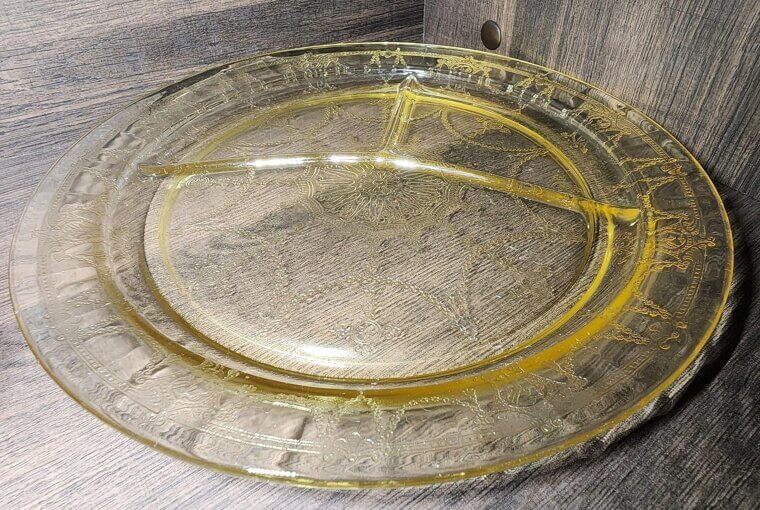
Divided grill plates were used in both homes and lunch counters during the 1930s, making them one of the most democratic pieces in Depression glass history. Rich or poor, urban or rural — everyone ate off a divided plate at some point during that decade.